Media Statement – 27/9/2026
57,161 undocumented migrants arrested in 2006 are at RISK of conviction and being WHIPPED – Urgently ABOLISH Whipping, and impose a MORATORIUM pending abolition
How many foreigners have been wrongly whipped including victims of human trafficking and refugee/asylum seekers that legally cannot be whipped for the crime of illegally being in Malaysia?
We call for the abolition of whipping, corporal punishment, which is an inherently cruel, inhumane, and degrading punishment that often amounts to torture, and which in Malaysia has even caused death.
Judicial Whipping causes physical trauma and even death
Judicial whipping, commonly known as caning in Malaysia, is carried out using a heavy rattan cane on a prisoner's bare buttocks under strict legal and medical supervision. The offender is stripped and made to lean forward against a specialized wooden or padded frame, with their hands and legs securely shackled. Comparatively, Syariah caning is lighter, symbolic, or non-scarring form of corporal punishment focused on religious deterrence and public repentance rather than severe physical trauma. The offender is typically clothed.
In many cases, the person being whipped faint after several strokes, and it can also result in death as happened in the case of Zaidi Abd Hamid who passed away on 7 October 2025 in Pokok Sena prison at the age of 49 after receiving a sentence of 12 strokes of the rotan (whipping). An investigation by SUHAKAM (the Human Rights Commission of Malaysia) has confirmed that before he died, Zaidi’s whipping wounds became infected, and he did not receive proper medical care. It is sad that Zaidi whose death penalty was recently commuted ultimately died after receiving his alternative sentence of whipping.
Appreciate that Malaysia is still on track towards abolition of Whipping
We appreciate the fact that this Prime Minister Anwar Ibrahim’s Pakatan Harapan is still actively considering the abolition of whipping in Malaysia.
‘On mandatory caning, Kulasegaran [Deputy Minister in the Prime Minister’s Department (Law and Institutional Reform) M. Kulasegaran] said the issue was also still under consultation following a recent meeting he chaired on a study into its impact and effectiveness in Malaysia. He said discussions with the Attorney General’s Chambers and other relevant parties were ongoing…’(Star, 17/9/2026)
It must be noted, that since the Immigration Act was amended in August 2002, to include whipping as a sentence for persons found to be in Malaysia without proper documents, the majority of persons being whipped are undocumented foreigners, which could also sadly may have included refugees, asylum seekers and also victims of human trafficking.
For the offence of illegally being in Malaysia, Section 6(3) of the Immigration Act 1959/63 states ‘Any person who contravenes subsection (1) shall be guilty of an offence and shall, on conviction, be liable to a fine not exceeding ten thousand ringgit or to imprisonment for a term not exceeding five years or to both, and shall also be liable to whipping of not more than six strokes.
“According to Prisons Department records, 47,914 foreigners were found to have violated the Immigration Act from 2002 to 2008. Of these, 34,923 were caned or whipped.” There are no current records provided by the Government, but it is estimated that at least about 5,000 to 10,000 are still being whipped in Malaysia annually. Media reports prove that the whipping has failed to DETER illegal presence in Malaysia.
The Immigration Department recently disclosed that just in 2026 ‘A total of 57,161 undocumented migrants were detained in various enforcement operations nationwide between Jan 1 and Sept 13...’ (NST, 25/9/2026). Would this mean that WHIPPING failed as a deterrent? It also mean that this about 50,000 new foreigners are at risk of being Whipped.
The RISK of the innocent being wrongfully convicted
One case of a person being wrongfully convicted and whipped was Sabri Umar, an Indonesian migrant worker with valid documentation, who was convicted and whipped despite there being a pending appeal, where Malaysian law explicitly prohibits whipping if there is a pending appeal.
Here the error was also made by the Immigration Department when they provided wrong documents, claiming that they had no record of entry when Sabri was a documented migrant worker of many years, which was reflected also in his passport. In Sabri’s case, thankfully High Court Judge Justice Lim Hock Leng, on becoming aware of this injustice did called up his case for Revision and acquitted Sabri Umar. (Star, 23/7/2022) (Malaysiakini 20/7/2022)
Sabri’s gross miscarriage of justice came to light because his Trade Union and civil society groups raised it, and media covered it. How many other foreign workers would have ended being whipped wrongly in similar situations?
Victims of Human Trafficking cannot be charged for being illegally in Malaysia
Foreigners who are victims of human trafficking cannot be charged for a crime of illegally being in Malaysia, and did the Prosecutions or the Courts even take this into consideration? Did they confirm that the accused is not a victim of human trafficking OR do they simply not bother – and convict and sentence them to be whipped?
Section 25 of the Anti-Trafficking In Persons And Anti-Smuggling Of Migrants Act 2007(ATIPSOM), which deals with Immunity from Criminal Prosecution, states that ‘A trafficked person shall not be liable to criminal prosecution in respect of- (a) his illegal entry into the receiving country or transit country; (b) his period of unlawful residence in the receiving country or transit country; or (c) his procurement or possession of any fraudulent travel or identity document which he obtained, or with which he was supplied, for the purpose of entering the receiving country or transit country, where such acts are the direct consequence of an act of trafficking in persons that is alleged to have been committed or was committed.
We wonder how many victims of human trafficking would have wrongly been charged and was sentenced to whipping.
Section 6(4) Immigration Act must be REPEALED
Now, Section 6(4) of the Immigration Act states ‘The burden of proof that a person entered Malaysia without contravening subsection (1) shall lie upon that person, and in any prosecution for an offence under subsection (1), it shall not be necessary to specify in the charge the date, time, place or manner of the entry of such person into Malaysia, or by means of travel used for such entry, and such prosecution may be held at any place in Malaysia.’ BUT all these are most important to determine whether he/she is a victim of human trafficking, or even a refugee/asylum seeker.
This Section 6(4) is a BAD law that must necessarily be repealed – if Malaysia by LAW wants to ensure that no victim of human trafficking is ever charged for the offence being illegally in Malaysia which would have caused them to suffer WHIPPING.
Malaysian law says that a victim of human trafficking cannot be criminally liable for illegally being in Malaysia or that his/her presence in Malaysia is ‘the direct consequence of an act of trafficking in persons’.
It must be the prosecution and/or the Courts rightly to determine whether any accused is a victim of human trafficking and thus cannot be criminally liable by reason of Section 25 ATIPSOM.
It is UNJUST and wrong to push the burden on foreigners who generally are not literate in the local languages or Malaysian law is unacceptable and invites INJUSTICE.
It is most important for prosecution and/or courts to determine how the foreigner came to be in Malaysia – was it by reason of deception, etc. If the foreigner was once a registered migrant worker, suspicion should naturally arise as to why he/she is still in Malaysia as our law places the burden on employers to send them back to country of origin. If the said worker is still here because he/she has been cheated of wages promised, then reasonably he/she is also a victim of human trafficking, as "trafficking in persons" means all actions of recruiting, conveying, transferring, acquiring, maintaining, harbouring, providing or receiving, a person, for the purpose of exploitation,..’ – thus workers brought to Malaysia on a promise of work and certain wages, who then end up with different jobs and wages clearly are victims of human trafficking. Same too with workers who employers still have not paid them wages and monies due.
REFUGEES and Asylum Seekers
In January 2026, Malaysia started its own started its own asylum seeker and refugee assessment and recognition program on 1/1/2026 with the Refugee Registration Document (DPP) programme but it is moving too slow as the number of refugees/asylum seekers based on UNHCR and others may be over 300,0000.
“Until June 2026, 128 Myanmar nationals of Rohingya ethnicity, comprising 127 adult men and one adult woman, were transferred to PPKPPS (Special Detention Centre for Refugees and Asylum Seekers) Bidor, Perak… “Following the status determination process, 78 individuals comprising 77 men and one woman have been approved as refugees under the Refugee Registration Document (DPP) programme. The release process will only be carried out after all related procedures have been completed,” he (Home Minister Datuk Seri Saifuddin Nasution Ismail) said. (Malay Mail, 9/7/2026)
Based on the principle on non-refoulement, refugees’/asylum seekers cannot be deported back to their country of origin. These refugees’/asylum seekers also cannot be held in detention for being illegally in Malaysia. REASONABLY, they cannot also be convicted for the crime of illegally being in Malaysia, that a conviction also may result in the sentence of whipping.
THEREFORE, that is why WHIPPING must be abolished now, and pending abolition the Malaysian government must impose a MORATORIUM on Whipping.
As even documented migrants can suffer being wrongfully WHIPPED because of fault/negligence of authorities, the prosecution and Courts as it happened in Sabri Umar’s case.
Gross injustice can also be suffered by victims of human trafficking because of failure on the part of prosecution and/or courts, to consider whether section Section 25 of ATIPSOM will be violated. Likewise, refugees/asylum seekers may also end up wrongly whipped.
Noting, in Malaysia in this year only (2026), ‘a total of 57,161 undocumented migrants were detained in various enforcement operations nationwide between Jan 1 and Sept 13..’, this means most of these 57,000 are in SERIOUS risk of being convicted and WHIPPED. This alone makes the ABOLITION of Whipping a PRIORITY that needs urgent action by the Malaysian government.
As such, MADPET (Malaysians Against Death Penalty calls for the immediate abolition of WHIPPING, and pending abolition a MORATORIUM on whipping to also avoid the innocent, including victims of human trafficking and refugees /asylum seekers from being wrongly and unjustly whipped;
MADPET calls for the repeal of Section 6(4) of the Immigration Act that now removes the onus or duty of the Prosecution and/or the Court to determine whether the foreign national is a victim of human trafficking or not, OR whether he/she is a refugee/asylum seeker also should not be criminally liable for illegally being in Malaysia; and
MADPET also reiterates its call for Malaysia to ratify the UN Convention against Torture and Other Cruel, Inhuman or Degrading Treatment or Punishment.
Charles Hector
For and on behalf of MADPET(Malaysians Against Death Penalty and Torture)
57,161 illegal immigrants detained in nationwide operations since January


KUALA LUMPUR: A total of 57,161 undocumented migrants were detained in various enforcement operations nationwide between Jan 1 and Sept 13.
The Immigration Department, in a statement, said 1,685 local employers were also detained for employing undocumented migrants during the period.
"From Jan 1 to Sept 13, the department conducted 9,559 operations and inspected 128,536 individuals.
"The department will also continue to conduct enforcement operations to ensure the country's security, sovereignty and interests are safeguarded," it said.
Immigration said that in the five days last week alone, it conducted 175 operations involving checks on 1,340 individuals.
Of those inspected, 880 foreigners and 36 Malaysians were detained for various immigration offences. - NST, 25/9/2026
The media report about Malaysian Government in process of studies in view of ABOLITION of Whipping in the following report - relevant portions marked in 'BLUE"
Proposed Senior Citizens Bill may be tabled early 2027, says Kulasegaran
IPOH: The proposed Senior Citizens Bill is still being discussed with stakeholders and could be tabled early next year, says Deputy Minister in the Prime Minister’s Department (Law and Institutional Reform) M. Kulasegaran (pic).
The Ipoh Barat MP said the proposal, which comes under the Women, Family and Community Development Ministry, was being pursued in collaboration with his ministry.
“The matter is still under consultation. I’m hoping to table the matter this year, but it probably looks like early next year,” he told reporters at the Program Sumbangan Prihatin Hari Malaysia on Thursday (Sept 17).
Kulasegaran said any legislation introduced must first undergo proper consultation.
“We need to discuss it with NGOs, other departments and various stakeholders. We also need to study the Act before any action can be taken.
“This process has already started and is ongoing. Although it is a bit tight to table it in October, November or December, I’m hoping that it will come in the end,” he said.
He said the need for such legislation had been raised by elderly parents.
Kulasegaran said the proposed Bill would address situations where elderly parents who are no longer working are not provided with financial or other support by their adult children, including professionals such as lawyers, doctors, politicians and engineers.
He said such legislation was not unusual, with similar laws already in place in several countries.
“This is not an unusual proposal. In several countries, including India and Singapore, we have studied what kind of legislation could be adopted in Malaysia,” he said.
On mandatory caning, Kulasegaran said the issue was also still under consultation following a recent meeting he chaired on a study into its impact and effectiveness in Malaysia.
He said discussions with the Attorney General’s Chambers and other relevant parties were ongoing.
“There are three meetings with various stakeholders, including NGOs and ministries.
“We are looking at the suggestions given. The question being asked by society is whether whipping is effective. That is what we need to study before making a decision,” he said.
Kulasegaran said discussions on the issue began about four to five months ago and he hoped the study could be concluded by the end of the year.
Asked whether the study could lead to the abolition of mandatory caning, he said no decision had been made as differing views had been put forward.
“Some are suggesting abolishing it, while some are suggesting keeping it.
“We need to obtain views from the judiciary, agencies and lawyers, as well as those who have been caned and undergone the process, including former prisoners whom we have spoken to. These are all key considerations,” he said.
Asked whether abolishing mandatory caning could lead to an increase in crime, Kulasegaran said there were arguments on both sides.
He added that the government was also examining issues involving mental capacity, particularly cases where a person suddenly becomes mentally incapacitated and their next of kin must go to court to obtain authority to manage their affairs. - Star. 17/9/2026
Press Statement No. 27-2024_SUHAKAM Calls for the Abolition of Corporal Punishment
KUALA LUMPUR (22 OCTOBER 2024) – The Human Rights Commission of Malaysia (SUHAKAM) expresses its deepest concern over the recent death of an inmate at Pokok Sena Prison, reportedly after corporal punishment by whipping. We extend our heartfelt condolences to the family of the deceased and reaffirm our unwavering commitment to the protection of human rights.
SUHAKAM unequivocally opposes all forms of corporal punishment, including whipping, as they violate fundamental human rights and human dignity. The severe physical and psychological harm caused by corporal punishment is a direct contradiction to international human rights standards as prescribed by article 5 of the Universal Declaration of Human Rights and article 7 of the International Covenant on Civil and Political Rights, both of which provide that no one shall be subjected to torture or to cruel, inhuman or degrading punishment. Further, article 1 of the United Nations Convention Against Torture and Other Cruel, Inhuman, or Degrading Treatment or Punishment (CAT) defines torture to include “any act by which severe pain or suffering, whether physical or mental, is intentionally inflicted.” Corporal punishment clearly falls under this definition and should be regarded as inhumane and degrading.
The CAT, adopted in 1984 by the General Assembly Resolution of 1984 and now ratified or acceded to by 173 states, represents a global commitment to abolish torture and inhumane treatment. Unfortunately, Malaysia remains amongst the minority nations that have yet to be a party to CAT, despite the moral obligation to uphold the dignity and rights of all individuals in the penal system. Even within ASEAN, countries such as Indonesia, the Philippines, Thailand, Cambodia, and Vietnam have already acceded to the CAT, setting an example for the region. SUHAKAM urges Malaysia to join these nations in taking a firm stance against torture, including corporal punishment by acceding to CAT.
In light of the recent tragedy at Pokok Sena Prison, we call on the government to immediately abolish all forms of corporal punishment, including those codified in the Penal Code, the Criminal Procedure Code, the Prisons Act, and related legislation. Furthermore, corporal punishment in schools, which normalizes violence against children, must also be outlawed to safeguard the mental and physical well-being of future generations.
This incident underscores the urgency of comprehensive reform. We call on authorities to conduct a full, independent, and transparent investigation into the circumstances surrounding the death, ensuring that those responsible are held accountable. However, addressing this incident in isolation is insufficient. Malaysia must reform its criminal justice system and abandon harmful, outdated practices like corporal punishment in favour of rehabilitative approaches that respect human dignity.
SUHAKAM advocates for a justice system based on deterrence, rehabilitation and the inherent dignity of every person. Measures that emphasize justice, accountability and public safety, without resorting to violence, are essential to creating a just society. These measures must be aligned with Malaysia’s international human rights obligations and a commitment to justice, fairness, and humanity.
SUHAKAM will continue to monitor this case closely and engage with the relevant authorities to push for reforms that align with international standards. Abolishing corporal punishment is not merely a legal obligation but a moral necessity to uphold justice, human rights, and the dignity of all.
-END-
The Human Rights Commission of Malaysia (SUHAKAM)
Date: 22 October 2024

Without legal recognition, registered refugees still risk arrest, whipping
COMMENT | The Madani government must be applauded as Malaysia finally started its own asylum seeker and refugee assessment and recognition programme on Jan 1 with the Refugee Registration Document (RRD) programme.
However, it is shocking that “Until June 2026, 128 Myanmar nationals of Rohingya ethnicity, comprising 127 adult men and one adult woman, were transferred to PPKPPS (Special Detention Centre for Refugees and Asylum Seekers) Bidor, Perak.
“Following the status determination process, 78 individuals comprising 77 men and one woman have been approved as refugees under the RRD programme.
“The release process will only be carried out after all related procedures have been completed,” he (Home Minister Saifuddin Nasution Ismail) said. (Malay Mail, July 9)
The registration process must be expedited.
Legislation needed
Malaysia is home to more than 215,000 asylum seekers and refugees (not including those still being processed for recognition). (Malay Mail, June 23)
Until the Immigration Act is amended or new laws enacted, the present Act treats foreigners as undocumented migrants unless they possess valid work permits, passes, or visas recognised by law that allow them to be in Malaysia temporarily.
If they are undocumented, they are at risk of arrest, detention, and being charged in court for illegally being in Malaysia, which makes them liable to a fine not exceeding RM10,000 or to imprisonment for a term not exceeding five years, or to both, and shall also be liable to whipping of not more than six strokes. (Section 6(3) Immigration Act 1959/63)
Sadly, to date, the possession of RRD passes or cards has yet to be incorporated in law - thus, there is the risk that asylum seekers and refugees, even with RRD passes/cards, would still be considered lawbreakers present illegally in Malaysia.
“According to Prisons Department records, 47,914 foreigners were found to have violated the Immigration Act from 2002 to 2008. Of these, 34,923 were caned or whipped.”
No recent data found, and one wonders how many genuine asylum seekers and refugees were also whipped in Malaysia – and may continue to be imprisoned and whipped unless laws are speedily amended/enacted to recognise asylum seekers and refugees as persons with rights to temporarily be in Malaysia.
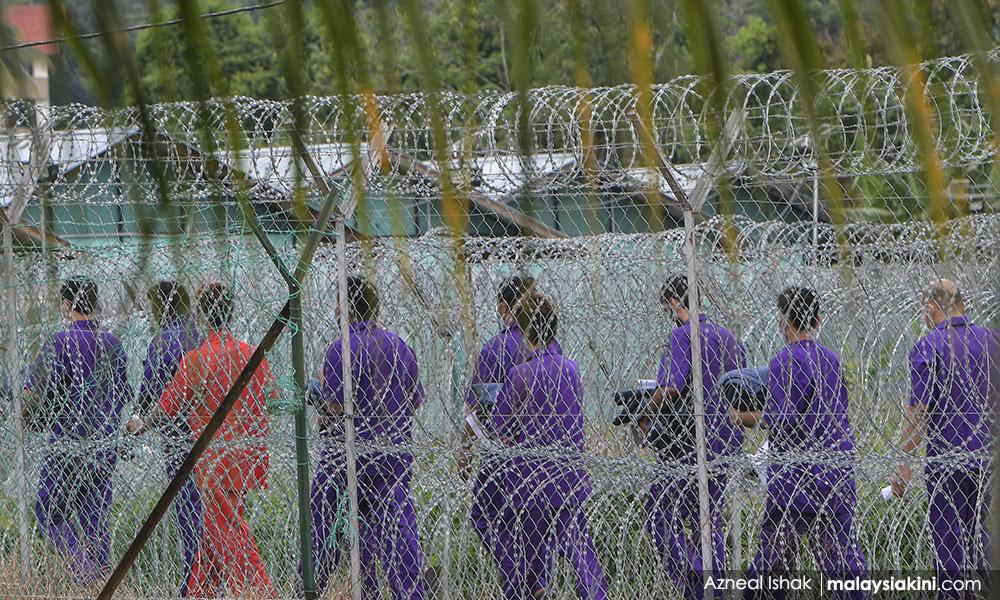
The Malaysians Against Death Penalty and Torture (Madpet) urges Malaysia to speedily amend the Immigration Act to recognise the RRD as a valid pass or proof of legal presence in Malaysia, for we certainly do not want any more asylum seekers and refugees to still be arrested, detained, or charged for illegally being in Malaysia.
Considering the process of registration may take time, Madpet also asks that those asylum seekers who are going to apply or have submitted their application for registration also be accorded protection too.
Noting that in six months, Malaysia has only managed to process and give RRDs to just 78 individuals, Madpet urges that the process be expedited in the interest of justice, noting there may be more than 200,000 asylum seekers and refugees in Malaysia.
Madpet calls upon Malaysia to enact a Refugee and Asylum Seeker law that will also provide legal recognition for the RRD programme.
Comply with non-refoulement principle
Saifuddin said the programme will ultimately lead to only three possible outcomes: repatriation, third-country resettlement, or deportation for legal offenders.
There are only three possible outcomes in managing refugees and asylum seekers.
“First, repatriation, which means sending them home once their country is safe and permits their return. Even if they are registered under the RRD, it does not mean they will remain here indefinitely.
“Second, resettlement in a third country. International agencies such as the United Nations High Commissioner for Refugees (UNHCR) must continue fulfilling that role. The UNHCR exists to register refugees and secure third-country placements.
“Third, deportation for those who violate laws and regulations. If they commit crimes and all due legal processes, convictions, and appeals have been exhausted, they will be deported. (NST, May 18)

Madpet applauds Malaysia’s commitment to not send asylum seekers and refugees home until their country is safe and permits their return is consistent with the principle of non-refoulement.
The principle of non-refoulement forms an essential protection under international human rights, refugee, humanitarian, and customary law.
It prohibits states from transferring or removing individuals from their jurisdiction or effective control when there are substantial grounds for believing that the person would be at risk of irreparable harm upon return, including persecution, torture, ill-treatment, or other serious human rights violations.
Need income to survive
In the past, the UN, through the UNHCR, undertook to bear the cost of accommodation and upkeep of these asylum seekers and refugees until they are settled in a third country, but now that burden falls on the nation state accepting refugees, or directly on the asylum seekers and refugees themselves who are expected to find their own food or shelter.
Housing and feeding some 200,000-plus refugees and asylum seekers in special detention centres may be impossible at the moment, so it is best to consider employment for refugees so they can earn and fend for themselves while not living in places of detention.
Thus, it was good to note that Malaysia is considering this - “He (Saifuddin) added that the programme also explored the possibility of matching approved refugees and asylum seekers with employers facing labour shortages in sectors such as manufacturing, plantations, agriculture, and construction.” (NST, May 18
Madpet proposes that Malaysia prioritise using asylum seekers and refugees to overcome labour needs first before resorting to bringing in migrant workers from other countries. There are 2,132,578 active and legally employed migrant workers as of Oct 15, 2025. (NST, Nov 3, 2025)
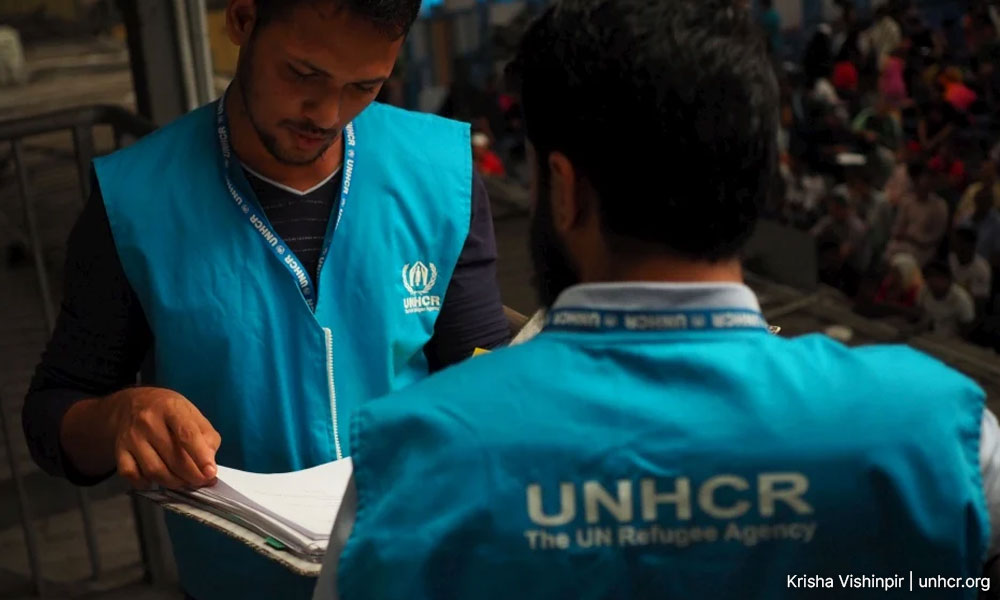
School for refugee children
As of early 2026, there are approximately 215,600 registered refugees and asylum-seekers in Malaysia according to UNHCR, though women and children still account for more than half of the total population.
Roughly 28,600 children fall into the primary or secondary school-going age brackets. There may be even more, being those who have yet to be registered by UNHCR.
Madpet calls on Malaysia to allow all these asylum seeker and refugee children to continue their studies in Malaysian public schools or other schools as the government deems appropriate. A child’s future is at risk if he/she cannot receive or continue their education.
A refugee has been defined as someone who has fled their country of nationality and is unable or unwilling to return due to a well-founded fear of persecution based on race, religion, nationality, political opinion, or membership in a particular social group – but for Malaysians, they are just human beings who need our temporary assistance.
Their children should never lose out on the basic right to study in schools, more so since Malaysia has ratified the United Nations Convention on the Rights of the Child (UNCRC).
The speedy assessment and determination of asylum seeker or refugee status is crucial to prevent Malaysia from unknowingly further persecuting these persons, who have sought our temporary help.
Hence, the importance of providing legal protection for asylum seekers and refugees through laws – temporary policies not recognised in law will not do.
CHARLES HECTOR is an activist with the Malaysians Against Death Penalty and Torture (Madpet). - Malaysiakini, 11/7/2026
Non-Liability and Non-Punishment for Crimes Committed by Victims of Human Trafficking — A Defence to Criminal Charges and a Mitigating Factor? (by Charles Hector) 2 Oct 2025 7:34 pm
When being a victim of human trafficking must be an absolute defense for crimes committed by victims of human trafficking. The principle of Non-Liability and Non-Punishment for Crimes Committed by Victims of Human Trafficking has been accepted by many jurisdictions, including by ASEAN and even by Malaysia.
‘…Victims of trafficking are subjected to exploitation in various ways. Sometimes, as a result of their victimization, they engage in illegal conduct. Common examples include involvement in the sex trade, involvement in drug production or trafficking, petty crime, possession or the use of fraudulent documents or entering another country in a manner that does not comply with its immigration laws, and even phone/online scam. In many cases, victims are forced or otherwise compelled by traffickers to commit these crimes or other illegal conduct…’ - ICAT The Inter-Agency Coordination Group against Trafficking in Persons. 1
In 2002, the United Nations High Commissioner for Human Rights issued the Recommended Principles and Guidelines on Human Rights and Human Trafficking that, amongst others, provides that: ‘Trafficked persons shall not be detained, charged or prosecuted for the illegality of their entry into or residence in countries of transit and destination, or for their involvement in unlawful activities to the extent that such involvement is a direct consequence of their situation as trafficked person.’
ASEAN Convention Against Trafficking in Persons, Especially Women and Children, which was adopted in Kuala Lumpur, Malaysia on 21/11/2015 clearly states in Article 14(7) that ‘Each Party shall, subject to its domestic laws, rules, regulations and policies, and in appropriate cases, consider not holding victims of trafficking in persons criminally or administratively liable, for unlawful acts committed by them, if such acts are directly related to the acts of trafficking.’
Likewise, in the Philippines’ Anti‑Trafficking in Persons Act of 2003(Republic Act No. 9208), Section 17. Legal Protection to Trafficked Persons, states that ‘Trafficked persons shall be recognized as victims of the act or acts of trafficking and as such, shall not be penalized for unlawful acts committed as a direct result of, or as an incident or in relation to, being trafficked based on the acts of trafficking enumerated in this Act or in obedience to the order made by the trafficker in relation thereto. In this regard, the consent of a trafficked person to the intended exploitation set forth in this Act shall be irrelevant.’
In Malaysia too, there is similar protection, though unreasonably limited and lacking, which is found in Section 25 of the Anti-Trafficking In Persons And Anti-Smuggling Of Migrants Act 2007
Section 25 - Immunity from criminal prosecution
A trafficked person shall not be liable to criminal prosecution in respect of-
(a) his illegal entry into the receiving country or transit country;
(b) his period of unlawful residence in the receiving country or transit country; or
(c) his procurement or possession of any fraudulent travel or identity document which he obtained, or with which he was supplied, for the purpose of entering the receiving country or transit country,
where such acts are the direct consequence of an act of trafficking in persons that is alleged to have been committed or was committed.
Sadly, Malaysia only focused on immigration crimes, but failed to yet provide immunity of trafficked victims who are compelled to commit other crimes like sex crimes, online crimes like theft, scamming or violation of data protection law, drug trafficking and/or other criminal acts. This will hopefully be remedied soonest by Parliament or the Courts.
Non-Liability and Non-Punishment for Crimes Committed by Victims of Human Trafficking should rightly include any or all crimes committed by a victim, whilst being a victim of human trafficking, or by reason of being compelled by the trafficker or the situation the victim is in. It should cover sex offences like prostitution, drug trafficking offences including production and also delivery, online or phone scam offences where the victim is compelled to carry out by traffickers, illegal employment offences, theft and maybe even killing.
This absolute Defense must be available for all victims of human trafficking, who reasonably will not have committed such crimes, if not for being a victim of human traffickers, or being compelled by the said traffickers.
The duty of the State should only be confined to rescuing and protecting victims, and prosecuting human traffickers – and not prosecuting victims of human trafficking.
Application of this law - Non-Liability and Non-Punishment for Crimes Committed by Victims of Human Trafficking
In Malaysia, it seems that the Courts have yet to consider how and when this total defense or Non-Liability and Non-Punishment for Crimes Committed by Victims of Human Trafficking can and should be applied.
Of course, law enforcement and prosecution can on their own decide in non-prosecuting such victims, but more importantly, we should look at how this defense can be raised in court and when, and for this we will consider decisions in the courts in UK and other jurisdictions.
Section 45 of UK’s Modern Slavery Act 2015, deals with Defence for slavery or trafficking victims who commit an offence
(1)A person is not guilty of an offence if—(a)the person is aged 18 or over when the person does the act which constitutes the offence, (b)the person does that act because the person is compelled to do it, (c)the compulsion is attributable to slavery or to relevant exploitation, and (d)a reasonable person in the same situation as the person and having the person's relevant characteristics would have no realistic alternative to doing that act.
(2)A person may be compelled to do something by another person or by the person's circumstances…’
Thus, the question then is who has the burden of proof for an accused who wants to rely on the Section 45 defense, and there have several cases that dealt with the issue, and at present the binding authority seems to be the Criminal Appeal case of MK v R and Persida Gega (a.k.a. Anna Maione) v R [2018] EWCA Crim 667, where Judge Lucas’s decision can be summarized as follows2:-
‘The effect of the rulings may be summarized in this way:
(i) The defendant bears an evidential burden to raise the issue whether she was a victim of trafficking or slavery;
(ii) Having successfully done so, it is for the prosecution to prove, beyond reasonable doubt, that she was not;
(iii) If the prosecution succeeds in that, the section 45 defence will not avail the defendant;
(iv) However, if the prosecution fails in this respect, the legal or persuasive burden of proof in respect of the other elements of the defense falls on the defendant. Therefore, if the defendant is over 18 years old, she must prove on the balance of probabilities:
(a) That she was compelled to commit the offence;
(b) That the compulsion was as a direct consequence of her being or having been a victim of slavery or relevant exploitation; and
(c) That a reasonable person in the same situation as her and having her relevant characteristics would have no realistic alternative to doing the act which constitutes the offence.
In law, the evidential burden (or burden of adducing evidence) refers to the obligation of the victim to only present sufficient evidence to raise a particular issue for consideration by the court. It's the burden of bringing an issue into play, not necessarily proving it to the required standard on a balance of probabilities or beyond reasonable doubt. Essentially, it's the burden of just demonstrating there's a reasonable possibility that a fact exists or does not exist. The evidential burden is distinct from the legal burden (or burden of proof), which is the obligation to prove a fact to the required standard
The evidential burden is met when a party presents enough evidence to make it plausible that a particular fact is true. This doesn't mean the party has to prove the fact, just that it's worthy of consideration by the judge.
In summary, the burden is first with the accused (or victim) but it merely an evidential burden to prove he/she is a victim of human trafficking, and thereafter the burden shifts to the prosecution to prove beyond reasonable doubt that he/she is a victim of human trafficking. If the prosecution succeeds, then it the end of the defence of victim of human trafficking.
However, based on the UK law (which may not be the same in other jurisdictions including Malaysia), if the prosecution fails to prove that the accused is NOT a victim of human trafficking, the burden again shifts to the accused (now proven a victim of human trafficking) to prove the other elements needed to rely on that defence, being (a)That she was compelled to commit the offence;(b) That the compulsion was as a direct consequence of her being or having been a victim of slavery or relevant exploitation; and (c) That a reasonable person in the same situation as her and having her relevant characteristics would have no realistic alternative to doing the act which constitutes the offence.’, and here the burden of proof on the accused is a balance of probabilities.
In comparison, in Malaysia based on the wordings used in Section 25 of the Anti-Trafficking In Persons And Anti-Smuggling Of Migrants Act 2007, all that needs to be proven is just that one is a victim of human trafficking and that ‘…such acts are the direct consequence of an act of trafficking in persons…’.
To date, there seems to be no reported cases on section 25. It could be that the State has yet to prosecute a victim of human trafficking, or this defense has yet to be raised by accused victims of human trafficking or their lawyers.
Reasonably, Section 25 of the Anti-Trafficking In Persons And Anti-Smuggling Of Migrants Act 2007 need to be amended to cover all crimes committed by victims of human trafficking, and not to do so would mean that Malaysia is failing to protect such victims, and may be guilty of further violations of rights of these victims of human trafficking.
When should this Defense be raised?
It must be noted that the principle is Non-Liability and Non-Punishment for Crimes Committed by Victims of Human Trafficking, and as such law enforcement and/or prosecution should not even investigate or charge such victims in criminal courts. The prosecutors should on their own first determine whether they are victims of human trafficking first.
But, if these victims end up being charged in Court, then reasonably, it should be best raised at the very beginning before the prosecution begins its case to prove a prima facie case or beyond reasonable doubt that the accused did commit the alleged crime. However, in the interest of justice, there should also be NO bar to raising this defense later, even during the defense case or even during the appeal stage. Lawyers, being human, may fail to raise this defense at the trial at the court of first instance, so it is best and just to allow this defence to be raised even at the appellate stage as we do not want a miscarriage of justice.
In cases, where the accused is of ‘…unsound mind and incapable of making his defense…’, then the criminal trial will not commence or proceed until this fundamental issue is resolved.
Likewise, when a person is a victim of human trafficking, he/she should have never even been charged, let alone allow the trial to be proceeded based on the principle of Non-Liability and Non-Punishment for Crimes Committed by Victims of Human Trafficking, a principle that Malaysia has clearly adopted. Should not the issue of whether he/she is a victim of human trafficking be resolved first?
The case of Mary Jane Veloso
In this case, according to her lawyer Edre U. Olalia, the fact that she was a victim of human trafficking seems to have been a major consideration, when Indonesia decided to stop her execution at the 11th hour, and decided to repatriate her back to Philippines.3
In this case, Mary Jane Veloso was first recruited in Philippines to work as a domestic worker in Malaysia. But in Malaysia, the recruiter informed her that her job was no longer available but she was reassured that she will look for a job for her. After a few days, she was told to pack her things as she will be sent to Indonesia to work. She was given an empty suitcase to put her clothes in and was given money. Upon arrival at Yogyakarta, airport personnel detected suspicious items in her suitcase through the x-ray machine…they found neatly packed in the inner part of the suitcase given to her US$500,000 worth of heroin weighing 2.6 kilograms. She was convicted for drug trafficking and sentenced to death.
Human Trafficking – What is it and who are the Victims?
A narrow understanding by many is that the victims are ‘forcibly abducted/transported with no opportunity to escape’ and brought in from another country to be forced to provide sex and sexual favours to customers, but that is not complete and too narrow.
In the Malaysian Anti-Trafficking In Persons And Anti-Smuggling Of Migrants Act 2007, "trafficking in persons" means all actions of recruiting, conveying, transferring, acquiring, maintaining, harbouring, providing or receiving, a person, for the purpose of exploitation, by the following means: (a) threat or use of force or other forms of coercion; (b) abduction; (c) fraud; (d) deception; (e) abuse of power;(f) abuse of the position of vulnerability of a person to an act of trafficking in persons; or (g) the giving or receiving of payments or benefits to obtain the consent of a person having control over the trafficked person;. "Exploitation" includes all forms of sexual exploitation, forced labour or services, slavery or practices similar to slavery, servitude, any illegal activity or the removal of human organs;.4
In short, the definitions in the Act must be considered in trying to use the principle of Non-Liability and Non-Punishment for Crimes Committed by Victims of Human Trafficking. Besides being a defence in criminal trials, the possibility of using this in mitigation of sentences also ought to be considered.
What is need in Malaysia is also an expansion of the list of crimes for which this defence can be used in law. Malaysia do not want to be blamed in further exploiting victims of human trafficking by ignoring the reality of human trafficking.
1 ICAT The Inter-Agency Coordination Group against Trafficking in Persons, Issue Brief Non-Punishment Of Victims Of Trafficking, Issue 08/2020
2 Inns of Court College of Advocacy, S.45 Modern Slavery Act Defence -https://www.icca.ac.uk/news/type/law/s-45-modern-slavery-act-2015-defence/
3 KEYNOTE SPEECH at the Anti-Death Penalty Asia Network (ADPAN) Regional Conference 2025 by Edre U. Olalia on 6 June 2025 at Bellevue Manila, Philippines [to be found in https://charleshector.blogspot.com/2025/09/can-pm-anwar-ibrahimalso-asean-head-and.html]
4 Section 2, Anti-Trafficking In Persons And Anti-Smuggling Of Migrants Act 2007


No comments:
Post a Comment