Media Statement – 29/9/2023
No Lese Majeste For Malaysia – Everyone Is Equal Under The Law, Abolish Sedition Act And Restore Freedom Of Expression
Government Must Impose Moratorium pending abolition of the Sedition Act
There is growing concern when Prime Minister Anwar Ibrahim and his PH-BN Plus government seem to be moving towards something like ‘lese majeste’ in Malaysia that will criminalize actions and speech about the royalty. In June 2023, Malaysia’s government warned it would take “appropriate action” against any insults or threats towards the nation’s royal institution.
The draconian Sedition Act 1948 (a law enacted by the British colonial government) have continued to be used. In 3 years, 2020-2022, 255 persons were investigated under the act, but only 4 were charged. (Star, 21/3/2023). In 2023, the Act is still being used.
On 25/9/2023, Wan Ji, 41, finding of guilt of making seditious remarks against the sultan of Selangor was confirmed by the Court of Appeal who sentenced him to 9 months imprisonment.
In July 2023, the now Kedah Chief Minister was charged under Sedition Act for 2 offences in 2 different courts, one with regard to comments concerning the Selangor Sultan, and another concerning a statement about the Unity Government of Prime Minister Anwar Ibrahim.
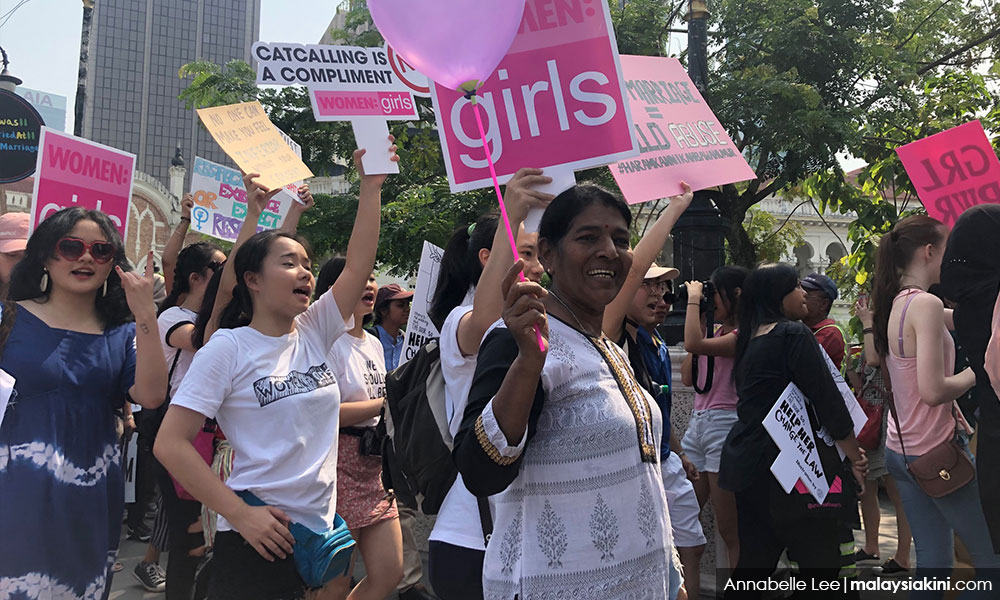
In March 2019, the police also investigated organizers/participants of the Women's March in Kuala Lumpur under the Sedition Act 1948. This year, some participants were investigated for offences under the draconian Peaceful Assembly Act 2012 and another law.
Malaysians expected the repeal of the draconian Sedition Act when Anwar Ibrahim’s Pakatan Harapan(PH) wins the election but this did not happen after about 11 months in power.
No need to Review, just totally Repeal
MADPET (Malaysians Against Death Penalty and Torture) reiterates the call for the TOTAL abolition of the Sedition Act 1948, and Cannot Agree with the Malaysian Cabinet’s position to keep it, and use it only to protect the King, Sultans and the Rulers of the States. “The Cabinet has agreed in principle for the Sedition Act 1948 (Act 15) to be reviewed to ensure this law is used only to protect the institution of Rulers from any provocation,” she [Minister in the Prime Minister’s Department (Law and Institutional Reform) Datuk Seri Azalina Othman Minister] said in a statement today. (Malay Mail, 25/7/2023).
On October 16, 2014, the Malaysian Bar held the “Walk for Peace and Freedom”, participated by about 1,500 lawyers to condemn the use of the Sedition Act 1948 and calling for its immediate repeal. In June 2020, SUHAKAM (Malaysian Human Rights Commission) called the Government to repeal Sedition Act 1948. without further delay. Many groups and persons have called for repeal.
Sedition Act criminalizes seditious tendency – intention irrelevant, truth is no defence, and freedom of expression sidelined
The Sedition Act makes it an offence of doing or saying things that ‘have a seditious tendency’ – that has a tendency ‘to bring into hatred or contempt or to excite disaffection against…’. Hence, it does not matter if what was said was even the truth or a justified opinion, for all that matters is whether it had a seditious tendency or not.
Whether the maker of the statement had the intention of doing this act that caused a seditious tendency is irrelevant. Section 3(3) of the Act states that ‘For the purpose of proving the commission of any offence against this Act the intention of the person charged at the time… shall be deemed to be irrelevant if in fact the act had, or would, if done, have had, or the words, publication or thing had a seditious tendency.
In P.P. v. Mark Koding [1983] 1 MLJ 111, the court held that even an innocent or noble intention will not provide a defence. “It is immaterial whether the accused's intention or motive was honourable or evil when making the speech”
Even if the Sedition Act is repealed, Malaysia has other laws that could be used including the Penal Code offence of criminal defamation that could be used against anyone that committed crimes against the royalty.
Equality – No One Is Above The Law – the King says
Our Federal Constitution in Article 8(1) states ‘All persons are equal before the law and entitled to the equal protection of the law. That means everyone is equal, including the King, Sultan and Rulers of State. Article 10(1)(a) states that every citizen has the right to freedom of speech and expression, and under the ‘restrictions as it deems necessary or expedient’ with regard this freedom, there is no mention about the royal institution or the rulers.
The King, Yang di-Pertuan Agong, Al-Sultan Abdullah Ri'ayatuddin Al Mustafa Billah Shah, recently reaffirmed the principle of equality of all persons, and that the law must not give special treatment or exception to anyone. He said that the law has only one language, one principle, one punishment and one application to anyone. (Sinar Harian, 5/9/2022). The King, in his wisdom, did not demand any special treatment for the royalty or the royal institution.
A Constitutional Parliamentary Democracy Not A Feudal State
Malaysia is a constitutional parliamentary democracy, not a feudal state.
The King and the Rulers no longer have absolute power generally. All is done by the King or Rulers, is on the advice of the Prime Minister or Chief Minister, whereby the King has no choice but to follow the advice of the party as provided in the Constitution, be it the Federal or State constitution. Even for the appointment of the Prime Minister, the King can only appoint the person who has the confidence of the majority of the Members of Parliament, not as he pleases.
As such, it is ignorant or wrong to personally blame the King or any Ruler, for the people he appoints including Judges, SUHAKAM Commissioners, Attorney General and members of the Cabinet.
Today. It must be acknowledged that the King did in the past appoint wrong people on the bad advice or indication of others, as we have the former Prime Minister Najib Razak and even the current Prime Minister who have been tried and found guilty of crimes by the courts.
Cabinet member Anwar was silent when Constitution amended removing ‘legal immunity’ of royalty
It must also be noted that the Constitution (Amendment) Act 1993 introduced Part XV Proceedings Against The Yang Di-Pertuan Agong And The Rulers, whereby Article 182(3) states that, ‘The Special Court shall have exclusive jurisdiction to try all offences committed in the Federation by the Yang di-Pertuan Agong or the Ruler of a State and all civil cases by or against the Yang di-Pertuan Agong or the Ruler of a State notwithstanding where the cause of action arose.’ Article 33A(1) states that ‘Where the Yang di-Pertuan Agong is charged with an offence under any law in the Special Court established under Part XV he shall cease to exercise the functions of the Yang di-Pertuan Agong.’
This Constitutional Amendment that made clear that there was no immunity for royalty and/or Rulers was made when Anwar Ibrahim was then a Cabinet Minister of the then Barisan Nasional government.
Royalty’s definition and involvement in wrongdoing
A problem in Malaysia is the definition of royalty, and the preferential treatment accorded by State, public officers and some to royalty primarily because of a prevalent ‘feudal mentality’. Would that affect tenders, contracts, logging permits and mining licences when royalty is involved in the business or application? Even, when it comes to enforcement of the law, there seem to be disinclination when royalty is involved, and this is seen by the number of cases filed in the Special Court.
Should not the people have the freedom to highlight wrongdoings of the royalty, or the companies/businesses they are involved in? If the King appoints a Prime Minister who does not(or no longer) enjoyed the confidence of the majority, will it be an offence under Sedition Act to highlight this failing of the King or Royal Institution? If the Royal Institution or the Rulers does or says something that is unacceptable or wrong, can not concerned Malaysians highlight this?
The royalty have been involved in companies involved in logging (including illegal logging), mining, and other matters, are there have been allegation of wrongdoing highlighted.
Some of media reports indicate possible crimes by royalty or even royal institution :- Tiger habitat threatened by Malaysian royals’ mining plans (Mongbay,7/7/2021); Malaysia’s Johor royals linked to forests felled for oil palm plantations without full approval (SCMP,24/7/2022); Shocking expose of politicians, royalty in multi-billion medicine monopoly (13/6/2018 FMT); and Company linked to royalty in Lynas' waste disposal site project (Malaysiakini,24/2/2021).
Malaysia is still reeling from the IMDB, SRC and other scandals where the Executive arm of government is implicated as perpetrators for crimes (like corruption, money laundering, abuse of power, etc); or for the failure of enforcement and administration of justice. Then Prime Minister Najib Razak, current/former Prime Ministers, then/now members of the Cabinet are or have been implicated in wrongdoings against the law.
Hence, to maintain Sedition Act for the protection of royalty, or even royal institutions cannot be justified. Are we to be forbidden by law to be a good citizen in a democracy to highlight wrongs or suspected wrongs, or to publicly disagree with a statement/action of the royalty or royal institution?
Therefore, MADPET reiterates the call on the Malaysian government to immediately repeal the draconian Sedition Act 1948, and no longer come up with excuses for delaying the repeal.
MADPET also call on the Malaysian government to immediately impose a MORATORIUM on the use of the Sedition Act, so that no one will ever be again investigated, arrested, detained for investigation or charged for any offences under the Sedition Act. Malaysia, in 2018 imposed a moratorium on execution and Malaysia did not hang anyone after that.
MADPET also reiterates the call for the immediate repeal of bad laws, and/or draconian provisions in law.
Charles Hector
For and on behalf of MADPET(Malaysians Against Death Penalty and Torture)
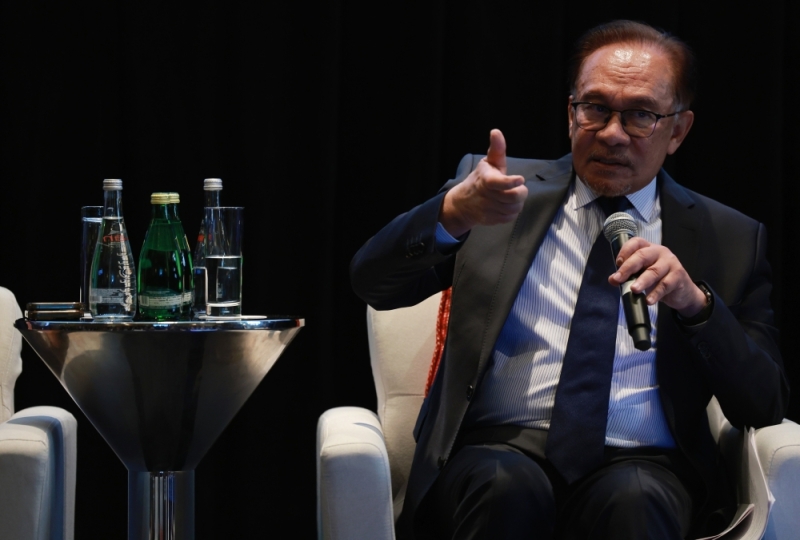
Prime Minister Datuk Seri Anwar Ibrahim says the unity government is not abusing the law to charge federal Opposition leaders but to protect Malaysia’s royal institution. ― Bernama pic
Follow us on Instagram, subscribe to our Telegram channel and browser alerts for the latest news you need to know.
By Shathana Kasinathan
Saturday, 23 Sep 2023 11:23 AM MYT
KUALA LUMPUR, Sept 23 — The unity government is not abusing the law to charge federal Opposition leaders but to protect Malaysia’s royal institution, Prime Minister Datuk Seri Anwar Ibrahim said in an interview with international news broadcaster CNN.
Currently in New York for the United Nations General Assembly, Anwar was responding to the perception his administration is using the colonial-era law that his Pakatan Harapan coalition had demanded to be reformed to quell critics now that he is in power.
“There's a law until we are able to amend that law, and the law persists,” he told CNN journalist Christiane Amanpour in an interview yesterday.
They were alluding to the use of the Sedition Act against PAS politician Datuk Seri Muhammad Sanusi Md Nor who was accused of making remarks that insulted the Selangor sultan in the appointment of Anwar’s party colleague Datuk Seri Amirudin Shari as the state menteri besar.
Sanusi, who is also Kedah menteri besar, was charged in July with two counts of sedition ahead of key elections in six states on August 12 that maintained the status quo.
Following criticism against the Anwar administration after the charging, the Selangor Royal Office released a statement categorising Sanusi's comments as an affront to the integrity of the state royal institution.
During the CNN interview, Amanpour noted that PKR’s Pasir Gudang lawmaker Hassan Abdul Karim had previously commented about Anwar’s focus after becoming prime minister.
She asked Anwar to comment on Hassan’s view that Malaysia’s 10th PM appeared to be occupied with preserving his government's power rather than advancing the promised reform agenda.
“Look at it positively, as a member of my party expressing criticisms against me, that is a very democratic process.
“You see, any criticism against the prime minister or the government, I don't charge for sedition. I have been abused on a daily basis, but none has been charged,” he replied. - Malay Mail, 23/9/2023
Azalina: Cabinet agrees to restrict Sedition Act to only royalty issues

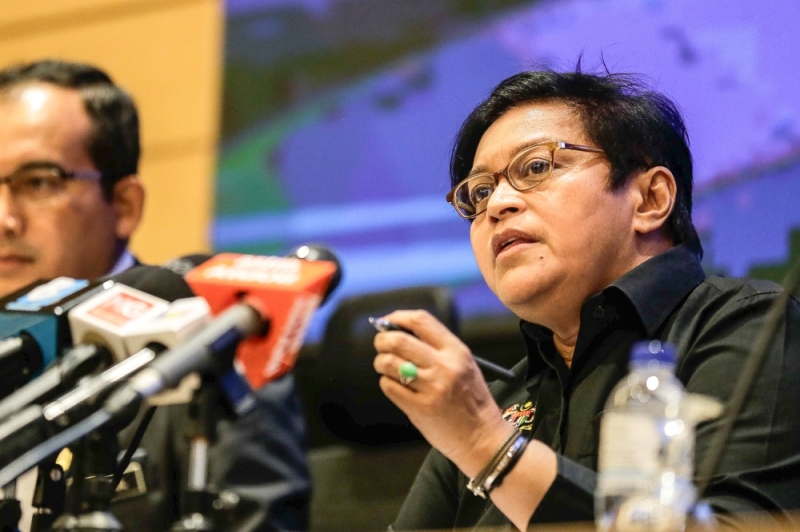
KUALA LUMPUR, July 25 — The Cabinet has agreed that changes should be made to limit the Sedition Act 1948’s use to only matters involving the royalty, minister Datuk Seri Azalina Othman Said said today.
Azalina, who is minister in charge of law and institutional reform, said she had presented today the outcome of a recent dialogue on the “3R” issues — religion, race and royalty — to the Cabinet.
“The Cabinet has agreed in principle for the Sedition Act 1948 (Act 15) to be reviewed to ensure this law is used only to protect the institution of Rulers from any provocation,” she said in a statement today.
“Other aspects regarding provocation involving religion and race will be scrutinised, including enacting new laws if necessary regarding national harmony and unity by taking into account the institution of the Rulers as the head of the religion of Islam, and international best practices and principles.
“The Prime Minister’s Department’s Legal Affairs Division (BHEUU) will take the appropriate steps to review the Sedition Act 1948 (Act 15) in detail and ensure that proposed amendments that will be proposed are truly intended to protect the institution of Rulers holistically,” she concluded.
The “3R” legal dialogue that Azalina was referring to was held on July 21 at the Asian International Arbitration Centre, and which was attended by over 50 representatives from the government — including the National Unity Ministry, the Home Ministry, the police, the Malaysian Communications and Multimedia Commission (MCMC) — and non-governmental organisations such as legal professional bodies, civil society organisations, academics and religious organisations.
Previously on July 21, Azalina had said the government intended to review the relevance of several laws — including the Sedition Act 1948 — that can be used to deal with “3R” issues to ensure that they keep up with current developments, as some of these laws were enacted seven decades ago.
Azalina had also noted that enforcement agencies are facing challenges in terms of investigation and prosecution, in light of the rapid spread of information through advanced technology, fake or hacked online accounts, anonymity and artificial intelligence.
Azalina said participants of the 3R legal dialogue and focus group discussion on July 21 were asked to discuss three main options, including whether Malaysia needs to abolish existing laws such as the Sedition Act and to replace it with new laws containing offences that are more specific and whether new laws that are criminal or quasi criminal/civil should be introduced.
The two other options that the participants were asked to discuss was whether Malaysia should amend existing laws to ensure that the issue of 3R provocations can be handled holistically, and whether Malaysia should maintain status quo where no changes to the country’s laws are required and where efforts to tackle 3R provocations could instead be continued through different approaches.
Azalina had at that time said the government would continue to involve stakeholders in considering a holistic policy and legal direction as a guide for the government in tackling 3R issues while also encouraging tolerance, harmony and unity. She had said the July 21 3R legal dialogue’s outcome would be presented to the Cabinet.
At that
time, Azalina said the unity government supported the right to freedom
of expression as guaranteed to Malaysians under the Federal Constitution
and in line with the Universal Declaration Of Human Rights, while also
taking into account that such freedom should be used responsibly. - Malay Mail, 25/7/2023
Home Minister: 255 investigated for sedition from 2020 to 2022, only four charged
By MARTIN CARVALHO, TARRENCE TAN and GERARD GIMINO Nation
Tuesday, 21 Mar 2023 9:10 AM MYT

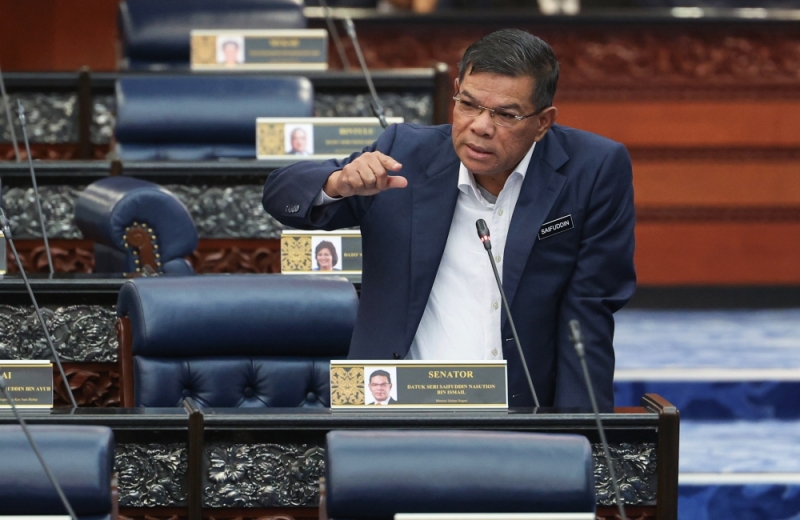
KUALA LUMPUR: A total of 255 suspects were investigated under the Sedition Act over a three-year period, says Datuk Seri Saifuddin Nasution Ismail.
The Home Minister said the investigations by the police were conducted between 2020 and 2022 with only four cases charged in court.
"In 2020, a total of 117 investigations papers were opened which led to the arrest of two men.
"However, no cases were prosecuted in court," he said in a written reply to a question raised by Datuk Ngeh Koon Ham (PH-Beruas) in the Dewan Rakyat on Tuesday (March 21).
Ngeh wanted to know the number of individuals investigated, detained and charged under the Sedition Act between 2020 and 2022.
He also wanted to know the gender, race and age of those investigated, detained and charged.
In 2021, Saifuddin said that a total of 84 investigations were conducted in with 36 arrests involving 29 male and seven female suspects, with their ages ranging from their 20s to their 60s.
He said that of those detained, 27 were Malays, five Chinese, three Indians and one of other race.
"Only two cases, involving two Malay male suspects in their 30s, were charged," he added.
Saifuddin said that a total of 54 investigations were carried out resulting in 24 arrests in 2022.
He said all suspects were males between 20 to 70 years old, of which 12 were Malays, five Chinese, two Indians and five of other races.
He added that only two Malay male suspects, in their 20s and 30s, were charged in court.- Star, 21/3/2023
Laksana prinsip keadilan tanpa pilih kasih: Agong
oleh NIK AMIRULMUMIN NIK MIN 05 September 2022 01:20pm
Al-Sultan Abdullah menyempurnakan Perasmian Kompleks Mahkamah Syariah Negeri Pahang yang dimasyhur dengan nama Kompleks Syariah Al-Sultan Abdullah di sini pada Isnin.
KUANTAN - Tiada sebarang keistimewaan atau pengecuali kepada pihak yang melakukan kesalahan dalam melaksanakan keadilan.
Yang di-Pertuan Agong, Al-Sultan Abdullah Ri'ayatuddin Al Mustafa Billah Shah bertitah, ketegasan prinsip keadilan Islam juga tidak membenarkan sebarang ketidakadilan kepada sesiapa pun termasuk pihak yang tidak disenangi.
Titah Seri Paduka Baginda, undang-undang hanya memiliki satu bahasa; satu prinsip; satu hukuman dan satu aplikasi kepada sesiapa pun.
"Keadilan yang diamalkan tanpa memilih kasih berjaya mengangkat martabat Islam pada zaman Rasulullah.
"Prinsip keadilan yang telus dan terbuka turut berjaya membangunkan masyarakat yang adil, saksama, makmur dan sejahtera,"titahnya.
Seri Paduka Baginda bertitah demikian dalam titah diraja sempena Majlis Perasmian Kompleks Mahkamah Syariah Kuantan yang dimasyhur dengan nama Kompleks Syariah Al-Sultan Abdullah di sini pada Isnin.
Turut berangkat, Raja Permaisuri Agong,Tunku Azizah Aminah Maimunah Iskandariah dan Pemangku Raja Pahang,Tengku Mahkota Tengku Hassanal Ibrahim Alam Shah Al-Sultan Abdullah Ri'ayatuddin Al Mustafa Billah Shah.
Hadir sama, Menteri Besar Pahang, Datuk Seri Wan Rosdy Wan Ismail dan Menteri di Jabatan Perdana Menteri (Hal Ehwal Agama), Datuk Idris Ahmad. - Sinar Harian, 5/9/2022
MALAYSIA'S MONARCHS OF MAYHEM
SINGAPORE -- Britain's royal family may be having a rough time these days, but at least none of its members has been accused of clubbing a golf caddy to death, fatally shooting a man from a helicopter or beating up a field-hockey coach.
These and other alleged offenses by the sultan of Johor, one of Malaysia's nine hereditary rulers, are being discussed publicly for the first time in the former British colony amid an unprecedented spate of royal-bashing that has accompanied the easing of a taboo against criticizing the sultans.
Fed up with a history of abusive, sometimes violent, behavior by some of the constitutional rulers, the Malaysian Parliament is considering a government proposal to strip the nine sultans of their immunity from prosecution.
With members of Parliament now airing charges of royal misbehavior openly, the normally docile Malaysian press has been having a field day recounting lurid tales that would have been punishable under the country's Sedition Act only a few weeks ago. The act, which prohibits any questioning of Malaysia's form of government, remains in force, but now is being largely ignored with regard to the sultans.
Under the Southeast Asian country's unique rotating monarchy, the sultans, who serve as titular rulers of nine of Malaysia's 13 states, hold elections among themselves every five years to choose one of their number as king. The controversial sultan of Johor, Mahmood Iskandar ibni Al-Marhum Sultan Ismail, 60, was king of Malaysia from 1984 to 1989 and now again rules his state of Johor on the southern tip of peninsular Malaysia across from Singapore.
Trouble for the royals began brewing in July when one of the sultan's younger sons, Tunku Abdul Majid Idris, 22, allegedly beat up the opposing goalkeeper after a field-hockey match that his team lost. The Malaysian Hockey Federation suspended the prince from playing in tournaments for five years.
In response, the sultan orchestrated the abrupt pullout of a Johor school hockey team from a national tournament in November, a move sharply criticized by the team's coach, Douglas Gomez. The hot-tempered sultan summoned Gomez to his palace Nov. 30 and thrashed him in the presence of royal bodyguards, Gomez reportedly told police. Police are investigating the incident.
Earlier this month the Malaysian Parliament publicly accused the sultan of beating the coach and unanimously passed a censure motion, the first time such an action had been taken against one of the hereditary rulers. Then on Dec. 15 Idris, who is not covered by the royal immunity, was charged in court with assaulting the goalkeeper. He faces up to a year in jail and a fine if convicted.
"If such incidents are repeated, it will affect the public's opinion of royalty like is happening in the United Kingdom," Prime Minister Mahathir Mohamad told reporters.
After the censure motion, Mahathir, who has clashed with the sultans previously during his 11-year tenure, called for constitutional changes to remove the rulers' immunity from legal proceedings. A debate on the matter is scheduled for January. A potential obstacle is that under the constitution, any changes to the sultans' privileges must be approved by their "Council of Rulers," essentially giving the sultans a veto power.
Deputy Prime Minister Abdul Ghafar Baba warned that while no one is yet calling for abolition of the monarchy, its fate lies in the sultans' hands. "A fair king is respected," he said, "a cruel king dethroned."
He said that although the constitution gives the sultans certain rights, "it does not allow them to assault, kill or hurt any citizen."
Another member of Parliament, Shahidan Kassim, charged during the session that the sultan and his eldest son, Tengku Mahkota, were implicated in 23 criminal incidents since 1972 ranging from rape to assault and homicide.
Among the examples aired in Parliament was Mahmood Iskandar's conviction for manslaughter in 1977 on charges of shooting a man in a boat from a helicopter, ostensibly to prevent a smuggling attempt. He was sentenced to six months in prison, but his father, who was then Johor's sultan, pardoned him. He succeeded his father as sultan in 1981.
In another case, members of Parliament asserted, Mahmood Iskandar, while serving as king in 1987, bludgeoned a caddy to death with a golf club, reportedly for sniggering over a bad shot. The incident had long been rumored, but never previously publicized, and no action against the king was ever taken.
Neither Mahmood Iskandar nor his sons have commented on any of the allegations, which were published in the Malaysian press as a result of having been raised in Parliament.
Another ruler, Sultan Ismail Petra of Kelantan, stirred controversy earlier this year when he refused to pay the required duty on a Lamborghini Diablo sports car that he had imported. Invoking his royal untouchability, he walked into a customs area and drove off in the car.
In a separate case, government officials said this month that the royal family of Pahang was linked to contractors involved in illegal logging in that state.
While the sultans have long been revered among ethnic Malays in the racially diverse country, they have increasingly aggravated the growing Malaysian middle class in recent years with their inside-track involvement in all kinds of businesses, in addition to the payments they draw from federal and state budgets, political analysts said.
Nearly $50 million a
year is paid to the royal families in federal stipends, Malaysian
officials estimate, and millions more go for royal residences, vehicles
and natural-resource concessions. - Washington Post, 29/12/1992
Tiger habitat threatened by Malaysian royals’ mining plans
- The area, which was until June 2019 listed as a permanent forest reserve, is part of a wildlife corridor connecting key forest complexes in Peninsular Malaysia’s Central Forest Spine.
- The planned iron mine, which came to light after the project’s environmental impact assessment was made public, is one of a spate of extractive projects recently found to be linked to Malaysian royalty.
An environmental report has revealed the Malaysian royal family is requesting permission from the Department of Environment for a new iron ore mine in the middle of one of the few remaining habitats of 15 threatened animals, including the critically endangered Malayan tiger.
The proposed project involves the deforestation and excavation of 60.75 hectares (150 acres) in the Som Forest Reserve, part of the Central Forest Spine linking four of Peninsular Malaysia’s key forest complexes. Alongside the Malayan tiger (Panthera tigris jacksoni), of which fewer than 200 remain in the wild, the Som Forest is home to the Malayan tapir (Acrocodia indica), Asian elephant (Elephas maximus), sun bear (Helarctos malayanus) and two different species of leopard.
According to the environmental impact assessment (EIA) for the proposed iron mine, the project poses a direct risk to these species, all of which are fully protected under Malaysia’s 2010 Wildlife Conservation Act. The Department of Environment did not respond to a request for comment regarding the enforcement of this law.

The planned mine would destroy an area the size of 113 football fields that comprises these protected species’ habitat. Beyond the “irreversible” loss of habitat, the EIA report highlights that these animals will be at increased risk of human-animal conflict due to them being pushed toward nearby plantations and residential areas. The report also warns of the potential for disrupting a key wildlife corridor, and the “rampant” poaching of animals in and around the project area.
In addition, the proposed site is just 500 meters (546 yards) from a salt lick that is regularly visited by a big herd of elephants along with tapirs and sun bears. Salt licks are a key resource for animals to increase their mineral intake, and also protected from any man-made disturbance under the 2010 Wildlife Conservation Act. The report states the mine will not only permanently alter the animals’ routes to the salt lick, but also risk the “total loss of functionality” of this critical resource.
Despite stating that nothing can be done to stop both the loss of habitat and negative impacts on flora and fauna — including a total of 188 fully protected species found in the proposed site — the report concludes that, with mitigation measures, the project can be implemented with acceptable environmental risks and impact.
The consultancy firm that produced the EIA report, Garuda Samudera, did not respond to a request for comment.

News of the Som Forest proposal was first reported by independent news site Malaysiakini on June 21, just weeks after the state government approved mining operations beside Lake Tasik Chini, a UNESCO Biosphere Reserve, despite the lake and its surrounding area being gazetted as a state park and permanent forest reserve. The royal heads of state had recently made a public pledge to rehabilitate the lake which has suffered under decades of nearby excavation operations. However, journalists discovered the company leading the project, Golden Prosperous Resources Sdn. Bhd., was appointed by Hanishah Ventures Sdn. Bhd., a private company owned by two members of the royal family of Pahang state, one of whom is the aunt of Malaysia’s current king.
However, it is the king’s sister, Tengku Nong Fatimah Sultan Ahmad Shah, who is running the Som Forest project. She owns the site’s mining lease and 70% of Sutera Manja Sdn. Bhd., through which she also chose to appoint Golden Prosperous Resources to mine for iron ore. The remaining 30% of Sutera Manja is owned by three other members of the Pahang royal family. Fatimah is also the point of contact for the Hanishah Ventures mining project at Lake Tasik Chini, although company documents for Hanishah Ventures do not list her as a shareholder.
The Som Forest project site was designated as a permanent forest reserve until June 2019, when it was degazetted to state land by the state government, downgrading its legal protection. Although animals, forests and Indigenous groups are protected under numerous laws in Malaysia, glaring loopholes exist; in this case, all it takes to degazette a piece of protected land is publicizing its change of status in the government gazette.
 Notice
in the government gazette on June 18, 2019, announcing that a
60.75-hectare (150-acre) plot will be excised from the Som Forest
Reserve.
Notice
in the government gazette on June 18, 2019, announcing that a
60.75-hectare (150-acre) plot will be excised from the Som Forest
Reserve.
While such decisions remain in the hands of the state government, the Pahang royals have long enjoyed links with politicians. The former king, Fatimah’s father, accepted handouts of $2 million from former prime minister Najib Razak during the notorious 1MDB corruption scandal. Indeed, despite a family wealth that allows them to build billion-dollar palaces, the Pahang royals continually seek opportunities to expand upon it: of the 11 mining leases currently granted in the state, three belong to individual members of the royal family.
Journalist Clare Rewcastle Brown, who exposed the 1MDB scandal, told Mongabay: “The royal families of Malaysia operate openly in business and use their social and political influence to leverage major shareholdings in contracts generated especially within their home states and usually involving resource extraction. They effectively control the non-transparent decision making in their states to their own enormous financial advantage.”
While the value of any excavated iron ore will line private pockets, it is Malaysia’s most vulnerable who will pay the price. This mine doesn’t just pose a risk to wildlife: it will affect the entire ecosystem, including poor rural villagers.
The EIA notes that silt and sedimentation in the nearby Kerak and Pahang rivers could increase during site clearing and mining, posing a risk to villages downstream that depend on aquaculture. Residents are also at risk of losing their homes and lives due to the possible increase in the frequency of flash floods, which often accompany deforestation.
A leopard (Panthera pardus). Image by Mohd Fazlin Mohd Effendy Ooi via Flickr (CC BY 2.0). - Mongbay
The mining project is due to last two years, but the damage will persist long after. The EIA recommends necessary land rehabilitation to combat continued environmental disturbance after the project has wrapped up. While some of the rehabilitation can be carried out alongside the mining itself, the EIA clearly states that revegetation of the land will likely require continued waste treatment and regular fertilizer inputs due to the high toxicity of mine waste. However, in the proposed project timeline, there is no indication of a plan to continue this rehabilitation after the mine shuts.
Golden Prosperous Resources did not respond to questions from Mongabay.
The project is awaiting approval from the Department of Environment and, thanks to its royal backers, can expect little in the way of public resistance; portraying the royals in a negative light is enough to land a citizen in jail in Malaysia. These gag laws make it very difficult for politicians, activists and citizens to protest projects bearing the royal stamp of approval. In early June, for example, Malaysia’s Muda youth movement slammed officials for allowing the continued exploitation of Tasik Chini — but did not berate the royal family for its role in the exploitation.
“The richer they have become the more influential it has made them so that people are now fearful to speak in terms that are not groveling let alone critical because of what might happen to them,” Rewcastle Brown said. “In particular there is a willingness on the part of the police and judiciary to abuse old-fashioned sedition laws to arrest and prosecute people just for speaking critically about such practices.”

Projects like these are extremely common in Malaysia. Despite the Som Forest being a gazetted as a forest reserve, the EIA report reveals there are many other mines, plantations and logging projects neighboring the site, which is secondary forest itself, having been logged just decades ago. Indeed, just 23 days after submitting this proposal, Golden Prosperous Resources submitted another to log 124.38 hectares (307.35 acres) of the Bukit Ibam Forest Reserve. Details of this EIA are not yet available to the public.
Banner image of a Malayan tiger (Panthera tigris jacksoni) by Brice De Reviers via Flickr (CC BY-NC-ND 2.0). Source: Mongbay, 7/7/2021
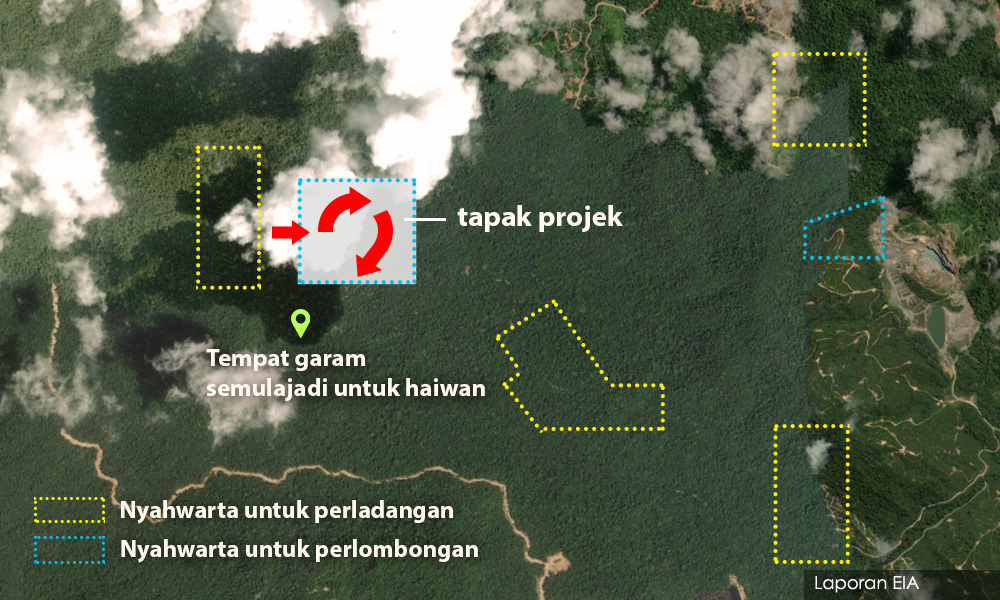
Another royalty-linked mining project
A company with links to the Pahang royal family is planning
to excavate iron from a degazetted forest reserve at Kuala Tembeling in
Jerantut - which is home to several protected species, including the
critically endangered Malayan Tiger.
The company is linked to Sultan Abdullah Sultan Ahmad Shah's younger sister, Tengku Nong Fatimah.
Previously, Malaysiakini reported that the monarch's aunt, Tengku Hanizar Tengku Muhammad, co-owned a company that plans to mine minerals near Tasik Chini, in Pekan.
Both projects had appointed Golden Prosperous Resources Sdn Bhd as the contractor.
The
project in Kuala Tembeling sits in the middle of the Som Forest
Reserve. Curiously, its mining lease will end next month but site
clearing is only scheduled to begin in August this year.
Malaysia’s Johor royals linked to forests felled for oil palm plantations without full approval
- Satellite images show hundreds of hectares of trees cleared from a site by a company Johor’s royal family part owns, without the proper approvals
- Locals say nearby plantations turned rivers itchy, sour and at times coffee-black – and drove elephants out of the forests into surrounding villages - SCMP, 24/7/2022
Shocking expose of politicians, royalty in multi-billion medicine monopoly
A 12-page document is submitted to the health minister, claiming corruption in the supply of drugs to the government.
PETALING JAYA: Shocking and detailed revelations have emerged on how companies linked to politicians close to the previous government control the supply of billions of ringgit worth of medical drugs to the government, giving them a monopoly that could have increased the cost of drugs supplied to government hospitals and clinics nationwide.
The 12-page dossier sighted by FMT, which was submitted to Health Minister Dzulkefly Ahmad today, confirmed his statement last week that pharmaceutical giant Pharmaniaga did not have a monopoly on the supply of drugs to his ministry as widely speculated.
Instead, the document listed 20 companies with links to prominent politicians, including former ministers who represent the top echelons of the Umno leadership.
The companies acted as “tendering agents” over a four-year period between 2013 and 2016, reaping contracts worth a total of RM3.7 billion.
The tendering agents, according to the document, acted for more than 70 pharmaceutical companies, all of whom used only the “same few official-owned tendering agents”.
“The reason is clear, and it is none other than corruption,” said the dossier.
A quick check by FMT revealed that the lion’s share of RM1.4 billion, or some 38%, went to a company owned by the uncle of a former minister and senior Wanita Umno politician.
Other personalities with ties to the companies include members of the royal family, a former high ranking Felda officer, a former ambassador to the US, a former official of the health ministry and a former minister who lost in the recent election.
It is understood that the supply of medicine to the government by international pharmaceutical companies is done through local subsidiaries through a tender process.
Explaining the process, the whistleblower said “tendering agents” are appointed by international pharmaceutical companies.
“International pharmaceutical companies collude with official-owned tendering agents to bid rig. By refusing to supply or deal to other resellers and tendering agents, international pharmaceutical companies grant official-owned tendering agents a monopoly, thus securing an automatic win in a tender,” said the whistleblower, whose identity is being withheld.
“Foreign companies cannot participate in a Malaysian government tender directly, but instead must go through a Malaysian distributor, reseller or tendering agent.
“When the health ministry puts out a procurement tender, international pharmaceutical companies will engage Bumiputera tendering agents to bid for the tender according to the tender specifications,” the dossier said.
The whistleblower explained that tendering agents are paid a percentage of commission based on every tender won, and earn clean profit since they do not handle marketing, logistics or distribution activities.
“From at least 2011 to the present, international pharmaceutical companies have been paying bribes to high ranking officials/politicians to assist in obtaining or retaining business in Malaysia in violation of the US Foreign Corrupt Practices Act (FCPA).
“These corrupt payments are concealed as commission payments to official-owned tendering agents,” it added.
When contacted by FMT, Dzulkefly said his office was going through the document. - FMT,
Bukit Ketam, located around 35km from Kuantan town, was an unassuming place until recently when Lynas Malaysia announced it will be building its permanent disposal facility (PDF) there to store toxic waste from its factory near Kuantan port.
While much attention was on the rare earth firm, what is taking shape at Bukit Ketam is much bigger than Lynas, and a firm linked to Pahang royalty has been tasked to set the plan in motion.
A total of 202.35 hectares, the size of 283 football fields, has been carved out of the Bukit Kuantan permanent forest reserve, to be converted into a Multi-Category Industrial Scheduled Waste Disposal Site (MCISWDS).
Lynas' PDF will only occupy 58.25 hectares or 29 percent of the overall site.
Gading Senggara Sdn Bhd (GSSB), a private firm linked to Pahang royalty, will be the contractor of the MCISWDS. Likewise, Lynas appointed the same company to build its PDF there.
GSSB, founded in July 2012 as Puncak Trillium Sdn Bhd, changed to its current name in December 2014.
A Malaysiakini check on the firm with the Companies Commission of Malaysia (CCM) revealed that the majority shareholder, with a 50 percent stake, is Pahang Regent Tengku Hassanal Ibrahim Alam Shah.
The second-largest shareholder is Gading Group chief executive officer Johari Harun, who is also the Bentong Umno vice-chief. He controls a 40 percent stake.
The remaining 10 percent is held by one Mohd Firdaus Redzuan. The company information is based on records it submitted to the CCM as of Oct 5, 2020.
The company's directors are Johari, Firdaus, and one Ahmad Radzi Zaini.
Environmental struggles
The mega-contract is another project that the people of Kuantan have to deal with as the town struggles to balance the environment and industry over the last decade.
The path from town to the future MCISWDS site is flanked by oil palm plantations with road tainted with red dirt, a reminder of the rampant bauxite mining in 2015 that left parts of Kuantan covered in red dust.
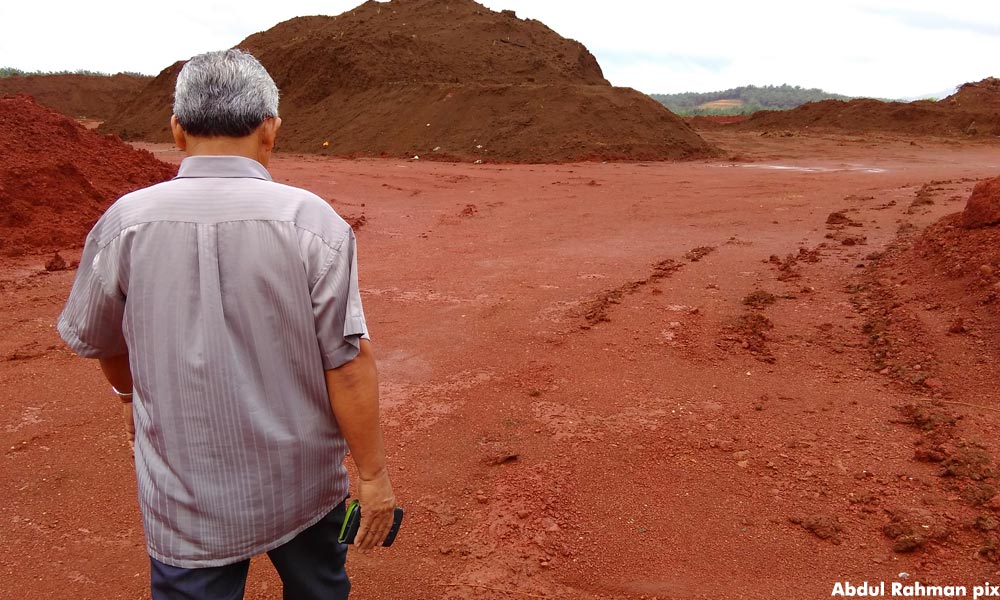
The mining frenzy, which saw oil palm smallholders giving up their land for mining in exchange for stacks of cash, eventually forced the federal government to intervene by imposing a moratorium on exports from the Kuantan port.
The MCISWDS itself was a byproduct of environmentalists protesting against Lynas' Advanced Material Plant in Gebeng, Kuantan since 2010.
Its processing of rare earth material at the facility produces toxic waste, including radioactive Water Leach Purification (WLP) residue.
While the waste has low radioactivity, its build-up over the years raised concerns.
The previous Pakatan Harapan government, which as the opposition had supported protests against the facility, unsuccessfully tried to get the waste sent back to Mt Weld in Western Australia, where the original rare earth was mined from.
However, Lynas Malaysia agreed, as part of its new licensing condition, to move its cracking and leaching operations, which produces the radioactive waste, back to Western Australia.
The waste already produced here since 2012 remains a problem and this is where the PDF comes in.
But the MCISWDS project is significantly larger than Lynas' PDF and it is not yet clear what other forms of waste will be stored at the facility.
A waste dumpsite until 2119
The MCISWDS in Pahang will hug the state's border with Terengganu. Adjacent to the site, on the Terengganu site of the border, is a vast durian plantation.
Information on the MCISWDS is still limited but some details can be gleaned from the Environmental Impact Assessment (EIA) report on Lynas' PDF, located within the site.
According to the EIA, the Pahang government, Kuantan Municipal Council, Land Office, Pahang Forestry Department, Pahang Public Works Department, Terengganu government, Syarikat Air Terengganu, and Kemaman Municipal Council have no objections to the Lynas PDF.
Supporting documents also revealed that the Pahang government already excised the MCISWDS area from the Bukit Kuantan Forest Reserve, which was gazetted as a permanent forest reserve since 1962.
The forest in the project site will be felled before construction begins.
Under Section 13 of the National Forestry Act 1984, the "state authority" can excise a permanent forest reserve by publishing a gazette specifying the extent of such land and a fixed date.
The interpretations of Acts 1948 and 1967 defines "state authority" as the ruler of a state.
The accompanying land grant in the EIA showed the site is now listed for industrial use for a period of 99 years - from Aug 14, 2020 until Aug 13, 2119.
While the waste, at least for Lynas, will be stored there permanently, the EIA said the site could still be converted into a public recreational park in the future.
According to the Lynas PDF project implementation timeline, the land clearing was scheduled to start in the middle of this month.
GSSB had applied to the Pahang Forestry Department for the land clearing in October 2020.
The Pahang Forestry Department has informed the Department of Environment last November that it did not have any objections, as long as GSSB left the forest surrounding the project site untouched.
Malaysiakini has contacted GSSB for a response and requested further information about the MCISWDS project. - Malaysiakini, 17/2/2021
In a statement today, the organisers said they are also being probed under Section 9(5) of the Peaceful Assembly Act 2012.
If convicted under Section 4(1) of the Sedition Act, a person can be slapped with a three-year jail term, or RM5,000 fine, or both.
"(We) will comply with the process despite these laws being unfairly and disproportionately being used against us," said the organisers.
The International Women's Day March last Saturday had, among others, called for an end to child marriage and gender-based violence.
However, this message was overshadowed by the focus on the presence of some participants from the LGBT community. - Malaysiakini,