Wednesday, April 01, 2020

Make COVID-19 an Occupational Disease under Law to ensure social protection for all workers and their families(47 Groups)


Media Statement – 2/4/2020

Make COVID-19 an Occupational Disease under Law to ensure social protection for all workers and their families

We, the 47 undersigned groups, organizations and trade unions, in response to the advent of Covid-19, an infectious disease that can easily be transmitted to other human persons, including workers, urge that the Malaysian government immediately recognize and make Covid-19 an occupational disease. 

By so doing, workers who are infected by Covid-19 at their workplace, even during this period, will become entitled to social protection accorded by social security schemes and laws.

For those who die, by reason of getting infected by Covid-19 at the workplace, will also be easily entitled to compensations, and their spouses/children/elderly parents will also become entitled to survivor benefits including pensions.

Employers have a duty in law to ensure a safe working environment, and will also now be required to ensure that the workplace is safe from Covid-19 and/or any other dangerous communicable diseases, especially those can result in death or other permanent disabilities.

With the movement control order in place, which still requires workplaces that provide for essential services to operate, workers traveling to and from work, and at these workplace are everyday at risk of being infected by the Covid-19 virus, which to date has also resulted in many deaths worldwide, and as such workers need protection, and this can be done by specifically classifying Covid-19 as an occupational disease.

Now, recently even workers in charge of Human Resources, are required to travel and return to their workplaces for the purposes of arranging the monthly payment of salaries to workers.

Workers who are also needed (or forced) to stay in particular accommodation by employers, should also be covered. This also ought to be considered an ‘occupational disease’, and be accorded all the needed social protection.

While the Covid-19 pandemic highlights the inadequacies in occupational safety and health laws, and also social security laws for workers, it is time to remedy these failings.

One must note, that in the past, there has also been allegations of some workers forced to house together or work together has ended up contracting life threatening ailments like tuberculosis from other workers they are made to stay and/or work with.

All such ailments, not just Covid-19, which can cause death or other disabilities that may impact these workers future employment and income, ought to be specifically classified as occupational diseases, and workers should be accorded all benefits under social protection laws.

These laws should apply to all workers, including migrant workers and domestic workers.

In Malaysia, local workers are generally covered by the Employees' Social Security Act 1969, which provides better protection to workers and/or their families compared to the Workmen’s Compensation Act 1952 that generally covered migrant workers. There must be equal protection for all workers, even domestic workers.

For now, The Human Resource Minister, can use the powers conferred by subsection 32(2) of the Occupational Safety and Health Act 1994 [Act 514], and declares that Covid-19 be recognized as an occupational diseases. Other changes and/or amendments to law to ensure equal protection to all workers may require Parliament.

Therefore, we 

-          Call on Malaysia to  immediately make Covid-19 an occupational disease, especially if it is contracted at the workplace, on journey to and from work, and in worker accommodations provided by the employer;

-          Call on Malaysia to amend all relevant worker social security law, to ensure appropriate just remedy to workers, their families and/or dependents especially in the event of death, or disability impacting future capacity to work and/or earn an income;

-          Call on Malaysia to ensure that employers are legally bound to provide a safe working environment, including safety from infection from human to human contact at the workplace for diseases like Covid-19,

-          Call on Malaysia and all employers to ensure that occupational safety and health of all workers are always prioritized and protected.    

Charles Hector
Apolinar Tolentino 

For and on behalf of the following 47 groups

WH4C(Workers Hub For Change)
Malaysian Trade Union Congress (MTUC)
Clean Clothes Campaign Network (CCC)
Building and Wood Workers International (BWI) Asia Pacific Region
Labour Behind the Label, United Kingdom
Odhikar, Bangladesh
National Union of Transport Equipment & Allied Industries Workers (NUTEAW), Malaysia
Persatuan Kesedaran Komuniti Selangor (EMPOWER)
Timber Industry Employee Union Sarawak (TIEUS)
MADPET (Malaysians Against Death Penalty and Torture)
North South Initiative(NSI)
Kesatuan Sekerja Industri Elektronik Wilayah Selatan, Semenanjung Malaysia (KSIEWSSM)
Sarawak Banking Employees Union
MTUC Sarawak (Malaysian Trade Union Congress – Sarawak)
Malayan Technical Services Union           
Timber Employees Union of Peninsula Malaysia
Malay Forest Officers Union      
PKNS Union       
Sabah Timber Industry Employees Union
National Union of Flight Attendants Malaysia (NUFAM)
Legal Action for Women, United Kingdom
Global Womens Strike, United Kingdom
Malaysian Automotive Industry Workers Union Federation
Saya Anak Bangsa Malaysia (SABM)
National Union of Banking Employees(NUBE)
Persatuan Sahabat Wanita Selangor                       
Single Mothers’ Self-Defence, United Kingdom
Association of Human Rights and Defenders and Promoters- HRDP(Myanmar)
Banglar Manabadhikar Suraksha Mancha (MASUM), India
MARUAH, Singapore
IMA Research Foundation, Bangladesh
Legal Awareness Watch (LAW), Pakistan
Asociación de Trabajadoras del Hogar a Domicilio y de Maquila–Atrahdom, Guatemala
Programme Against Custodial Torture & Impunity (PACTI), India
Marvi Rural Development Organization (MRDO), Pakistan
Onward Consulting, Malaysia    
Women of Colour Global Women Strike, United Kingdom
Payday, United Kingdom
Women Against Rape (UK)
Bangladesh Group Netherlands
International  Black Women for Wages for Housework
International Jewish Anti-Zionist Network, UK
Asosasyon ng mga Makabayang Manggagawang Pilipino Overseas in Malaysia (AMMPO-SENTRO)
European Rohingya Council
WinVisible (women with visible & invisible disabilities)
Campaign Abiti Puliti (Italian CCC)
Collectif Etique sur l’etiquette, France

Sunday, March 22, 2020

Special Task Force Maybe, But Not The National Security Council, Under The Draconian NSC Act, To Assist Health Ministry Deal With Covid-19 Situation(MADPET)


Media Statement – 23/3/2020

SPECIAL TASK FORCE MAYBE, BUT NOT THE NATIONAL SECURITY COUNCIL, UNDER THE DRACONIAN NSC ACT, TO ASSIST HEALTH MINISTRY DEAL WITH COVID-19 SITUATION


MADPET (Malaysians against Death Penalty and Torture) is perturbed that the Malaysian government may have quietly and wrongly resorted to using the draconian National Security Council Act 2016(NSC Act) in this combat to curb and defeat the Covid-19 threat.


In the past few days, the National Security Council (or Majlis Keselamatan Negara (MKN)) under the NSC Act, seem to now be making decisions and issuing orders related to the Covid-19 related issues. The Ministry of Health’s authority may be ousted by the National Security Council.


The now Prime Minister Muhyiddin Yassin, and the several Members of Parliament (formerly from PH) may have forgotten their promises before the last General Elections to abolish, not repeal, this National Security Council Act 2016(NSC Act).


Phone alerts and messages, previously seem to have come from the Ministry of Health (MOH) seem to be now coming from the National Security Council (MKN).


The NSC may be wrongly taking over power and control from the Ministry of Health, who is really the  responsible Ministry under the Prevention And Control Of Infectious Diseases Act 1988(PACID Act).


Change Minister if Unhappy, but do not take over power of Ministry of Health


There is no problem for the Prime Minister, the Malaysian Cabinet or even the Parliament setting up any special task force or Cabinet Committee, to assists and do the needful to assist the Ministry of Health but certainly not the National Security Council, formed under the National Security Council Act 2016(NSC Act).


Ministry of Health is NOT even in the National Security Council


Such a National Security Council which is very specific about its composition, and does not even include the Ministry of Health.


The members of the National Security Council, according to the Act is only the Prime Minister as Chairman, the Deputy Prime Minister as Deputy Chairman, the Minister charged with the responsibility for defence, the Minister charged with the responsibility for home affairs, the Minister charged with the responsibility for communication and multimedia, the Chief Secretary to the Government, the Chief of Defence Forces and the Inspector General of Police. The Minister of Health is not in the National Security Council, and neither is the Director General of Health.


Further, this NSC Act should not even come into play as this is not a ‘national security’ situation as envisaged or covered by that NSC Act.


Malaysia already have a law for this specific situation or concern, and there is no need to resort to any other Acts including the National Security Council Act(NSC Act).


Prevention And Control Of Infectious Diseases Act 1988(PACID Act) – the applicable law


At present, Malaysia is responding to the Covid-19 threat by resorting to that specific Act, that is meant to deal with this kind of situation, being the Prevention And Control Of Infectious Diseases Act 1988(PACID Act).


Pursuant to this Act, 2 Orders were issued being Prevention And Control Of Infectious Diseases (Declaration Of Infected Local Areas) Order 2020(PU(A) 87/2020) and Prevention And Control Of Infectious Diseases (Measures Within The Infected Local Areas) Regulations 2020(PU(A) 91/2020.


The Ministry responsible under the Prevention And Control Of Infectious Diseases Act 1988 is reasonably the Ministry of Health, and as such the Minister of Health. If the Prime Minister choses, the Prime Minister can have a cabinet reshuffling, remove the current Minister and appoint a new Minister, or alternatively put himself in charge of the Health Ministry.


Whilst the first Order(PU(A) 87/2020) declares the whole of Malaysia as being the ‘infected local area, the second Regulations(PU(A) 91/2020) lays out in detail what are the restrictions in place, which also includes what businesses/agencies and premises are allowed to operate during this period, being only those that are providing essential services, whereby the Schedule provides a detailed list.


For  ‘(2) Any premises not providing essential services may be opened provided that the owner or occupier of the premises obtains the prior written permission of the Director General and the Director General may impose any conditions as he thinks fit.’ The schedule listing ‘essential services’ in item 22 states ‘22. Any services or works determined by the Minister as essential or critical to public health or safety’


As is most clear, any exemptions will need the ‘prior written permission of the Director General’, and the Act is clear that this refers to the Director General of Health.


It is sad that the law is broken now, when other Ministers or government bodies, possibly without even the ‘written permission of the Director General’ are seen to be exempting and allowing some premises that do not clearly fall within the detailed list of ‘essential services’ to continue operate.


Law Breaking by Other Ministers, Ministries and Government Agencies?


One example of this is when the Plantation Industries and Commodities Minister Datuk Dr Mohd Khairuddin Aman Razali was reported saying that workers in the plantation and commodities sector have been exempted from the Movement Control Order and are allowed to resume their work activities (Bernama, 19/3/2020). There is a question of whether the Minister even obtained the required ‘prior written permission of the Director General’, which should also include conditions.


Likewise, some companies may also be seeking exemptions from other Ministries and even Ministry of International Trade and Industry (MITI), which is wrong, as any permission or exemptions must only be sought from the Director General of Health.


Additional Restrictions Permissible But Not Anything in Violation of PACID Order/Regulations


Whilst the government, being the Federal government, State government and the Local Government, may rely on other laws to impose additional restrictions, they should never do anything that countermands, undermine or violate the orders/regulations made by the Prevention And Control Of Infectious Diseases Act 1988.


Use of Armed Forces Wrong and Violation of Law


MADPET opposes the use of the Malaysian Armed Forces, and state that if there is insufficient police and/or enforcement officers to deal with the situation, there are so many other options available like the using of recently retired enforcement officers, voluntary corps, and all other public servants in Ministries and Departments not involved in the provision of ‘essential services’.


Section 5 of the PACID Act also provides that, ‘Police, customs and immigration officers and officers from other government departments and agencies shall render such assistance as any authorized officer may request for the purpose of enabling him to exercise the powers vested in him by this Act or the regulations made under this Act.’ There is no mention of the armed forces.


Deterrent Sentence Under PACID Act – Prison terms to Directors, Owners – not Compounds or fines?


The Prevention And Control Of Infectious Diseases Act 1988 should be used against all violators of this law, whereby the penalty now is in respect of even a first offence, to imprisonment for a term not exceeding two years or to fine or to both, and the penalty is higher for repeat offenders.


For companies that violate the Act, and continue operating, prosecution shall be taken against all Directors and owners, not just the Company, and a prison term would be a more effective deterrent, than mere fines. Fines or compounds against companies, that continued operating, exposing workers (and their families) to the threat of Covid-19 may be simply inadequate.


Names of the perpetrators, especially companies, should be disclosed and not ‘hidden’ so as not to affect the name and reputation of businesses.


It was reported that an unnamed construction company was allowed to compound their offence by paying RM50, 000 for violating the PACID restrictions of not operating during this period, but no action was taken under the PACID Act. The compound was issued under Section 70 (13) of the Road, Drainage and Building Act 1974 (Act 133). (Star, 19/3/2020)


Violators of the PACID Act and Regulations in place to combat Covid-19 must be prosecuted under that law and not some other law, and compound should not be offered to perpetrators. They should all be charged and tried in open court.


MADPET reiterates its call for the abolition of the draconian National Security Council Act 2016; and for the dissolution of the National Security Council formed under this Act;


MADPET also calls for the setting up of a Cabinet or Parliamentary Committee, which shall include the Health Ministry, to assist the Health Ministry implement the orders and restrictions imposed pursuant the Prevention And Control Of Infectious Diseases Act 1988(PACID Act); and


MADPET urges that human rights be respected and protected at all times.


Charles Hector

For and on behalf of MADPET(Malaysians Against Death Penalty and Torture)


 ******


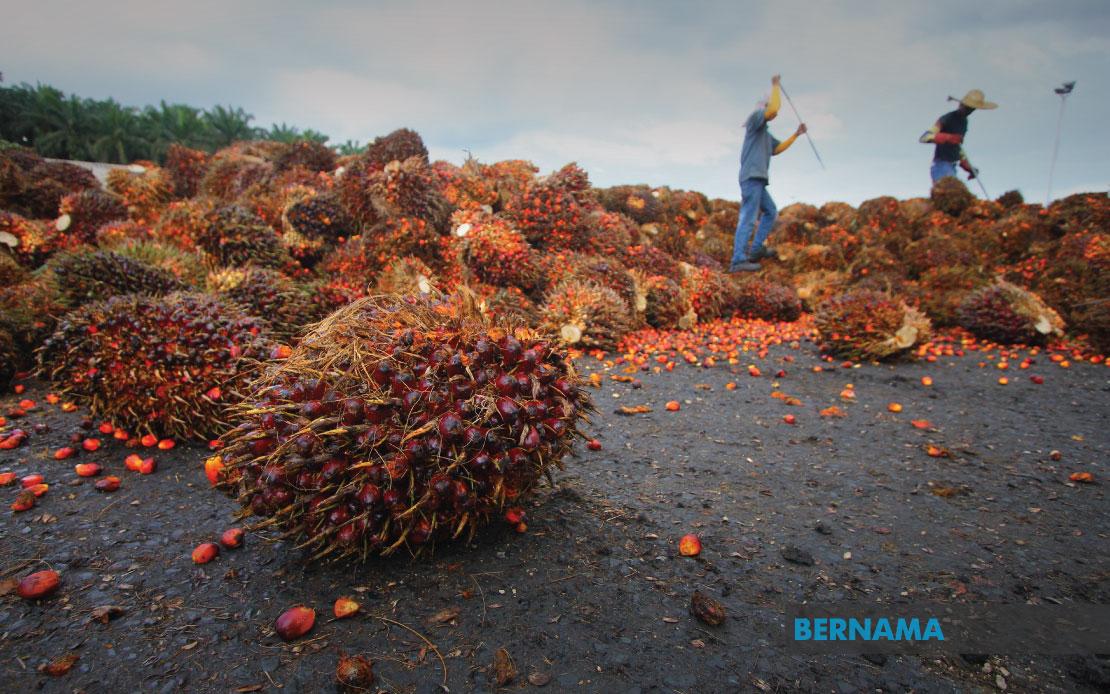
Plantation, commodity sectors exempted from Movement Restriction Order


19/03/2020 02:03 PM

KUALA LUMPUR, March 19 -- Workers in the plantation and commodities sector have been exempted from the Movement Control Order and are allowed to resume their work activities, said Plantation Industries and Commodities Minister Datuk Dr Mohd Khairuddin Aman Razali.

He said the ministry Is aware that the enforcement of the order from March 18-31 would have an impact on the sector.

“The ministry is aware of the importance of the oil palm and rubber industries which contribute to the supply chain related to the provision of essential services, such as supplies of cooking oil and medical equipment like gloves and catheters,” he said in a statement today.

Following the exemption, activities such as harvesting and processing fresh fruit bunches by plantation companies, smallholders and palm oil millers may be continued.

The exemption also includes processing of crude palm oil at the refineries for the production of cooking oils to meet local demand.

Rubber tapping is also allowed to continue to ensure the supply of raw materials for medical items such as gloves and catheters, while the timber sector may resume their operations to fulfill their existing contract orders.

However, workers will need to abide by all preventive and control measures including ensuring social distancing and returning home straight after work, as well as practicing good hygiene habits such as washing their hands with soap or hand sanitisers.


Oh, 'that' ban: Construction firm fined RM50k for operating during MCO

Metro News
Thursday, 19 Mar 2020 2:38 PM MYT
By BAVANI M

PETALING JAYA: A construction firm in Kuala Lumpur was compounded for not adhering to the ongoing movement control order (MCO).

The firm was slapped with a RM50,000 fine
for carrying out work despite having been given notice to stop work for two weeks.

Two others were ordered to shut down operations immediately after they were found to be carrying out housekeeping at the site.

Under the MCO directive from the government, construction sites and household renovation works are not considered essential services and hence must cease.


DBKL enforcement officers in charge of monitoring construction sites had carried out inspection at about 50 sites by 1pm on Thursday (March 19).

“These are big firms caught breaking the law, and it is disappointing," said DBKL Corporate Planning department director, Khairul Azmir Ahmad.

“The two ordered to close were carrying housekeeping work at the site, while the other one, which was summoned, was fully operational, ’’ he added.

Khairul said the inspections were carried out at construction hotspots in Bukit Bintang, Segambut and Wangsa Maju.

The compound was issued under Section 70 (13) of the Road, Drainage and Building Act 1974 (Act 133).

Non-essential services in the city have to cease until March 31.- Star, 19/3/2020