MADPET is for the Abolition of Death Penalty, an end of torture and abuse of rights by the police, an end to death in custody, an end to police shoot to kill incidents, for greater safeguards to ensure a fair trial, for a right to one phone call and immediate access to a lawyer upon arrest, for the repeal of all laws that allow for detention without trial and an immediate release of all those who are under such draconian laws.
Edict: Gubal Akta Mahkamah Koroner untuk tangani kes kematian tahanan
Diterbitkan
Dikemaskini 12:46 pm
Kumpulan
hak asasi Menghapuskan Kematian dan Penderaan Dalam Tahanan (Edict)
meminta kerajaan memperkasakan mahkamah moroner dan menggubal
undang-undang baru melibatkan mahkamah berkenaan.
Edict menegaskan
tiada cara lain untuk mendapatkan keadilan bagi kes-kes kematian dalam
tahanan melainkan melalui mahkamah tanpa sebarang unsur politik dan
diskriminasi.
"Peranan mahkamah koroner perlu diperkukuhkan dan
Akta Mahkamah Koroner perlu digubal. Dalam masa sama, peruntukan-
peruntukan dalam Kanun Prosedur Jenayah harus dipatuhi.
"Sejarah
telah membuktikan begitu banyak keputusan mahkamah yang menyebelahi
pihak keluarga selepas melalui proses yang betul dan wajar.
"Sebarang
ketidakpuasan hati terhadap keputusan sesuatu mahkamah boleh dibawa ke
mahkamah yang lebih tinggi," katanya dalam satu kenyataan hari ini.
Katanya siasatan kes kematian juga perlu dilengkapkan dalam masa enam bulan daripada tarikh kejadian.
"Inkues
juga mesti diadakan untuk setiap kes kematian dalam tahanan. Ini
termasuk kes-kes kematian di pusat tahanan imigresen," katanya lagi.
Edict
juga menegaskan bahawa Suruhanjaya Bebas Kes Aduan Polis (IPCMC)
bukanlah satu mekanisme untuk menyiasat kematian dalam tahanan.
Ini kerana katanya IPCMC adalah sebuah suruhanjaya menyiasat salahlaku anggota polis.
"Ini
bermakna sebarang tuduhan ke atas salahlaku akan dibawa ke IPCMC
selepas penyiasatan ke atas kematian dalam tahanan dilengkapkan mengikut
undang-undang," katanya.
Sementara itu, dalam kenyataan
berasingan jurucakap Malaysians Against Death Penalty and Torture,
Charles Hector Fernande, berkata sudah tiba masanya semua anggota
perkhidmatan kehakiman, termasuk koroner ditempatkan secara langsung di
bawah badan kehakiman dan bukannya Suruhanjaya Perkhidmatan Kehakiman
dan Perundangan semasa.
"Sebagai alternatif, mungkin sudah
waktunya bagi Malaysia untuk menubuhkan badan koroner yang bebas,
seperti mana di United Kingdom, yang juga memiliki Coroners and Justice
Act 2009.
"Majistret yang sudah terbeban dengan kes mereka mungkin
tidak mempunyai cukup waktu untuk memusatkan perhatian pada
tanggungjawab koroner," kata peguam hak asasi manusia itu.
Sekurang-kurangnya tiga kematian dalam tahanan dilaporkan dalam tempoh 15 hari lalu.
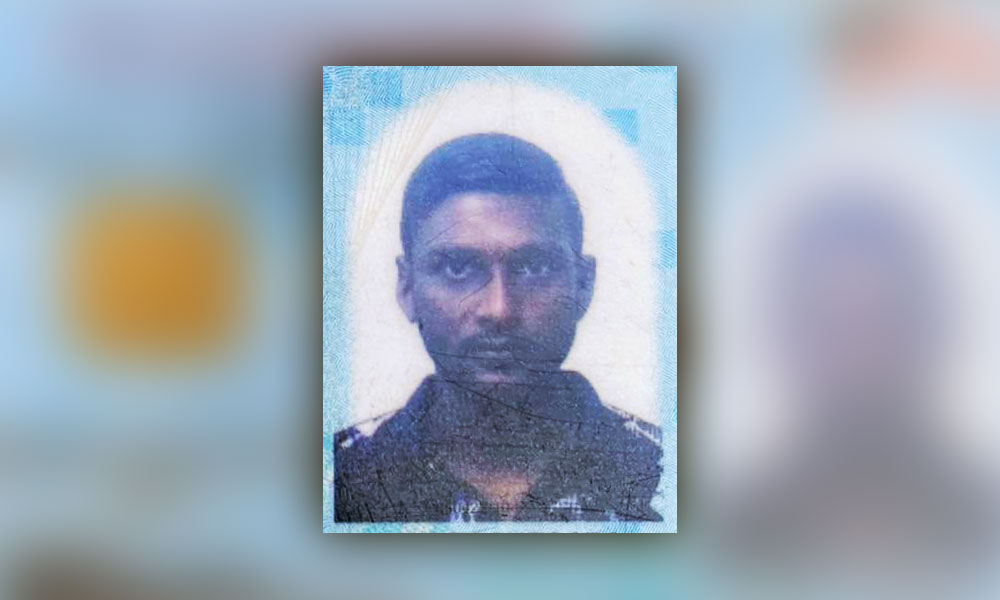
Terbaru melibatkan seorang pemandu lori berusia 36 tahun, Umar Faruq Abdullah @ Hemanathan yang meninggal dunia di Ibu Pejabat Polis Daerah (IPD) Klang selatan. Malaysiakini, 7/6/2021
Human rights groups call for inquests into recent police custodial deaths
Monday, 07 Jun 2021 09:27 AM MYT
BY ASHMAN ADAM
Edict said police
investigations into custodial deaths should be done by a special
forensics team in compliance with existing law. — Picture by Ahmad
Zamzahuri
Follow us on Instagram and subscribe to our Telegram channel for the latest updates.
KUALA
LUMPUR, June 7 — Several human rights advocacy groups have called for
inquests into the recent deaths of inmates while in police custody.
Non-profit
organisation Eliminating Deaths & Abuse in Custody Together (Edict)
said in a statement that for cases of death in custody, according to
the principle of the rule of law, an inquest is the only way to find the
cause of death and who is responsible for the death.
Only
through an inquest will we be able to see the transparency of the
inquiry. We also have the opportunity to dispute and challenge any
allegations and evidence presented by the authorities involved in the
death in custody case.
“No
investigation by any other party is as transparent as the inquest
process in the Coroner Court. Justice is for both sides,” it said.
Edict
said that there should be independent investigations conducted into
custodial deaths, adding that for the time being, police investigations
into such cases should be done by a special forensics team in the police
force in compliance with existing laws.
“This
special unit should be independent of the police station concerned with
the death. Ideally it should be based in Bukit Aman headed by an
officer whose integrity and independence would not be questioned,” it
said.
It
also urged the Human Rights Commission of Malaysia (Suhakam) to look
into possible human rights infringements in such cases after the
Coroner's Court completes its investigations, adding that any
recommendation coming from the establishment would be useful to improve
the situation in the detention centers.
Another
organisation, the Malaysians Against Death Penalty and Torture
(Madpet), also said it is perturbed about the lack of inquests and
transparency of data concerning deaths, especially deaths in custody,
adding that Malaysia needs more independent coroners to determine
criminal liability into deaths that happen in the country.
Mapdet
said the blame for not holding an inquest into the custodial deaths
falls on the public prosecutor and magistrates’ shoulders, adding that
the law stipulates that all deaths ought to be inquired into by the
Coroner.
“Section
334 of the Criminal Procedure Code (CPC) provides specifically for
deaths in custody, whereby it states, ‘...When any person dies while in
the custody of the police or in a psychiatric hospital or prison, the
officer who had the custody of that person or was in charge of that
psychiatric hospital or prison, as the case may be, shall immediately
give intimation of such death to the nearest Magistrate, and the
Magistrate or some other Magistrate shall, in the case of a death in the
custody of the police, and in other cases may, if he thinks expedient,
hold an inquiry into the cause of death’.
“If
the said Magistrate (Coroner) decides that there is no need for an
inquest, he must transmit his decision and reasons to the Public
Prosecutor, pursuant to section 339 of the CPC, has the power to ‘...at
any time direct a Magistrate to hold an inquiry”, said the group.
The
group said that it is time for the members of the judicial service to
fall directly under the Judiciary and not the Judicial and Legal
Services Commission to ensure greater independence and less avoidance of
an inquest into deaths in custody cases.
“Alternatively,
it may be time for Malaysia to establish an independent body of
Coroners, as is the case in the United Kingdom, which also has the
Coroners and Justice Act 2009.
“Magistrates already burdened with their caseload may simply have insufficient time to focus on Coroner’s responsibilities.
They
added that a public inquest would also quell any suspicion of cover
ups, culling any suspicion that enforcement officers were involved in
the deaths.
A
recent spate of deaths in police custody have made headlines over the
past month, with the most recent being 36-year-old Umar Faruq Abdullah
who died after jumping from the second floor of the building while under
remand for questioning over the alleged theft of gas cylinders.
Selangor
police chief Datuk Arjunaidi Mohamed said the detainee had tried to
escape while heading back to the lockup after recording his statement at
the investigating officer’s office, where the suspect pushed the
personnel and jumped out through an open window on the second floor.
This follows the recent deaths of two detainees, namely, A. Ganapathy and S. Sivabalan at the Gombak police headquarters.
According
to the family of Ganapathy, a 40-year-old milk trader, his health
deteriorated as a result of beatings. As evidence, they said his legs
were swollen and bruised as though he had been assaulted.
Ganapathy,
had spent 12 days in police custody from February 24 to March 8 before
he was admitted to Selayang Hospital, where his legs were later
amputated after contracting necrotising fasciitis.
Forty-two-year-old security guard Sivabalan had reportedly died of a heart attack, less than 24 hours after his arrest.
According to the authorities, the deaths were due to health issues that had been confirmed by the hospital. - Malay Mail, 7/6/2021
Rights group moots Coroner's Court Act to deal with custodial deaths
Published
Modified 10:21 am
Rights
group Eliminating Deaths & Abuse In Custody Together (Edict) has
called on the government to strengthen the Coroner's Court and to enact a
new Coroner's Court Act.
Edict, in a statement, said this is
because, in court, there would be no element of politics and
discrimination for death in custody cases.
"History has proven so many court decisions are in favour of the family after going through the proper and due process.
"Any
dissatisfaction with the decision of a court can be taken to a higher
court," said Edict in the statement with proposals to address custodial
deaths, following a recent series of new cases in police and prison
custody.
Edict said an inquest would be the most transparent
process to establish the cause of death and responsible parties,
providing an opportunity to dispute and challenge any evidence or
allegations made by relevant authorities.
"Justice is for both
sides. As activists and lawyers who adhere to the principle of rule of
law, it is inappropriate to be prejudice and bias before an
investigation is conducted," said Edict.
It also called for strict
compliance to provisions of the Criminal Procedure Code and for death
inquiries to be completed within six months of such cases occurring.
"There should be an inquest conducted for every custodial death case.
"This would include cases occurring in Immigration detention centres," it said.
Section
334 of the CPC states that when any person dies in the custody of the
police, psychiatric hospital or prison, the authorities in charge shall
immediately notify the nearest magistrate, for consideration on whether
an inquiry into the cause of death should be held.
Should the
magistrate decide that there is no need for an inquest, the decision and
reasons must be presented to a public prosecutor, who under Section 339
of the CPC has powers to "...at any time direct a magistrate to hold an
inquiry…"
"For the time being, the police investigations into
such cases should be done by a special forensics team in the police
force in compliance with existing laws.
"This special unit should
be independent of the police station concerned with the death," Edict
said, adding that ideally it should be based in Bukit Aman and headed by
an officer whose integrity and independence would not be questioned.
Edict
also pointed out that the often-proposed Independent Police Complaints
of Misconduct Commission (IPCMC) is not a mechanism for making inquiries
into custodial deaths as its function would only begin after an inquest
has determined there was an element of police misconduct that led to a
death in custody.
Latest victim lorry driver Umar Faruq Abdullah @ Hemanathan
'Coroners must be independent'
Separately,
rights group Malaysians Against Death Penalty and Torture (Madpet)
spokesperson Charles Hector Fernandez said it is time that all members
of the judicial service, which will also include coroners, who usually
are magistrates, be placed directly under the judiciary instead of the
current Judicial and Legal Services Commission.
He said the move
will result in greater independence and less avoidance of an inquest in
death in custody cases, death in industrial accidents and other deaths.
"Alternatively,
it may be time for Malaysia to establish an independent body of
Coroners, as is the case in the United Kingdom, which have also the
Coroners and Justice Act 2009.
"Magistrates already burdened with
their caseload may simply have insufficient time to focus on Coroner’s
responsibilities," said the human rights lawyer.
He said a
dedicated Coroner's Court would not only be able to address custodial
death cases but also uncover any criminal liabilities linked to medical
negligence or road accidents, among others.
Their calls today follow at least three reported custodial deaths over the last 15 days, the latest being that of 36-year-old lorry driver Umar Faruq Abdullah @ Hemanathan’s at the south Klang district police headquarters.
Umar's death follows the recent deaths in custody of A Ganapathy on April 18 and S Sivabalan on May 20 who were both detained in the Gombak police station. It also follows the passing of S Surendran on May 27. He was detained in Selangor but later placed in Simpang Renggam prison in Johor.
In all three cases, their family members had raised allegations of abuse or discrepancies in official reports of the deaths. - Malaysiakini, 7/6/2021
Coroner and Public Prosecutors
fail to deter Death In Custody if Inquests avoided
-Need
independent Coroners and Inquest for all Deaths in Custody –
MADPET(Malaysians Against Death
Penalty and Torture) is perturbed about the lack of inquests and the lack in transparency
of data concerning deaths, especially deaths in custody. Malaysia needs more independent
trained Coroners that will look into the about 150,000 deaths that happen
yearly in Malaysia who will determine whether criminal liability existed or not
in these deaths. Decisions of coroners must be made available.
3 reported deaths in custody within 15 days?
3 persons died in the space of about
15 days, 2 in police custody and one in detention.
Lorry driver Umar Faruq Abdullah died on
3/6/2021 at the south Klang district police headquarters (IPD), allegedly he
fell to his death from the second floor of the police station. On 27th
May, Surendran Shanker died at the Kluang hospital after being held at the
Simpang Renggam prison in Johor. On 20th May, one S Sivabalan’s died
at the Gombak police station. These are just the media reported cases, and
there can be more, and it is best that the Malaysian government discloses full
statistics of deaths in government places of custody or detention.
All deaths must be reported to the Coroner
In Malaysia, the law stipulates that
ALL deaths ought to be inquired into by the Coroner (usually a Magistrate). Further,
there is a specific section that imposes inquest requirement for deaths in
custody.
Section 334 of the Criminal Procedure
Code(CPC) provides specifically for deaths in custody, whereby it states, ‘..When
any person dies while in the custody of
the police or in a psychiatric hospital or prison, the officer who had the
custody of that person or was in charge of that psychiatric hospital or prison,
as the case may be, shall immediately give intimation of such death to the
nearest Magistrate, and the Magistrate or some other Magistrate shall, in the
case of a death in the custody of the police, and in other cases may, if he
thinks expedient, hold an inquiry into the cause of death…’.
If the said Magistrate(Coroner)
decides that there is no need for an inquest, he must transmit his decision and
reasons to the Public Prosecutor, pursuant to section 339 of the CPC, has the
power to ‘…at any time direct a Magistrate to hold an inquiry…’
Therefore, it is clear that whether
inquest into deaths happens, including these 3 recent deaths in custody, the
power lies lies with the Magistrate(Coroner) and the Public Prosecutor, and the
blame for not holding an inquest,
especially when the police or public servants may be criminally liable falls on
the Public Prosecutor and Magistrates. Magistrates now are directly under the
Judicial and Legal Services Commission, who is chaired by the Chairman of the
Public Services Commission, now being Tan Sri Zainal Rahim Seman.
Coroners must be independent and in the
interim be under the Judiciary
It is time that all members of the
judicial service, which will also include Coroners, who usually are Magistrates,
to be directly under the Judiciary, and no more under the Judicial and Legal
Services Commission, so that there will be greater independence, and less
avoidance of an inquest in death in custody cases, death in industrial accidents
and other deaths.
Alternatively, it may be time for Malaysia
to establish an independent body of Coroners, as is the case in the United Kingdom,
which have also the Coroners and Justice Act 2009. Magistrates already burdened
with their case load may simply have insufficient time to focus on Coroner’s
responsibilities.
An inquest is
important, especially so when the police or other government officers may be
criminally liable. Simply having investigation by the police or the relevant
government authorities is just not enough, as it is not uncommon for public
servants or fellow employees to act wrongly to ‘protect’ their fellow officer/s
that may be implicated. The EAIC in the inquiry into the death in custody of Syed
Mohd Azlan Syed Mohamed Nur found that there was tampering of evidence by
fellow police officers – ‘…terdapat perlakuan gangguan bahan bukti yang
material oleh anggota PDRM…’[…there was
tampering of material evidence by the members of the Royal Malaysian Police…]
Public
Inquests quells possibility of ‘cover-up’
As such, a public inquest by an
independent Coroner is needed to dispel suspicion that the police or other
enforcement officers may have caused the death.
Section 337 of the CPC states, ‘A
Magistrate holding an inquiry shall inquire when, where, how and after what
manner the deceased came by his death and also whether any person is criminally
concerned in the cause of the death.’ A public inquest that allows the
participation of other interested parties, including family members of the
deceased ensures that the Coroner will less likely make an erroneous decision.
SUHAKAM and EAIC
Whilst the National Human Rights
Commission(SUHAKAM), the Enforcement Agency Integrity Commission(EAIC) and
similar bodies have the power to investigate and conduct inquiries, the primary
role still lies with the Coroner and the Public Prosecutor.
The EAIC, according to information on
its website, have to date conducted several inquiries into deaths in custody –
Syed Mohd Azlan, S. Balamurugan, Soh Kai Chiok, N Dharmendran and James Ramesh.
Both EAIC and SUHAKAM have in the past
made various recommendation for actions that need to be taken, including
prosecution of certain officers but sadly the reality seems to be that many a
times it falls on deaf ears of authorities and government.
The absence of prosecution of wrong
doing of police and enforcement officers not just for the killing, but also
acts of concealing and destroying evidence and related matters, even after
SUHAKAM and/or EAIC’s recommendation, fails to deter future torture, abuse of
power and killing by the police and/or other relevant public servants.
Too many deaths – insufficient Coroners and
Inquests
In Malaysia, in 2019, there were about
170,000 deaths but the question is how many inquests were actually done. Remember,
that inquest should be for all deaths. Even a person who dies of old age or sickness
in a hospital, there could be persons who could be criminally liable maybe by
reason of medical negligence or acts of others. A death by road traffic
incident or workplace accident, may also have a person criminally liable.
Failing to ensure safe work environment makes an employer criminally liable for
deaths caused.
In UK, in 2020 only, there were 32,000
inquests whereby about 30,900 was concluded that year. 205,400 deaths were
reported to coroners in 2020, including 562 deaths in state detention.
Inquest must be the norm, safe for
exceptional situations and as such we need more Coroners, or Magistrates
trained as coroners. Coroners decide whether there will be an inquest or not.
How many deaths were reported to the Coroner in Malaysia, and how many did the
Coroner decide there was no need to have an inquest. How many deaths in custody
or deaths by police shootings had an inquest? There is a concern that not all
deaths are being reported to Coroners in Malaysia, and the lack of an annual
Coroner’s Report makes it difficult to ascertain how many deaths were even reported
to Coroners.
Media has the role to report on these
inquest and its findings, to educate Malaysians and encourage the public to
report suspected wrongdoings of the police and enforcement officers. The belief
that reporting wrongs is useless as the authorities simply do not bother and
act is something that must be extinguished in Malaysia.
MADPET(Malaysians Against Death
Penalty and Torture) calls for inquest to be carried out for all deaths in
custody in Malaysia, and that post-mortem be done for ALL deaths in custody, or
deaths resulting from actions(or involvement) of police, enforcement officers
and/or public servants;
MADPET calls for Coroners to be
independent, and in the interim be placed under the Judiciary;
MADPET calls that Coroners must look
into each and every death determining whether an inquest be done or not, and
that annual reports must be provided;
MADPET calls for the establishment of
an independent Coroner system, where Coroners appointed can focus on the about 150,000
deaths that happen in Malaysia annually, and conduct speedily the needed
inquests.
MADPET reiterates the calls for the
installation of CCTV with recording capacity at all police stations,
enforcement officers and detention facilities, which would have been needed
evidence to facilitate the investigation of death in custody cases, and even help
dispel suspicion of police or public servant involvement in causing these
deaths.
Charles Hector
For and on behalf of MADPET(Malaysians
Against Death Penalty and Torture)
DEATHS
The number of deaths increased
The number of deaths in 2019 was
173,746, increased 1.0 per cent to as compared to 172,031 deaths in
2018. The Crude Death Rate (CDR) remained at 5.3 deaths per thousand
population in 2019. - Department of Statistics Malaysia
In 2020, 30,936 inquest conclusions were recorded, down 1% on 2019.
Inquest conclusions of killed unlawfully, road traffic collision and
open conclusions were down 55%, 22% and 20% on 2019 to 61, 774 and 1,207
respectively.- Coroners Statistics - England and Wales
The Enforcement Agency Integrity Commission (EAIC),
on 30/10/2015, after an inquiry concluded the death was caused by the
police. The recommended that the said offiocer/s be charged for murder,
amongst others. Has anyone been charged yet?
6. Terdapat perlakuan serangan bersifat jenayah yang melibatkan unsur niat bersama atau pensubahatan (abetment)
oleh anggota PDRM yang terdiri daripada anggota pasukan tangkapan bagi
melakukan kekerasan fizikal secara sengaja ke atas si matiyang telah mengakibatkan kecederaan dan kematian ke atas si mati, dan perlakuan ini adalah merupakan jeniskesalahan
bersifat jenayah di bawah undang-undang, khususnya kesalahan di bawah
seksyen 302 dan seksyen 325 Kanun Keseksaan dibaca bersama seksyen 34
Kanun Keseksaan atau secara alternatif seksyen 107 Kanun yang sama;
EAIC
also said there was police that tampered with the evidence - surely
the police officers who did ought to have charged for this, even if they
were not involved in the killing or murder, and they still can...
3. Terdapat perlakuan gangguan bahan bukti yang material oleh anggota PDRMiaitu,
(i) membersihkan tempat kejadian sebelum dilawati dan diperiksa oleh pegawai perubatan,
(ii) melupuskan tikar getah dan karpet yang dipercayai mempunyai kesan darah si mati di tempat kejadian tangkapan, dan
(iii) perlakuanmenyembunyikan/menghilangkan saksi mata (eye witness) yang melihat kejadian tangkapan si mati; - see
The
suspect was brought in yesterday after allegedly stealing a gas
cylinder and was remanded for four days to assist in the investigation,
police said.
PETALING JAYA: Lorry driver Umar Faruq Abdullah died today at the
south Klang district police headquarters (IPD), the third case of
custodial death reported in the space of 15 days.
According to police, the 36-year-old jumped to his death from the
second floor of the IPD where he was being questioned, with an initial
report stating that he passed away due to “severe facial injuries”.
He was brought in yesterday after allegedly stealing a gas cylinder
and was remanded for four days to assist in the investigation.
His death comes in the wake of security guard S Sivabalan’s death at
the Gombak police station on May 20. A week later, on May 27, Surendran
Shanker died at the Kluang hospital after being held at the Simpang
Renggam prison in Johor.
According to the police’s initial report, Umar, whose hands were
handcuffed behind his back, was being taken down from the third floor to
the first floor of the IPD’s criminal investigation department after
his statement was recorded.
A scuffle with a policeman ensued on the second floor, with Umar then
jumping through the window at the staircase. The report also stated
Umar had previous police records.
Lawyer M Manoharan, who is representing Umar’s family, said that
“something must have happened” for the police to state that Umar wanted
to escape.
“I urge the public prosecutor to charge the policemen involved for
manslaughter under Section 304 of the Penal Code or criminal negligence
under Section 328 of the Penal Code at the very least,” he told FMT.
Manoharan said Umar, a father of three, was arrested while at home with his wife in Kuala Selangor yesterday.
His wife, Humairah Abdullah, came to the IPD this morning after being
told to bring him some food but she was unable to meet him.
Manoharan said that Humairah was still waiting there in the afternoon
when she saw an ambulance arrive to take a patient, who she later found
out was her husband.
Umar’s post-mortem is scheduled for tomorrow morning.
A police officer at the IPD told FMT that Selangor police chief Abdul
Jalil Hassan will provide more details about Umar’s death at a press
conference tomorrow. - FMT, 3/6/2021
LETTER
| A review of body camera and CCTV footage would help prove the
police's innocence in the murder/killing of Muhammad Afis Ahmad.
At
12.30am on Jan 28, Afis was found unconscious in the lockup of the Yan
police headquarters in Kedah. He was then sent to the Yan Hospital. At
1.10am, fourty minutes later, he was pronounced dead.
He
was arrested on Jan 27 under Section 379 and 170 of the Penal Code in
connection with theft and impersonating a police officer.
Died due to blunt force trauma to the head
A post-mortem conducted the following day revealed that Afis had died due to blunt force trauma to the head.
In a report,
Kedah police chief Hasanuddin Hassan said "during his arrest, the
deceased put up a struggle which caused him to suffer injuries to the
face, ear, and forehead."
Investigation not simply to clear police of wrongdoings
The
police chief said the investigation was to determine whether there were
elements of violence, negligence, or misconduct by police personnel as
well as the possibility of injury during the arrest. Statements have
been taken from 47 people.
Malaysians Against Death
Penalty and Torture (Madpet) is of the opinion that a murder
investigation ought to be conducted, noting that the cause of death was
blunt force trauma to the head. If someone struck his head, and that
ultimately caused the death, then the person could still be charged for
murder or a related killing offence.
It must be pointed out, there
is a possibility the blunt force trauma on the head that killed could
have also been caused by some other parties - not the police. So,
narrowly investigating only to ensure no police wrongdoing is just not
right.
As such, it is essential that it be a murder or killing
crime investigation under the penal code. If it was a police officer who
caused it, then ensure that the perpetrator is charged in court just
like everyone else, and not simply dealt with quietly through some
internal disciplinary action.
There is the possibility of
another crime, being section 304A of the penal code, for not getting a
prompt inspection of the deceased by a medical professional - causing
death by negligence.
All arrested who are injured or sick must be given medical exam
After
his arrest, there were obvious injuries to the head of Afis, and a
relevant question was whether he was taken to the hospital for treatment
and checkup, or examined by a doctor. If this was done, there is a
possibility that he may still be alive today.
Immediate medical
examination soon after an arrest will also prevent unfounded accusations
of police violence post-arrest or whilst in police custody.
Investigations must be done by independent coroner, not police
In
cases of death in police custody or death caused by police shooting, it
is best that the investigations be conducted by the coroner or some
other independent body.
The police investigating their fellow
police officers, more so within the same police district or station, may
lead to improper investigation and may not lead to justice.
We
note that some earlier inquiries by the Enforcement Agency Integrity
Commission (EAIC) into deaths in police custody has found police
involvement in covering up the truth, including destroying and/or
tampering with evidence.
In the case of Syed Mohd Azlan Syed Mohamed Nur, for example, it was reported
that "the use of physical violence by police during arrest and
questioning was the cause of Syed Mohd Azlan Syed Mohamed Nur’s 2014
death in custody... The EAIC, in that inquiry, also said 'its
investigations found attempts to obscure evidence from the 25-year-old's
interrogation'."
As such, as soon as a death happens in police
custody or where police are suspected, the coroner, being usually a
magistrate, who is not a police officer should lead the inquiry and/or
investigation to reveal the truth and ensure that justice is done.
Alternatively, it could be a Deputy Public Prosecutor or the EAIC.
Body cameras and CCTVs long overdue
In
September 2019, the then prime minister Dr Mahathir Mohamad said the
government was looking at equipping selected enforcement personnel with
body cameras as part of its efforts to combat corruption and other
alleged abuses of power.
In November 2020, in Parliament, the Home Minister of the current government, Hamzah Zainudin said the government will implement
the proposal on the use of body cameras by police officers, amongst
others to prevent the accusation and imputation brought against the
security personnel while performing their duties.
In December, the Inspector-General of Police Abdul Hamid Bador said the police were in the process of acquiring body-worn cameras (BWC) to be used by officers, and also equipping all police cars with cameras.
If
the body-cams, vehicle cameras, and CCTV with recording capacity are
still not there, Madpet urges that it be made a priority, as this will
certainly deter police from breaking the law or violating the rights of
others.
Some Malaysian lock-ups do have CCTV, but alas when the
recordings are needed as evidence for inquests, it is revealed that
these CCTVs do not have recording capacity, or that they were not
working at the time.
What is needed is CCTV, body cams, and
cameras on police vehicles that have recording capacity, where the
recording is stored safely to prevent tampering or deletion by any
police officer or station.
In some jurisdictions like Hong Kong,
for the last few decades, CCTV recordings are there from the point of
arrest and throughout the suspect’s stay in police facilities, and
lawyers of suspects are given CDs of these recordings on request.
Such
good practice ensures there is no abuse or wrongdoing on the part of
the police, that the law is complied with, and that the arrested are not
denied any of their rights.
Malaysia yearns for a more
trustworthy police force to restore and/or enhance public confidence in
our police and the administration of criminal justice in Malaysia. We
need police officers who will not hesitate to report, investigate, or
even charge a fellow police officer if he/she commits a crime.
CHARLES HECTOR represents Malaysians Against Death Penalty & Torture (Madpet). - Malaysiakini, 6/2/2021