MADPET is for the Abolition of Death Penalty, an end of torture and abuse of rights by the police, an end to death in custody, an end to police shoot to kill incidents, for greater safeguards to ensure a fair trial, for a right to one phone call and immediate access to a lawyer upon arrest, for the repeal of all laws that allow for detention without trial and an immediate release of all those who are under such draconian laws.
Singapore:
Authorities must end executions and stop targeting anti-death penalty activists
to curb criticism
22 August 2024
We, the undersigned seven organizations, are gravely
concerned by developments in Singapore since the beginning of August 2024, which
has seen the authorities carry out two executions in violation of international
safeguards on the death penalty, as well as limiting the right to freedom of
expression of the Transformative
Justice Collective, a non-governmental organizationwho expressed concern about human rights violations and criticized the processes
leading up to the executions. With fears mounting that more people on death row
are now at imminent risk, we call on the Government of Singapore to immediately
establish a moratorium on all executions and cease the harassment of anti-death
penalty activists, as critical first steps.
On 2 and 7 August, the authorities of Singapore executed two men
convicted of drug trafficking in violation of international human rights law
and standards that restrict the use of the death penalty to the “most serious
crimes”, most
recently interpreted as referring to “crimes of extreme gravity involving
intentional killing”.[1]Several UN bodies, including the International
Narcotics Control Board, have repeatedly clarified that drug related offences
do not meet this threshold.[2]
In
both cases, the death penalty was imposed as the mandatory sentence, which meant
that the judge could not consider the particular circumstances of the offence
or the background of the convicted person, also in violation of international
law and standards.[3]
Another troubling aspect in these cases is that the convictions were reached
with reliance on legal presumptions of trafficking under the Misuse of Drugs
Act. When these legal
presumptions are invoked, the burden of proof is shifted onto the defendant to
be rebutted to the higher legal standard of “on a balance of probabilities”.
Legal presumptions of guilt violate the right
to be presumedinnocent –a peremptory norm of customary international
law – and other fair trial guarantees under international human rights law that mandate that the burden of proving the charge rests on the prosecution.[4]
In addition to undermining the right to a fair trial, presumptions of guilt
have also had the effect of lowering the threshold of evidence needed to secure
a conviction in capital cases.
As
denounced by the Transformative Justice Collective, both men had appeals
pending when their executions were set: both were parties to pending civil
applications and one of them had an additional pending criminal review
application.[5]
Safeguard No.8 of the UN Safeguards guaranteeing protection of the rights of
those facing the death penalty, adopted by two UN bodies in 1984 without a
vote, states that “[c]apital punishment shall not be carried out pending any
appeal or other recourse procedure or other proceeding relating to pardon or
commutation of the sentence”.[6]
Given the lack of transparency in relation to the use
of the death penalty in Singapore, it is unclear what procedural steps the
authorities took in the lead up to the execution warrants being issued in these
two cases, as well as four others earlier in the year.
In
the narrow circumstances in which the death penalty may be imposed under
international law – which does not include drug trafficking – the criminal
justice system should allow a robust testing of the individuals’ right of
review up and until the gallows.
The
circumstances in which the authorities of Singapore set and carried out these
executions violate safeguards under international law and standards to protect
against the arbitrary deprivation of life. Subsequent statements by the
authorities that the executions followed “full due process under the law” fail
to recognize that Singapore’s legislation falls short of international human rights
standards, including norms of customary international law to which Singapore is
bound by. We call on the authorities to refrain from ignoring these standards when
issuing statements on the death penalty and to recognize that respect of human rights
is a corollary pillar of the rule of law. Pending full abolition of the death
penalty, we call on the Government to immediately establish a moratorium on
executions and review national legislation to bring it in line with
international human rights law.
A change in course is more urgent than ever, as in
recent weeks the Supreme Court has considered and rejected applications filed
by several men on death row, potentially exposing them to the risk of
execution.
We further condemn the chilling climate of fear and repression
that the authorities have created around anti-death penalty activism in
Singapore. We absolutely reject the issuing of two Correction Directions and
Targeted Correction Direction under the Protection from Online Falsehoods and
Manipulation Act (POFMA) against statements made by the Transformative Justice
Collective on 1 and 6 August 2024.[7]
The orders request “factual corrections”, which have been disputed by the Transformative
Justice Collective.[8]
Issued by the Minister for Home Affairs and the POFMA
Office, POFMA orders
targeting those who criticize the handling of death penalty cases in Singapore have
the broader effect of curtailing the right to freedom of expression and human
rights activism in the country, and preventing fully
informed debates on the ongoing use of the death penalty.
When
seeking to protect people in Singapore from harm, the authorities must act in
accordance with international human rights law, including that related to the
protection of the right to freedom of expression. Restrictions to this right must
be clearly and narrowly defined in law and conform to the strict tests of
necessity and proportionality to a legitimate aim, rather than, in the case of
POFMA, becoming a weapon for censorship.[9]
We
call on the government of Singapore to cease the use of POFMA orders to silence
criticism and ensure that any legal provisions aimed at protecting national
security or that unduly restrict the right to freedom of expression are reviewed
so that they conform to international human rights law and standards, in order
to guarantee the right to freedom of expression for all.
This
statement is co-signed by:
Amnesty
International
Capital
Punishment Justice Project
FIDH
– International Federation for Human Rights
MADPET
– Malaysians Against Death Penalty and Torture
[6] Adopted without a vote by the UN Economic
and Social Council in its resolution 1984/50 of 25 May 1984; and endorsed by
the UN General Assembly, without a vote, in resolution 39/118 of 14 December
1984.
[7] Ministry of Home Affairs of Singapore, “Issuance
of Correction Direction Under the Protection From Online Falsehoods and
Manipulation Act Regarding Statement by the Transformative Justice Collective
Concerning the Treatment of Prisoners Awaiting Capital Punishment”, 8 August
2024; and “Issuance of Correction Direction and Targeted Correction Direction
Under the POFMA Regarding Statement by the Transformative Justice Collective on
6 August 2024 Concerning the Treatment of Prisoners Awaiting Capital Punishment”,
11 August 2024.
Criminalize extrajudicial killing,
and charge law enforcement officers involved in the killing in Court, for it is
Court that decides guilt and whether any defence including self defence will
succeed
We, the 13 undersigned groups and organizations is
appalled at yet another extrajudicial killing by Malaysian police that happened
on 13/8/2024(The Sun), whereby immediately after that the public is fed with the
police version of what happened in an attempt to absolve the police from guilt,
and with allegations that the deceased was a ‘bad person’. Was there even
sufficient time for the police to conduct a proper investigation into the
killing? Were the police officers in uniform or in a easily identifiable police
vehicle?
In cases of extrajudicial killing, it is the
police that caused the killing who should be investigated for the crime of
murder and culpable homicide, not the deceased.
However, it must be noted that there have been
several cases in Malaysia, where the police version of what happened was found
to be LIES.
Police Version Of What Happened Found
To Be False
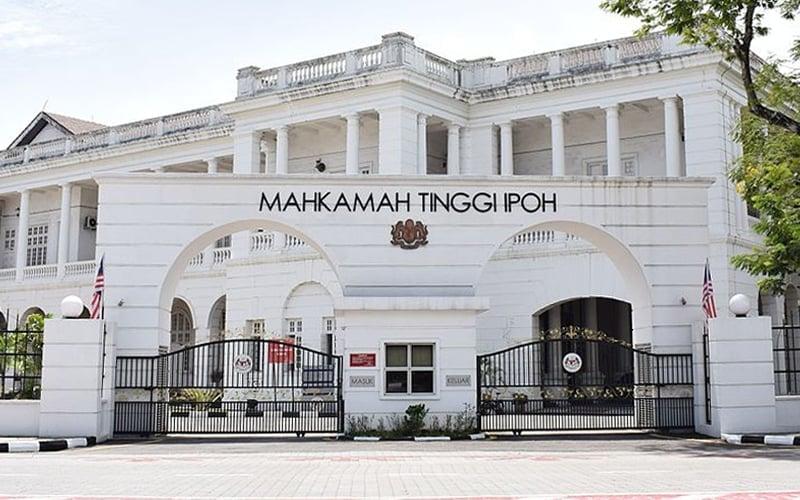
The High Court in Ipoh on 1/2/2024 set aside an open verdict delivered in an
inquest involving a police shooting in Sitiawan, Perak nearly eight years ago,
and ruled it to be a homicide. "This court, under the Chief Justice’s
Direction No 2 of 2019, makes a finding of homicide against the police,"
he[Judicial commissioner Moses Susayan] said..’ The police and prosecution
version were that Mohan got out of the vehicle and fired at the policemen,
forcing them to shoot back. However, there were ‘…no bullet casing from the
purported revolver used by Mohan was found. Neither were fingerprints, DNA or
gunshot residue found on the alleged gun or the deceased. The Inspector-General’s
Standing Orders that requires police to fire warning shots and to shoot at the
leg was probably not followed. (FMT)
On 31/5/2023 that the coroner’s court, presided
by Coroner Rasyihah Ghazali, for ‘police shooting that resulted in death of 3,
‘…. concluded that there was abuse of power and elements of a criminal nature
in the death of three men who were shot at close range by police three years
ago. “The shots were not fired in self-defense. There was abuse of power and
(actions in the nature of) criminal elements by police in the death of the
men,”… She said police witnesses gave evidence that shots were fired at the men
from an upright position but post-mortem reports stated that the bullets
pierced their bodies at a downward angle. … “The weapons described by the ballistic
expert (Izzuwan Marzuki) and the investigating officer (P Visvanathan) were
also in conflict,” (FMT, 31/5/2023)
We sadly note that there has been no news about
the said police personnel found criminally liable for the killing being
investigated and/or charged in the courts, despite the findings of the Coroner and/or
the Court.
End Perception that Malaysia Protects Law Enforcement Who Broke the Law
The perception that Malaysia protects police
and law enforcement officers from criminal prosecution must end. This is not a
matter to be dealt with through internal disciplinary actions – but requires
the suspected police officers to be charged and tried in Court.
Sadly, in most of these extrajudicial killings,
we do not hear about the findings of the Independent Coroner, who is legally
the person who will enquire and determine the cause of death, including whether
any person, including the police, was criminally liable for the death. Hence,
we only have the police version of what happened issued hours after the killing.
The Home Minister must disclose the findings of the Coroner’s Inquiry of all cases of
extrajudicial killing by law enforcement. He must explain why the police
have not been charged in court for the crime of killing. Whether, the police’s
defence of ‘self defence’ will succeed is something for the Court to decide –
not the police, the prosecution, the Minister or the government of the day.
Coroner must investigate immediately,
and decide fast
In cases of police killing that we hear about
the Coroner’s findings, it is simply too long after the said killing occurred. In
cases of extrajudicial killings and deaths in custody of law enforcement,
Coroners must speedily inquire into the death and render a decision as fast as
possible, preferably within a month, not after years. Coroners must not only
rely on the police for evidence, but also do their own independent
investigations as the police do ‘lie’ at times to maybe protect their own
officers.
Police are the suspects – not the
deceased
In extrajudicial killings, the suspects of the
crime is the POLICE, not the deceased. It is the police suspects that need to
be investigated, and not the deceased. It was odd, that a media report stated that
the police had commenced an investigation ‘…under the Penal Code for attempted
murder’. Are they investigating the deceased, for if they are investigating the
police, it should be an investigation for murder, not attempted murder since
the victim died. (NST, 13/8/2024)
Extrajudicial Killings
Must Be Criminalized – An offence and a deterrent penalty
Extrajudicial, summary or arbitrary executions
– is the deliberate killing of individuals outside of any legal framework - are
a violation of this most fundamental right. In Malaysia, the Federal
Constitution acknowledges the right to life, and in Article 5(1) states that
‘No person shall be deprived of his life …. save in accordance with law’ and
this means that the State or its officers can generally only kill someone after
he has been tried, convicted and sentenced to death. When it comes to the
police, their duty is merely to arrest and investigate suspects – not kill
them.
Malaysian law, on arrest is very clear and
right to kill is limited to persons who have already been charged in court,
being the time, a suspect becomes an accused, for an offence that carries the
death penalty or sentence of imprisonment of 30 years or more.
Section 15 of the Criminal Procedure Code,
amongst others, state that‘…(2) If such
person forcibly resist the endeavour to arrest him or attempt to evade the
arrest such officer or other person may use all means necessary to effect the
arrest.(3) Nothing in this section gives
a right to cause the death of a person who is not accused of an offence
punishable with death or with imprisonment for a term of not less than thirty
years but not exceeding forty years or with imprisonment for life.’
In all the known cases, those that end up being
shot dead are certainly not accused persons facing trial for such serious
offences.
Malaysia must enact a law making extra-judicial
killing by law enforcement a crime with a deterrent penalty, as the killers in
these cases are public officers responsible for law enforcement, who should
never ignore the law and kill suspects, witnesses or others during the
performance of their duties. The fact that we have murder and other killing
offences in the law is insufficient, and the criminalizing of extrajudicial
killings also will indicate Malaysia’s strong position against such killings.
First response by Home Minister is to
APOLOGIZE and ensure proper investigation
After anyone is killed whilst making arrest or
in police custody, the Home Minister Saifuddin Nasution Ismail first response should
be to apologize for the death of any suspect. No one during arrest, custody and
investigations by law enforcement should die.
He should also commit to an immediate independent
investigation and for a speedy Coroner’s inquiry to determine the truth of what
really happened. Was there any acceptable legal defence for the killing of
persons by the police? In any case, the police
personnel involved should be investigated and charged, and it is up to the
Court to determine whether any defence, including self-defence will succeed in
avoiding conviction.
The Minister is responsible for the police, but
that does not translate that he should always come out in defence of police
actions and/or ‘justifying’ possible criminal wrongdoings, trusting the police
version of the facts.
On the face of it, the police broke the law
when they failed to arrest a suspect alive.
Hence, as Minister responsible, he must come
out expressing his remorse for what happened, and commit to a thorough investigation
to determine the truth. He must also make sure that the police do not try to prematurely
justify killings on the basis that the deceased was a ‘bad person’. He must leave the determination of guilt to the
Courts.
It is not for the police to decide whether one is
a criminal or not, or whether they deceive the death sentence. They are not ‘judge,
jury and executioner’ – the police is NOT ‘a person or group who has unchecked
power to make decisions, impose punishments, and carry out those punishments
without due process or oversight.’
Therefore, we call
Call for the criminalization of extrajudicial killing, making it a crime with a deterrent
penalty;
Call on Malaysia to adopt the Principles on the Effective Prevention and Investigation
of Extra-legal, Arbitrary and SummaryExecutions, asrrecommended by the United Nation’s Economic
and Social Council resolution 1989/65 of 24 May 1989, which, amongst others,
state that ‘Governments shall prohibit
by law all extra-legal, arbitrary and summary executions and shall ensure that
any such executions are recognized as offences under their criminal laws, and
are punishable by appropriate penalties which take into account the seriousness
of such offences…’
Call on the Home Minister to disclose findings of the Coroner in all cases of
extra-judicial killings in Malaysia, and explain why the said police officers
or law enforcement personnel have NOT been charged and tried in Court for the
said killings.
Call on Malaysia to end the ‘defamation’ of the dead, as an attempt to ‘justify’ the
killings by law enforcement.
Call for the police officers responsible for the death of suspects and others be
charged and tried in Court, for it is Court only that determines guilt, and
whether any defence for the said crime including self-defence is accepted.
Charles
Hector
Ng
Yap Hwa
For and on behalf of the 13 groups listed below
ALIRAN
MADPET (Malaysians Against Death Penalty and
Torture)
Teoh Beng Hock Association for Democratic
Advancement
WH4C (Workers Hub For Change)
Anti-Death Penalty Asia Network (ADPAN)
Banglar Manabadhikar Suraksha Mancha (MASUM),
India
Democratic Commission for Human Development,
Lahore, Pakistan
Global Women’s Strike, United Kingdom
Legal Action for Women, United Kingdom
Programme Against Custodial Torture &
Impunity (PACTI), India
Redemption, Pakistan
Sabah Timber Industry Employees Union (STIEU)
Yaung Chi Oo Workers’ Association (YCOWA)
Robbery suspect killed in shootout with police in Kajang
BERNAMA
13-08- 2024 09:42 PM
Selangor police chief Datuk Hussein Omar Khan - BERNAMApix
KUALA LUMPUR:
A man with a criminal record of six previous robberies was shot dead in
a shootout at the entry to the Sungai Balak Toll on the Kajang
Dispersal Link Expressway (SILK) near Kajang, Selangor this afternoon.
Selangor
police chief Datuk Hussein Omar Khan said that a team from the Bukit
Aman Criminal Investigation Department, which was patrolling the area,
stopped a Perodua car driven by the man around 3 pm.
The man, who was in his mid-30s, refused to stop the vehicle and fired shots at the police.
“Police
returned fire, and the suspect is believed to have been killed in the
exchange,” he said, adding that a police officer in his 30s was struck
by a bullet in the incident but survived because the bullet hit his
bulletproof vest.
He said that
checks revealed the local man was believed to have been involved in a
robbery at a gold shop in Plaza Metro Kajang a few months ago, adding
that an investigation into the incident has been opened under Section
307 of the Penal Code. - The Sun, 13/8/2024
High Court rules businessman’s fatal shooting is homicide
V Anbalagan
-
Judicial commissioner Moses Susayan says he finds no justification for the shooting and it was done by a known person.
The Ipoh High Court has set aside the coroner’s verdict following a revision application by the dead man’s father.PETALING JAYA:
The High Court in Ipoh has set aside an open verdict
delivered in an inquest involving a police shooting in Sitiawan, Perak,
nearly eight years ago on grounds that the coroner had failed to grasp
the evidence presented and correctly rule it a homicide.
Judicial commissioner Moses Susayan said he found no justification for the police shooting dead businessman G Mohan.
Moses said he was substituting the findings due to the deceased being shot by a known person and the resultant death stemming from an aim to kill.
This court, under the Chief Justice’s Direction No 2 of 2019, makes a finding of homicide against the police, he said in his judgment delivered today in allowing a revision application by Mohan’s father, A Gopela Krishnan.
Lawyer S Raam Kumar had said coroner Ainul
Shahrin Mohammad failed to consider admissions by the deceased’s
shooters that they were shooting to kill and the inquest conclusion was
untenable.
Raam had submitted that police failed to
adhere to the Inspector-General’s Standing Orders by not giving warning
shots or shooting at the leg of the deceased.
He said no bullet casing from the purported
revolver used by Mohan was found. Neither were fingerprints, DNA or
gunshot residue found on the gun or the deceased.
He said there was no reason given as to why no roadblock was set up if indeed the police were chasing after Mohan.
There was also no suggestion that the tyres of Mohan’s car had been fired at, he said.
Deputy public prosecutor Evangelin Simon submitted that police had chased after the car driven by Mohan.
She said the car skidded, but Mohan got out and fired at the policemen, forcing them to shoot back.
The facts of the case revealed that a police
team was conducting an operation along the Sitiawan-Air Tawar road at
about 3.15am on Oct 8, 2016 when they saw a car driven by an allegedly
suspicious-looking man.
A post-mortem report revealed that Mohan died
of excessive bleeding from two gunshot wounds in the chest and another
in one of the legs. - FMT, 1/2/2024
Family of man shot by cop 12 years ago demands murder charge
This follows a High Court ruling in January classifying P Kathir Oli’s death as homicide.
The
family of P Kathir Oli submitted a memo to the attorney-general today,
calling for retired corporal Cheah Yew Teik to be charged over Kathir’s
death.PUTRAJAYA:
The family of a man shot dead by a policeman 12 years
ago has demanded that Attorney-General Terrirudin Salleh charge the
perpetrator with homicide.
This morning, the family – represented by
Suara Rakyat Malaysia (Suaram), Parti Sosialis Malaysia (PSM) and
Citizens Against Enforced Disappearances (CAGED) – submitted a
memorandum to the Attorney-General’s Chambers (AGC) here to demand
appropriate action against corporal Cheah Yew Teik, now retired.
Suaram coordinator Wong Yan Ke said the
memorandum today was submitted after a High Court decision in January
ruled the incident a homicide, overturning the coroner’s open verdict
from a year before.
“On March 1, the family’s lawyer – Valen, Oh, and Partners – sent a letter to the AGC, followed by another letter on April 18, but has yet to receive a response.
We want the AGC to take the necessary action and charge the perpetrator with murder, he told the media.
The victim, P Kathir Oli, 31, was fatally shot by Cheah outside a pub in Ipoh, Perak, on Sept 15, 2011.
Previously, media reported then Perak police
chief Shukri Dahlan as saying that Cheah had acted in self-defence
because the victim and his friends, armed with a parang, had allegedly
attempted to rob the pub owner.
However, PSM said according to the testimony from the police, no parang was found at the scene.
According to the memorandum, Kathir
and Cheah were involved in a scuffle at a carpark near the pub after
Kathir and his friends were denied entry.
When initially confronted by Cheah, Kathir allegedly asked who he was and why Cheah was pointing a gun at him.
The two men then reportedly got into a scuffle and Kathir was shot in the chest and killed instantly.
Following the incident, the family campaigned for an inquest which took place in 2019.
The memorandum also said Cheah was off-duty at the time of the incident and asked why he was carrying a gun.
It likewise asked why Cheah had not shouted a
warning before firing his weapon, adding that using a firearm in this
context was unwarranted, unreasonable and unjustifiable.
Kathir’s brother P Anbughani, who was at the
event today, said he and his family were waiting for action to be taken
against Cheah.
On the day of the incident, they (the police) claimed that my brother robbed the premises, but now that the court’s verdict is out, there has still been no action taken against Cheah, he said.
Meanwhile, CAGED spokesman Rama Ramanathan
said the AGC had to pay attention to ordinary people in the street who
become victims of the police, not only focus on high-profile cases. - FMT, 16/5/2024
Kajang shootout: Suspect killed, policeman injured during police operation
Selangor
police chief Datuk Hussein Omar Khan said that around 3pm, a routine
patrol by the Bukit Aman Criminal Investigation Department encountered a
Perodua vehicle near the Sungai Balak toll entrance on the Kajang
Traffic Dispersal Ring Road (SILK) Highway. FILE PIC
KUALA
LUMPUR: A police operation in Kajang turned deadly earlier today,
resulting in a shootout that left one suspect dead and a policeman
injured.
Selangor police chief Datuk Hussein Omar Khan said that around 3pm, a
routine patrol by the Bukit Aman Criminal Investigation Department
encountered a Perodua vehicle near the Sungai Balak toll entrance on the
Kajang Traffic Dispersal Ring Road (SILK) Highway.
"In the incident, the suspect refused to stop and fired shots at the police.
"This prompted the police to return fire and the suspect was
believed to have been fatally shot in the exchange," he said in a
statement.
During the incident, a policeman sustained injuries from the suspect's gunfire.
He said the suspect, a local male in his mid-30s with a criminal
record of six robberies, was believed to have been involved in a robbery at a gold shop in Plaza Metro Kajang several months ago.
An investigation has been launched under the Penal Code for attempted murder.
On June 17, four masked robbers robbed a goldsmith shop at Plaza Metro and fled with jewellery from the outlet.
Kajang district deputy chief of police Superintendent Muhamad Nasir
Drahman said the incident occurred at about 3.17pm, involving four male
suspects dressed like security guards, masked, and wearing dark gloves. NST, 13/8/2024