Monday, May 30, 2022

Singapore EX TEMPORE Judgment - where court ordered lawyers in death penalty CRIMINAL case to pay cost personally to Attorney General


In the COURT OF APPEAL of the republic of singapore
[2022] SGCA 44
Civil Appeal No 61 of 2021 
 
Between
 
Nagaenthran a/l K Dharmalingam… Appellant
And
Attorney-General… Respondent
 
In the matter of Originating Summons No 1109 of 2021
Between
Nagaenthran a/l K Dharmalingam… Plaintiff
And
Attorney-General… Defendant
 
Criminal Motion No 30 of 2021
Between
Nagaenthran a/l K Dharmalingam… Applicant
And
Public Prosecutor… Respondent
 
EX TEMPOre Judgment
 
[Criminal Procedure and Sentencing — Compensation and costs — Prosecution urging court to make costs order against defence counsel personally]
[Civil Procedure — Costs — Personal liability of solicitor for costs]

This judgment is subject to final editorial corrections approved by the court and/or redaction pursuant to the publisher’s duty in compliance with the law, for publication in LawNet and/or the Singapore Law Reports.
 
Nagaenthran a/l K Dharmalingam
v
Attorney-General and another matter
[2022] SGCA 44
Court of Appeal — Civil Appeal No 61 of 2021 and Criminal Motion No 30 of 2021

Sundaresh Menon CJ, Andrew Phang Boon Leong JCA, Judith Prakash JCA, Belinda Ang Saw Ean JAD and Chao Hick Tin SJ

25 May 2022
26 May 2022 
 
Sundaresh Menon CJ (delivering the judgment of the court ex tempore):
 
Introduction
 
1 On 29 March 2022, the Court of Appeal (“the CA”) dismissed both Civil Appeal No 61 of 2021 (“CA 61”) and Criminal Motion No 30 of 2021 (“CM 30”) in Nagaenthran a/l K Dharmalingam v Attorney-General and another matter [2022] SGCA 26 (“the Judgment”). In the Judgment at [70], the CA gave leave to the parties to raise by notice in writing any question of costs within seven days of the date of the Judgment. On 12 April 2022, the CA directed, among other things, that (a) the Attorney-General’s Chambers (“AGC”) was to file and serve its written submissions on costs by 26 April 2022, and (b) Ms L F Violet Netto (“Ms Netto”) and Mr Ravi s/o Madasamy (“Mr Ravi”) were to file and serve their reply written submissions on costs within two weeks from the filing and service of AGC’s submission on costs. 
 
2 By way of its written submissions dated 26 April 2022, AGC sought personal costs orders against both Mr Ravi and Ms Netto as follows:
(a) In respect of CA 61, Mr Ravi and Ms Netto are to be jointly and severally liable for costs of $30,000; and
(b) In respect of CM 30, Mr Ravi and Ms Netto are to be jointly and severally liable for costs of $10,000. 
 
3 On 12 May 2022, Mr Ravi filed a document entitled “Applicant’s Submissions on Costs”. On the same day, AGC stated that it had no objections to the late filing of Mr Ravi’s submissions. 
In the said document, Mr Ravi purported to submit, on behalf of Ms Netto and himself, that it is not just, in all the circumstances, to order personal costs against Ms Netto and him. Mr Ravi also stated that “a separate consideration should apply to [Ms Netto]”, though it is not clear what Mr Ravi meant by this. On 13 May 2022, we directed that (a) Ms Netto was to confirm that the submissions were filed on her behalf, and (b) Mr Ravi was to state the basis on which he purported to file the submissions on behalf of Ms Netto by 18 May 2022. On 18 May 2022, Ms Netto clarified by way of letter that the submissions were filed in Mr Ravi’s personal capacity and not on her behalf. 
 
4 At the hearing before us today, Ms Netto appeared some ten minutes or so after we had started the proceedings. Shortly before the hearing, she had tendered a medical certificate which was not valid for excusing the subject of the certificate from attendance in court. This was issued yesterday but for unknown reasons was only advanced today. In any event, she made it clear she was not requesting an adjournment and said only that she was associating herself with Mr Ravi’s position.
 
Our decision
 
5 In our judgment, this is an appropriate case in which personal costs orders ought to be made against both Mr Ravi and Ms Netto. 
 
6 We begin by setting out the legal principles pertaining to personal costs orders against counsel. 
 
7 For CA 61, the relevant provision is O 59 r 8(1)(c) of the Rules of Court (Cap 322, R 5, 2014 Rev Ed) (“ROC”). This provision empowers the court to order costs against solicitors personally where costs have been incurred “unreasonably or improperly” in any proceedings or have been “wasted by failure to conduct proceedings with reasonable competence and expedition”. As summarised most recently by the CA in Munshi Rasal v Enlighten Furniture Decoration Co Pte Ltd [2021] 1 SLR 1277 (“Munshi Rasal”) at [17]: 
 
… The applicable test in deciding whether to order costs against a solicitor personally is the three-step test set out by the English Court of Appeal in Ridehalgh v Horsefield [1994] Ch 205 at 231, which has been endorsed by this court in Tang Liang Hong v Lee Kuan Yew and another and other appeals [1997] 3 SLR(R) 576 at [71] and Ho Kon Kim v Lim Gek Kim Betsy and others and another appeal [2001] 3 SLR(R) 220 at [58]:
(a) Has the legal representative of whom complaint is made acted improperly, unreasonably or negligently?
(b) If so, did such conduct cause the applicant to incur unnecessary costs?
(c) If so, is it in all the circumstances just to order the legal representative to compensate the applicant for the whole or any part of the relevant costs?
 
8 In relation to CM 30, the court hearing criminal proceedings has the power under s 357(1)(b) of the Criminal Procedure Code 2010 (2020 Rev Ed) (“CPC”) or its inherent powers to order that defence counsel pay costs directly to the Prosecution (see the decision of the CA in Abdul Kahar bin Othman v Public Prosecutor [2018] 2 SLR 1394 (“Abdul Kahar”) at [77]–[80]). In Syed Suhail bin Syed Zin v Public Prosecutor [2021] 2 SLR 377 (“Syed Suhail”) at [16], [18]–[19] and [21], the CA found that the principles developed in the context of civil cases, which were outlined at [7] above, were of general application as well, with the ultimate question being whether it was just in all the circumstances to make such a personal costs order. 
 
9 The approach to be taken to the words “improperly”, “unreasonably” and “negligently” is as follows (see Syed Suhail at [20], citing Ridehalgh v Horsefield [1994] Ch 205 at 232–233):
 
‘Improper’ … covers, but is not confined to, conduct which would ordinarily be held to justify disbarment, striking off, suspension from practice or other serious professional penalty. It covers any significant breach of a substantial duty imposed by a relevant code of professional conduct. But it is not in our judgment limited to that. Conduct which would be regarded as improper according to the consensus of professional (including judicial) opinion can be fairly stigmatised as such whether or not it violates the letter of a professional code.
 
‘Unreasonable’ … aptly describes conduct which is vexatious, designed to harass the other side rather than advance the resolution of the case, and it makes no difference that the conduct is the product of excessive zeal and not improper motive. But conduct cannot be described as unreasonable simply because it leads in the event to an unsuccessful result or because other more cautious legal representatives would have acted differently. The acid test is whether the conduct permits of a reasonable explanation. If so, the course adopted may be regarded as optimistic and as reflecting on a practitioner’s judgment, but it is not unreasonable.
… [The term] ‘negligent’ should be understood in an untechnical way to denote failure to act with the competence reasonably to be expected of ordinary members of the profession.
 
10 In this regard, we note that in Bintai Kindenko Pte Ltd v Samsung C&T Corp [2018] 2 SLR 532 (“Bintai Kindenko”) at [67], the CA was of the view that one situation where a solicitor may be regarded as having acted improperly, unreasonably or negligently, such that a personal costs order pursuant to O 59 r 8(1) of the ROC may be made, is “where the solicitor advances a wholly disingenuous case or files utterly ill-conceived applications even though the solicitor ought to have known better and advised his client against such a course of action.” 
 
11 We approach the present matter with those principles in mind. Specifically, we consider whether Mr Ravi and Ms Netto acted improperly, unreasonably or negligently by considering the following questions:
(a) Did Mr Ravi and Ms Netto advance arguments which were unsustainable?
(b) Did Mr Ravi and Ms Netto act in such a manner to frustrate the lawful process of execution in abuse of the court’s processes?
(c) If so, did such conduct cause AGC to incur unnecessary costs?
(d) If so, is it in all the circumstances just to order Mr Ravi and Ms Netto to compensate AGC for the whole or any part of the relevant costs?
 
12 Turning to the first question, in the Judgment, we explained in considerable detail why there was no basis for CA 61 and CM 30. In the Judgment at [33]–[34], we held there was no admissible evidence showing any decline in the appellant’s mental condition after the commission of the offence. In OS 1109, all that was before the court was the bare assertion of Mr Ravi as to the appellant’s mental age. This evidence was irrelevant and inadmissible. Mr Ravi himself acknowledged that he had no medical expertise and it cannot be disputed that his purported opinion appeared to be based on a single interaction with the appellant over the course of the last three years, which lasted less than half an hour. In CM 30, we also explained why Mr Navinkumar’s evidence was wholly unreliable (see the Judgment at [48]–[50]). 
 
13 These factual weaknesses and problems with the case would have been apparent to any reasonable defence counsel. 
 
14 Mr Ravi contended that it was because of his lack of medical expertise that he sought experts overseas to determine the appellant’s medical condition, but this fails to address the nub of the issue which is that the proceedings were undertaken when there was no factual basis. Proceedings may not be instituted on the basis of speculation. In any event, we also noted in our judgment that none of the appellant’s experts had examined or even spoken to the appellant or had seen the appellant’s present medical reports (see the Judgment at [54]). Coupled with the evidence of the prison officer in charge of observing the appellant (see the Judgment at [35] and [50]), we think that it should have been apparent to any reasonably diligent defence counsel that CA 61 and CM 30 lacked factual basis. Further, as we also highlighted in the Judgment at [36]–[37], in so far as there was highly probative evidence to aid the court’s assessment of the appellant’s mental condition, objections were mounted on the appellant’s behalf to prevent the court from accessing that evidence. 
 
15 Mr Ravi also submitted that novel issues and questions of public importance were raised, but this is irrelevant without a relevant substratum of facts to support raising those issues and questions before the court. In the present case, there is simply no relevant substratum of facts. 
 
16 Aside from this, in our Judgment, we had also traced the timeline of events which led us to find that the proceedings constituted a blatant and egregious abuse of the court’s processes (see the Judgment at [8]–[24]). This is not the occasion to repeat all that we have said. But we do observe, for example, that instead of putting their best case forward at the first instance, Mr Ravi and Ms Netto each drip-fed the supposed evidence and arguments. For instance, upon the court declining his request on 9 November 2021 for an adjournment, Mr Ravi then sought to file two expert reports dated 5 November 2021 and 7 November 2021 respectively. To date, Mr Ravi has also failed to provide a satisfactory explanation as to why the evidence of Mr Navinkumar was not provided to the court earlier when the same could have been provided to the appellant’s expert days before. As for Ms Netto, no explanation was provided for her tendering of a speaking note and further expert report at the last possible moment, during the hearing on 1 March 2022 itself. As we observed in the Judgment at [24]: 
… when every single action on the part of one party is done in a manner that is contrary to the applicable rules and contrary even to basic expectations of fairness to the other party and of courtesy to the court, it becomes difficult to accept that there is an innocent explanation for this. This is heightened when either no explanations are offered, or explanations that are offered are shown to be untrue.
17 In this light, it is simply impossible to contend that the AGC did not incur unnecessary costs.
 
18 This leads to the question of whether it is just to make the order. Mr Ravi first contended that such an order could not be made against a solicitor who is no longer practising. No authority was cited and we think this is because it is a plainly bad point. The court imposes a personal costs order to reprobate the unsatisfactory conduct of counsel appearing before it. The fact that counsel subsequently ceases or is unable to practice cannot affect the ability of the court to make such an order.
 
19 Mr Ravi also made some general comments and submissions to the effect that this would constitute a reprisal against the Bar and claimed that both advocates and forensic psychiatrists were being chilled and discouraged from taking on engagements to act for accused persons if such orders were made. With respect, this was a baseless submission. No person, psychiatrist or lawyer, has a licence to appear before a court and act improperly; and if the making of an adverse costs order would deter such conduct, then that is precisely what the power is there for.
 
20 We turn finally to the quantum of costs. We have outlined the AGC’s costs submissions, but we do not accept this as it stands. Although AGC has referenced the Costs Guidelines and asked for costs of $30,000 for CA 61 which falls at the lower end of those guidelines, and $10,000 for CM 30, we consider that costs orders of $15,000 for CA 61 and $5,000 for CM 30 are appropriate because the facts in this case were not complex (as can be seen from the short reply affidavits tendered by AGC) and the applications in CA 61 and CM 30 concerned the same factual matrix and essentially made very similar arguments, which was in fact a point we noted in explaining that there was an abuse of process. 
 
21 We also disagree with AGC’s submission that Mr Ravi and Ms Netto should be jointly and severally liable for the costs incurred in the proceedings. AGC does not contend that Ms Netto was involved in the commencement and conduct of CA 61 and CM 30 prior to 17 January 2022. It is not clear then, why she should bear responsibility or the attendant consequences for actions in which she played no part. Conversely, for conduct which took place after 17 January 2022, notwithstanding Mr Ravi’s plainly substantial role (such as in drafting the consolidated submissions and in apparently giving instructions to Ms Netto throughout the course of the hearing; see the Judgment at [22]), it was Ms Netto who was the solicitor on record. In short, and without more, we do not think that Mr Ravi’s and Ms Netto’s conduct of the proceedings, when they were each the solicitor on record at different points in time, can or should be attributable to the other.
 
22 In the circumstances, we consider that Mr Ravi and Ms Netto should each be liable only for the costs incurred and wasted as a result of their personal conduct during their respective periods acting as the appellant’s solicitor on record. AGC has provided a breakdown of the work it undertook for CA 61 and CM 30 and it appears that the majority of the work undertaken by AGC took place before the change in solicitor, and is therefore attributable to Mr Ravi’s initiation and conduct of the proceedings, rather than to Ms Netto’s subsequent continuance of the proceedings. 
 
23 In all the circumstances, we hold that:
(a) For CA 61, a costs order of $15,000 is appropriate. Mr Ravi and Ms Netto should be liable for 75% of the costs ($11,250) and 25% of the costs ($3,750) respectively.


(b) For CM 30, a costs order of $5,000 is appropriate. Mr Ravi and Ms Netto should be liable for 75% of the costs ($3,750) and 25% of the costs ($1,250) respectively.
 
Sundaresh Menon

Chief Justice
Andrew Phang Boon Leong

Justice of the Court of Appeal
Judith Prakash

Justice of the Court of Appeal
Belinda Ang Saw Ean

Judge of the Appellate Division
Chao Hick Tin

Senior Judge

The appellant in CA/CA 61/2021 and applicant in CA/CM 30/2021 not in attendance and unrepresented;
Wong Woon Kwong, Tan Wee Hao and Andre Chong (Attorney-General’s Chambers) for the respondent in CA/CA 61/2021 and CA/CM 30/2021.
Back to Top

This judgment text has undergone conversion so that it is mobile and web-friendly. This may have created formatting or alignment issues. Please refer to the PDF copy for a print-friendly version.

Source:-  https://www.elitigation.sg/gd/s/2022_SGCA_44

Thursday, May 26, 2022

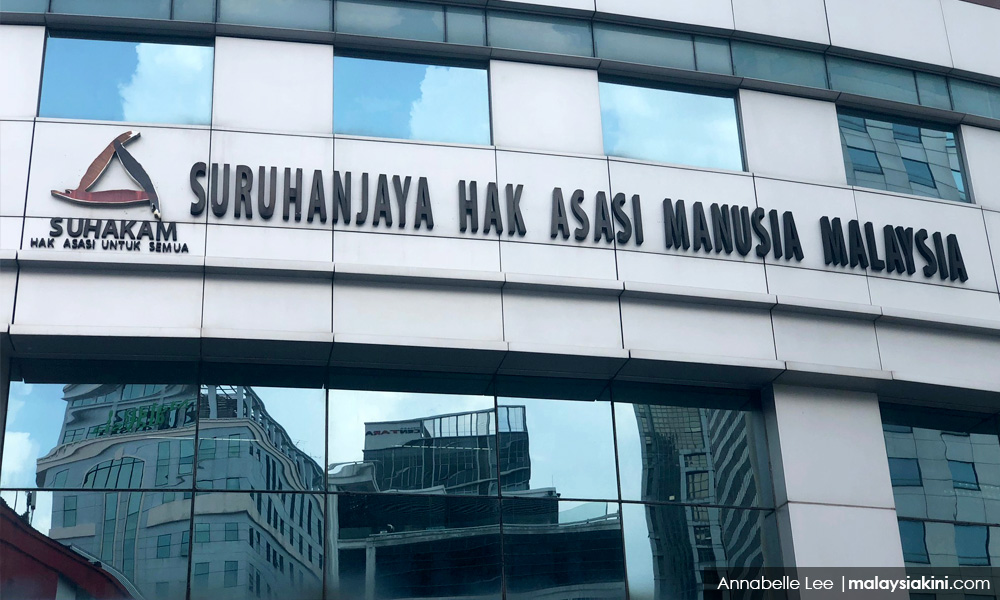
8 Groups Statement - SUHAKAM ‘dead’ with no HR Commissioners for 1 Month is unacceptable


Media Statement – 27/5/2022

SUHAKAM ‘dead’ with no HR Commissioners for 1 Month is unacceptable

We, the 8 undersigned organizations and groups are perturbed that the Malaysian Human Rights Commission (SUHAKAM) has ceased to function when the term of office of the previous Chairman and SUHAKAM Commissioners came to an end on 27/4/2022, and to date no new Chairpersons and HR Commissioners have been appointed.

Without any HR Commissioners, SUHAKAM cannot play the vital role it has been playing in Malaysia. They can make no SUHAKAM statements, recommendations to the government or even hold public inquiries. Human Rights suffers.

A media report on 11/5/2022, stated that the ‘…Human Rights Commission of Malaysia (Suhakam) is conducting an investigation into alleged human rights violations against junior doctors at public hospitals in Malaysia…’ raises a fundamental question, as to how SUHAKAM, with NO Commissioners at present, can even make such a statement. SUHAKAM employees reasonably cannot act on their own if and when there are no Commissioners. (FMT, 11/5/2022).

SUHAKAM is a statutory body created by reason of the Human Rights Commission Of Malaysia Act 1999, and the Commission is made up of the appointed HR Commissioners, appointed for a 3-year term. When there are NO Commissioners, as had been the case for the past month, SUHAKAM ceases to function, and will not be able to do anything including issuing  statements, appointing and also providing directions to SUHAKAM’s staff/employees.

Noting the important role that SUHAKAM has been playing in Malaysia, in terms of the promotion and defense of human rights, it is an embarrassment for SUHAKAM to find itself in a comatose stage by reason of a failure of government to ensure that SUHAKAM always have Commissioners.

It must be pointed out that the process of identifying and selecting new SUHAKAM Commissioners began in October 2021, and so the failure of the appointment of Chairperson and new Commissioners on or before the end of the term of previous Commissioners on 27/4/2022.

The choice of the future Chairperson and SUHAKAM Commissioners is crucial, for that determines the future functioning and effectiveness of the National Human Rights Institution.

In the past, from the birth of SUHAKAM, its effectiveness was not so evident but it changed after Tan Sri Hasmy Agam (2010-2016), and later Tan Sri Dato' Razali bin Ismail(2016-2019)  were appointed as Chairpersons of SUHAKAM. The strong effective SUHAKAM continued on until April 2022.

The number of Commissioners who will act without fear or favour for human rights in SUHAKAM is crucial, for all decisions of SUHAKAM requires consensus failing which the decision by a two-thirds majority of the members present at meetings shall be required. If the wrong kinds of Commissioners are appointed, we may end up with a less vocal, possibly ‘pro-government’ SUHAKAM who may be disinclined to speak up when required, or even hold public inquiries, more so when the alleged perpetrators may be State or State officers.

If the wrong Chairperson and Commissioners are chosen, there may be no more public inquiries on matters of human rights, like the Public Inquiry Into The Disapperances Of Joshua Hilmy And Ruth Sitepu, Public Inquiry Into The Disappearance of Pastor Raymond Koh And Amri Che Mat, Public inquiry into the incidents during and after the public assembly of 28 april 2012, Public Inquiry into the Infringement of Human Rights Including the Use of Excessive Force Prior to and During the Assembly on 9 July 2011, Public Inquiry Into The Arrest And Detention Of Five Lawyers Of The Kuala Lumpur Legal Aid Centre on 7 May 2009, Public Inquiry Into The Allegation Of Excessive Use Of Force By Law Enforment Personnel During The Incident Of 27th May 2008 At Persiaran Bandar Mahkota Cheras 1, Bandar Mahkota Cherasil and inquiries into death in custody.  

The days when the Human Rights Commission of Malaysia (SUHAKAM) was effectively an independent organisation which investigates complaints for the violation of human rights may come to an end.

We hope that the members of the Commission appointed by the Yang di-Pertuan Agong on the recommendation of the Prime Minister are done without any more delay.

Charles Hector

For and on behalf of the 8 groups/organizations listed below


ALIRAN

MADPET(Malaysians Against Death Penalty and Torture)

Greenpeace Malaysia

International Women's Rights Action Watch Asia Pacific (IWRAW AP)

NAMM (Network of Action for Migrants in Malaysia)

Saya Anak Bangsa Malaysia (SABM)

Teoh Beng Hock Trust for Democracy

WH4C (Workers Hub For Change)


Suhakam left with no commissioners for third time

Mah Weng Kwai says having no commissioners will affect advocacy work and maintaining the good standing of Suhakam.

PETALING JAYA: The Human Rights Commission of Malaysia (Suhakam) does not have any commissioners after their term expired yesterday, similar to what happened twice previously.

Former commissioner Mah Weng Kwai said a selection committee met on Monday and the process would take some time.

“As of today, there are no commissioners and this will affect advocacy work and maintaining the good standing of Suhakam,” he told FMT.

Mah said only the Suhakam management functioned and no policy decisions could be made.

There are nine commissioners who have a three-year term from 2019.

Five, including Mah, a former Court of Appeal judge, served two terms, the maximum allowed under the Suhakam Act.

The other four – Osman Hashim, Noor Aziah Mohd Awal, Madeline Berma and Hishamudin Md Yunus – could be reappointed for another term.

FMT understands that Hishamudin, also a retired Court of Appeal judge, had expressed his wish not to be reappointed.

Mah said that three years ago, it took the government two months to appoint the commissioners.

“It is in the best interest of the public that the commission is up and running at all times as there are always serious challenges on human rights issues like the threat to the independence of the judiciary,” he said.

In 2016, under Najib Razak’s administration, Suhakam was also left without commissioners for almost two months. - FMT, 27/4/2022


Five Suhakam commissioners complete two service terms
Published:  Apr 27, 2022 10:22 AM
Updated: 10:25 AM

Five Suhakam members completed their second term at the human rights commission yesterday.

They are Mah Weng Kwai, Jerald Joseph, Nik Salida Suhaila Nik Saleh, Lok Yim Pheng and Godfrey Gregory Joitol.

All five started their tenure as Suhakam commissioners in 2016 during then prime minister Najib Abdul Razak's administration.

Each term lasts three years. Section 5(4) of the Human Rights Commission of Malaysia Act 1999 (Suhakam Act) does not allow a third term.

Four other commissioners completed their first term including Othman Hashim (outgoing chairperson), Madeline Berma, Mohd Hishamuddin Md Yunus and Noor Aziah Mohd Awal.

Putrajaya has yet to announce the list of replacement commissioners.

Suhakam members are appointed by the Yang di-Pertuan Agong on the recommendation of the prime minister in consultation with an appointment committee chaired by the chief secretary of the government.

According to Section 11 of the Suhakam Act, the committee must also consist of the chairperson of Suhakam and three members of civil society who have practical experience in human rights matters, appointed by the prime minister.

In previous cycles, there have been incidents where there will be a gap of several months before a new batch of commissioners is appointed. - Malaysiakini, 27/4/2022

Tuesday, May 10, 2022

MADPET - 16th Death In Police Custody in 2022, and disclosure of Coroner’s investigation and status of reform implementation to reduce deaths, and facilitate investigation needed


Media Statement – 10/5/2022

16th Death In Police Custody in 2022, and disclosure of Coroner’s investigation and status of reform implementation to reduce deaths, and facilitate investigation needed

Pre-detention medical check-up, CCTV/Body Cams, Coroners

16th death in police custody in Malaysia in 2022, and this does not include other deaths in custody at other government facilities. This time, it was a 48-year-old man who was temporarily placed at the Seri Alam lock-up while awaiting imprisonment after being sentenced to a five-month jail term from April 27 for drug-related offenses.(FMT, 8/5/2022). Why was he placed in a police lock-up, when he really ought to have immediately been sent to prison?

It must be pointed out that persons held in police lock-ups are persons or suspects arrested, who need to be placed in police custody, including detained in a police lock-up, for the purposes of police completing their investigations. Other persons should be detained in the appropriate detention facility.

With so many deaths in police custody, one needs to be reminded, amongst others, of rights of persons arrested, the right of police to detain further to complete investigations, the status of the needed reforms to ensure proper behavior of police and reduce police responsibility for deaths and whether our Coroners are effectively carrying out their responsibilities.

Detention in police lock-ups unnecessary for all police investigations

After the cases of of former Prime Minister Najib, his spouse Rosmah, the current UMNO President Zahid Hamidi and several others, Malaysians now know that police need not detain any suspect for the purposes of completing police investigation. Persons arrested can be immediately released, requiring them to turn up at the police station at particular times for police to continue their investigations.

If a detainee elects ‘silence’, is further detention a ‘torture’?

A suspect or a person investigated have the right to silence, in that he/she ‘…may refuse to answer any question the answer to which would have a tendency to expose him to a criminal charge or penalty or forfeiture…’(Section 112, Criminal Procedure Code). Today, in Malaysia, a ‘confession’ given by an accused person whilst in police custody can no longer be used by the prosecution – a right move as such confession may have been as a result of torture, lies, etc. Section 113 (3) states that, ‘Where the accused had made a statement during the course of a police investigation, such statement may be admitted in evidence in support of his defence during the course of the trial.’, which means that such statements can be used by the accused person, but not the prosecution. This is the general rule.

Section 28A(4) of the Criminal Procedure Code states that, ‘Where the person arrested has requested for a legal practitioner to be consulted, the police officer shall allow a reasonable time- (a) for the legal practitioner to be present to meet the person arrested at his place of detention; and (b) for the consultation to take place.’ The police officer shall defer any questioning or recording of any statement from the person arrested for a reasonable time until the communication or attempted communication with the lawyer happens.

If a suspect and/or witness take the option to remain silent, what really is the purpose of keeping a suspect in police detention? All that police investigation entails then would be the taking of one’s photograph, fingerprints and maybe in some cases, DNA evidence. A person may need to be detained maybe if the police, as part of its investigation, wanted to do an identification parade. As such, how much time does a suspect really need to be detained – and during his/her detention, how much time did he/she spend with the investigation officer. How many hours did he/she simply spend in the lock-up, and would this not be considered ‘torture’, noting that the police in Malaysia is prohibited from using torture as part of their investigations.

Another problem could be the insufficiency of qualified investigation officers in the police, and the available few is burdened with simply having to investigate too many cases at the same time – so suspects awaiting their turn to be investigated languish unnecessarily in police detention.

Immediate Medical check-up for arrestees who will be detained

Death in police custody have been a concern for a long time, and in fact, the Malaysian government is in the process of making sure that every person arrested, and to be detained ought to immediately be inspected by a medical practitioner – this would determine the health/medical condition of such detainee, and will also ensure speedy healthcare if needed to prevent any deterioration of health and/or death. As government healthcare facilities and doctors are available in most places, implementation of this practice should not have been delayed. A medical examination will also help determine whether a person who later dies, did not die by reason of matters that happened post arrest and/or police custody.

The Minister, In a Parliamentary Reply on 16/12/2021, informed us about the set-up of Custodial Medical Unit (CMU), which will also do a medical examination of detainees before they are placed in police lock-ups. This, according to the Minister, will start as pilot projects in 5 police lock-ups. This is not acceptable, and it must be implemented immediately nationwide, and until then persons arrested must undergo medical examinations by government doctors before being detained. This is rather easy to be done, and must be a standard operating procedure for all arrested, who will be detained in police custody.

CCTV and body-cams

CCTV at police stations has also been on the agenda for some time. If there are CCTV recordings that documents what happens to a person from the point of arrest and for the times one is in police custody, it would be evidence that the police is not responsible for the causing of the death of a detainee, and that the police conducted themselves in accordance with Malaysian law including the fact that there was no torture.

In Hong Kong, it has been the practice for several decades now, that the suspect and/or lawyer is provided with a copy of CCTV recording proving that the law was complied with by the police.

In Malaysia, the problem that has arisen before even in inquests was the fact that there were no CCTV recordings – sometimes because there were no CCTV installed, the CCTV was not functioning or there is simply no CCTV recordings as the CCTV installed does not have recordings and/or storage capacity.

The government recently talked about body-cams and cameras on police vehicles, which would help ensure the available of documentary evidence right from the point of arrest, and MADPET urges immediate disclosure on the current status of these CCTVs and body-cams.

Coroner – has he been informed, and has he begun inquiries?

There is still a disturbing silence on the part of the Coroners in Malaysia regarding the status of their inquiries into these deaths in custody, and media reports have mostly been about police investigation and findings. The Coroner must announce what is happening on their inquiries of the now 15 deaths in custody in Malaysia. What are the Coroner’s findings? Will there be public inquest, or not?

It will be good if the name of the Coroner responsible for each death be informed, so members of the public with relevant information may be able to forward such information directly to the Coroner, as many may be unwilling to disclose such information, more so if the information indicates possible police responsibility in the deaths.

MADPET (Malaysians Against Death Penalty and Torture) urges the Malaysian government to prioritize the elimination and the investigation of the deaths in custody in Malaysia. Post arrest pre-detention medical examination, CCTV and body-cams and other things that need to be done must be expedited. Lives matter, even those of suspected and convicted criminals.

Charles Hector

For and on behalf of MADPET(Malaysians Against Death Penalty and Torture)


Another death in custody, 16th this year

A man awaiting imprisonment died in a lock-up at Seri Alam, Johor, this morning.

PETALING JAYA: Another man has died in custody – the 16th case this year – this time at a police station in Johor.

The deceased was a 48-year-old man who was temporarily placed at the Seri Alam lock-up while awaiting imprisonment after being sentenced to a five-month jail term from April 27 for drug-related offenses.

Bukit Aman’s integrity and standards compliance department director Azri Ahmad said the man was found in a weak condition at the lock-up this morning.

A doctor from Masai health clinic conducted a checkup and confirmed his death at 9.35am.


Fifteen custodial deaths have been reported this year alone before the latest incident.

The last case was reported on April 14, when a 45-year-old male detainee at the lock-up of Kajang police station died on the way to hospital on April 13, after he was “seen to be having seizures” by personnel on duty. - FMT, 8/5/2022

Monday, May 02, 2022

When only companies, but not the Directors and Officers are charged when workers die > 15 Group Joint Statement


Media Statement – 3/5/2022

Is it the Minister or is it the Public Prosecutor that ‘protects’ Directors and/or humans in companies from being charged when OSH laws are breached and worker/s die?

174 workers killed and 249 disabled in 6,686 workplace accidents in 2021

We, the 15 undersigned groups, trade unions and organization are concerned as to why human persons responsible for worker safety and health are still not being charged in court even when workers are killed or injured despite the fact that the Occupational Safety and Health Act 1994 provides for this. Prosecution for offences under this Act requires the consent of the Public Prosecutor, and as such one wonders whether it is the Public Prosecutor or is it the Minister that is deciding to charge only the company, but not the director, manager, secretary or other like officer of the body corporate even when workers are killed.

It was recently reported that a state-linked company (SLDB Management Sdn Bhd) and a manufacturing firm was found guilty for the offence under Section 15(1) of the Occupational Safety and Health Act 1994, for neglecting safety aspects, which resulted in the deaths of their workers which provides for a fine of up to RM50,000 or a jail term of up to two years, or both, upon conviction. It appears from the media report that no ‘director, manager, secretary or other like officer of the body corporate…’ was charged(Star, 8/4/2022)

After state-linked SLDB Management Sdn Bhd pleaded guilty on Friday (April 8), the company was ordered by the Sessions Court to pay a fine of RM15,000 for the death of Indonesian worker Cahya Abdullah at Ladang Bombong 1, Kampung Bombong in Kota Marudu on May 25 2021. SLDB Management was also ordered to pay RM5,000 by April 14 to Cahya's next of kin.

In the other case, Englen Manufacturing Sdn Bhd after its representative admitted to the charge, was sentenced with a fine of RM20,000 or three months' jail. The company was accused of failing to ensure the safety of its worker Bonnie Roger, who was involved in a fatal accident at its premises on May 15 last year at the Kota KInabalu Industrial Park here.

What is of concern is that no human decision maker or owner of these companies were charged for these offences despite the fact that Section 52 of the Occupational Safety And Health Act 1994 states ‘(1) Where a body corporate contravenes any provision of this Act or any regulation made thereunder, every person who at the time of the commission of the offence is a director, manager, secretary or other like officer of the body corporate shall be deemed to have contravened the provision and may be charged jointly in the same proceedings with the body corporate or severally, and every such director, manager, secretary or other like officer of the body corporate shall be deemed to be guilty of the offence.’ Subsection (2) states, (2) A person may be proceeded against and convicted under the provision of subsection (1) whether or not the corporation has been proceeded against or has been convicted under that provision.

It must be pointed out that in a company, all decisions are made by human persons, including ensuring the safety of workers. It is absurd that only the company is charged in court, and not the human decision makers or those responsible. With regards to a company, they can only be fined – it obviously cannot be imprisoned.

Concern arises about this practice of not charging Directors and officers of the company, more so when it is a government linked company (GLC), where Directors may be politically appointed persons is a worry. Directors of companies have a great responsibility not just to the shareholders but also to all workers, and actions or omissions be it intentionally or negligently done, to avoid making workplaces safe to protect workers and their health should no longer be tolerated.

Even in the recent 2 cases in Sabah, we find that the companies immediately admitted guilt, and as such there will also not be any grounds of judgment that can be educational to other employers to ensure that they do not ignore safety and health of workers.

The cases was dealt at the Sessions Court, even when death was a result of the fault of the employer, and this may also lead to non-dissemination and/or reporting of the grounds of judgment in law journals.

We take the view that when a worker dies, or is injured by reason of an employer’s failure to ensure the safety and health of a worker, this matter should be dealt by the High Court, and a higher penalty ought to be imposed on the guilty employer company, and its a director, manager, secretary or other like officer of the body corporate. Black listing of such convicted companies and its directors may also be needed to ensure employer’s place the highest regard to complying with the law concerning occupational health and safety.

Statistics from the Department of Occupational Safety and Health (DOSH) showed that there were 6,686 workplace accidents reported as of December 2021, of which 174 were fatal. Another 249 victims became disabled. This shows that this issue is a very serious issue for the protection of workers.

Prior Written Consent Of The Public Prosecutor – Who decided not to charge Directors,etc?

Section 61 of the Occupational Safety And Health Act 1994 states that ‘Prosecutions in respect of offences committed under this Act or any regulation made thereunder may, with the prior written consent of the Public Prosecutor, be instituted and conducted by an occupational safety and health officer or by an officer specially authorized in writing by the Director General subject to the provisions of the Criminal Procedure Code.

By reason of the written consent requirement, the Public Prosecutor may be the person refusing to give the required consent if and when the Ministry wants to charge certain directors, managers, secretary or other like officer of the body corporate, and so they cannot be charged.

Alternatively, it may the officers of the Ministry, being the ‘…occupational safety and health officer or by an officer specially authorized in writing by the Director General…’ who chooses not to charge any directors, managers, secretary or other like officer of the body corporate.

This matter needs to be clarified, and the reasons for not charging the human persons in these companies need to be investigated. We hope that there is no corruption or abuse of power involved.

The maximum fine from RM50,000 will be increased to RM500,000 by virtue of the Occupational Safety And Health (Amendment) Act 2022, which was gazetted on 16/3/2022, but is not yet put into force by the Minister, being the Human Resource Minister. Why the delay?

As such, the Session Courts imposition of fines of only RM15,000 and RM20,000 in the cases mentioned above where workers died by reason of the companies’ breach of the law, when Parliament had already decided to raise fines is also questionable. True, that the current maximum applicable in this cases was only RM50,000, and justly where the companies admitted guilt, maximum fines should have been imposed since workers died by reason of the companies breach of the law.

The Public Prosecutor and the Minister must explain why  directors, manager, secretary or other like officer of the body corporate are not being charged and jailed more so in cases when the breach of law resulted in injury or death of workers.

Every time that a company is charged for such offences, the persons who are responsible for the acts/omissions that resulted in the violation of the law reasonably must also be charged. It is odd if just the company is charged, and not the human persons responsible.

Charles Hector

Apolinar Z Tolentino Jr.


For and on behalf of the following 15 groups/organisations

WH4C (Workers Hub For Change)

Building and Wood Worker's International (BWI) Asia Pacific

Labour Law Reform Coalition(LLRC)

ALIRAN

Persatuan Sahabat Wanita Selangor

Asociación de Trabajadoras del Hogar a Domicilio y de Maquila–Atrahdom, Guatemala

Black Women for Wages for Housework

Clean Clothes Campaign (CCC) SEA Coalition

Haiti Action Committee

MADPET (Malaysians Against Death Penalty and Torture)

Malaysian Physicians for Social Responsibility (Dr R S McCoy)

NAMM (Network of Action for Migrants in Malaysia)

North South Initiative

The William Gomes Podcast, United Kingdom

Women of Color/Global Women’s Strike


Two Sabah firms fined for negligence over workers' death

By MUGUNTAN VANARSabah & Sarawak


Friday, 08 Apr 2022 7:56 PM MYT


KOTA KINABALU: A state-linked company and a manufacturing firm have been fined by the Sessions Court here for neglecting safety aspects, which resulted in the deaths of their workers.

A representative of state-linked SLDB Management Sdn Bhd pleaded guilty on Friday (April 8) and was ordered to pay RM15,000 for the death of Indonesian worker Cahya Abdullah at Ladang Bombong 1, Kampung Bombong in Kota Marudu on May 25 last year.

The offence under Section 15(1) of the Occupational Safety and Health Act 1994 provides for a fine of up to RM50,000 or a jail term of up to two years, or both, upon conviction.

Judge Elsie Primus also ordered SLDB Management to pay RM5,000 by April 14 to Cahya's next of kin.

Cahya died after falling off a trailer mounted on a tractor which was deemed unsuitable for carrying workers.

In another case, judge Noor Hafizah Mohd Salim imposed a fine of RM20,000 or three months' jail against Englen Manufacturing Sdn Bhd after its representative admitted to the charge.

The company was accused of failing to ensure the safety of its worker Bonnie Roger, who was involved in a fatal accident at its premises on May 15 last year at the Kota KInabalu Industrial Park here.
 
According to the charge sheet, Bonnie's death resulted from unsafe work procedure involving a welding machine. - Star, 8/4/2022


Work towards zero workplace accidents, urges NIOSH chairman

By RAGANANTHINI VETHASALAM Nation


Thursday, 28 Apr 2022 3:46 PM MYT


PETALING JAYA: There should be zero accidents at workplaces, if possible, says National Institute for Occupational Safety and Health (NIOSH) chairman Datuk Wilson Ugak Kumbong.

Wilson urged employers and employees to practise a safe and healthy working environment to prevent any mishaps.

Therefore, he urged stakeholders to work as a team and conduct activities related to safety and health to ensure a safe work environment.

“At least, we want zero accidents or casualties.

“Our goal is to reduce accidents at workplaces,” he said at the sidelines of the Occupational Safety and Health Day celebration.

Statistics from the Department of Occupational Safety and Health (DOSH) showed that there were 6,686 workplace accidents reported as of December 2021, of which 174 were fatal. Another 249 victims became disabled.

The sector which contributed to the highest number of deaths during the period was construction, where 65 casualties were reported.

As at the first quarter of this year, there were 1,703 such accidents reported which claimed the lives of 48 while 54 became disabled.

The manufacturing sector contributed to the highest number of fatalities coming from manufacturing and construction which reported 16 deaths each.

Meanwhile, Wilson also advised the public to continue to observe standard operating procedure (SOP) to curb Covid-19, despite the announcement on relaxations.

“Children as young as two to three years old have yet to be vaccinated and only those aged five and above have been vaccinated. So if possible please observe the SOP while you are with your family,” he said.

“If there is a big crowd, why not use the SOP to be safe,” he said.

Health Minister Khairy Jamaluddin announced a slew of relaxed measures on Wednesday (April 27). Among the measures were making MySejahtera check-ins and wearing face masks outdoors no longer compulsory. - Star, 28/4/2022
 
 
OCCUPATIONAL SAFETY AND HEALTH ACT 1994
 
52  Offences committed by body corporate

(1) Where a body corporate contravenes any provision of this Act or any regulation made thereunder, every person who at the time of the commission of the offence is a director, manager, secretary or other like officer of the body corporate shall be deemed to have contravened the provision and may be charged jointly in the same proceedings with the body corporate or severally, and every such director, manager, secretary or other like officer of the body corporate shall be deemed to be guilty of the offence.

(2) A person may be proceeded against and convicted under the provision of subsection (1) whether or not the corporation has been proceeded against or has been convicted under that provision.

 61  Prosecutions

Prosecutions in respect of offences committed under this Act or any regulation made thereunder may, with the prior written consent of the Public Prosecutor, be instituted and conducted by an occupational safety and health officer or by an officer specially authorized in writing by the Director General subject to the provisions of the Criminal Procedure Code.


Friday, April 29, 2022

Silence of the Coroner about the 8 deaths following the Sungai Bakap Immigration Detention Depot incident disturbing - Death of detainee at detention facility by reason of Covid may make government criminally liable

Media Statement – 29/4/2022

Silence of the Coroner about the 8 deaths following the Sungai Bakap Immigration Detention Depot incident disturbing

Death of detainee at detention facility by reason of Covid may make government criminally liable

MADPET (Malaysians Against Death Penalty and Torture) is concerned about the silence of the Coroner on the recent 8 deaths, including one that allegedly died by reason of Covid-19. The Coroner must state whether he/she has decided to have an inquest or otherwise. Death by reason of Covid in a detention facility may place criminal liability on the government, Commandant of Detention facility, Minister and other relevant public officers.

At about 4am last Wednesday(20/4/2022), 528 Rohingya detainees, being men, women and children, escaped or broke out  from the Sungai Bakap Immigration Detention Depot in Penang. 7, including 3 children, were killed when hit by a car while crossing the North-South Expressway at Kilometer 168. The seventh – a 14-year-old girl – succumbed to her injuries yesterday (NST, 27/4/2022).

Another died, allegedly because of Covid-19. Kedah police chief Commissioner Wan Hassan Wan Ahmad was reported saying, that the ‘…Police have ruled out foul play behind the death of a Rohingya detainee at the Temporary Immigration Detention Depot near Bandar Baharu last Wednesday. "The detainee's death was a separate matter. We have classified the case under a sudden death report (SDR) case. He had died from virus infection after contracting Covid-19," Wan Hassan told reporters…(New Straits Times, 28/4/2022). It looks like the detainee died at the depot, not at some hospital where he was admitted for treatment.

When a detainee is in a government detention facility dies by reason of Covid, the government including the Minister of Home Affairs, Director General of Immigration and the Commandant of the Immigration Detention facility may be criminally concerned or liable for the death.

Unlike a person not under detention, who can freely do the needful including compliance with Standard Operating Procedures (SOP) to prevent being infected by Covid-19, which include doing the needed self-tests and seeking necessary healthcare, a person under detention is denied many of these freedoms, and the duty to keep free a detainee from being infected by Covid, and also getting the needed healthcare, reasonably falls on the detaining authority.

It has been more than 2 years since Malaysia been affected by Covid-19, and the question is whether the relevant authorities are making sure that detainees in government facilities are complying with the SOPs to prevent infection, detect infections and provision of the necessary speedy healthcare if found to be infected. Were there regular temperature checks, Covid testing and medical check-ups done at the Sungai Bakap Immigration Detention Depot? The fact that the detainee died in detention, not in some hospital whilst receiving necessary medical attention raises questions?

The Coroner is supposed to determine also ‘whether any person is criminally concerned in the cause of the death’ (Section 337 Criminal Procedure Code/CPC).

Criminal liability arises not simply by reason of actions, but also omissions. The failure to ensure detainees in a detention facility are not infected by Covid-19, the failure to detect infection amongst detainees and/or the failure to provide speedy healthcare to the infected are possible reasons why the government and/or other responsible persons may be found criminally liable and/or concerned with the death.

The Coroner must forthwith have an INQUEST(or inquiry into deaths) into this death in custody allegedly by reason of Covid-19, and also the other 7 deaths that resulted by reason of allegedly a vehicular incident.

In the currently applicable Practice Direction issued by the then Chief Justice of Malaysia Tan Sri Datuk Seri Panglima Richard Malanjum [Arahan Amalan Bil 2 Tahun 2019, Pengendalian Laporan Mati Mengejut Dan Siasatan Kematian Oleh Mahkamah Sesyen Koroner] it was emphasized that cases classified as ‘sudden deaths’ must be investigated by the Coroner, and, if need be, it should be reclassified as a case requiring inquest, or a death in custody case. The Coroner ought not simply or blindly accept police classification of ‘sudden deaths’.

All 8 deaths that happened, in MADPET’s view, are deaths in custody.

Noting that whilst the Coroner in Malaysia, now a Sessions Court Judge, is duty bound to determine the cause of death of all deaths in Malaysia, with or without an inquest. Section 334 CPC re-emphasizes the need for an inquest for deaths in custody, and this includes deaths of persons who were in custody at the Sungai Bakap Immigration Detention Depot.

Did the relevant officers/authorities adhere to the law, and immediately informed the Coroner of the deaths – ‘…shall immediately give intimation of such death to the nearest Magistrate, and the Magistrate or some other Magistrate shall, in the case of a death in the custody of the police, and in other cases may, if he thinks expedient, hold an inquiry into the cause of death…’.(s.334)

While public attention is now on the case of Sam Ke Ting who was recently sentenced to six years in prison for reckless or dangerous driving, resulting in the death into eight teenagers riding their bicycles on a road. The High Court allowed the appeal overturning the Magistrate’s Court decision to acquit and discharge the 27-year-old woman last October 2021. Will the driver/s of the car/s that caused the death of the 7 that ‘escaped’ from the Immigration detention facility be similarly charged?

What was the protest or grievance of the detainees the Sungai Bakap Immigration Detention Depot that led them to run away from detention? Was it simply a ‘riot’ or an exercise of the right to peaceful assembly that led these 500 plus to escape? Is there a need for an independent inquiry by a Royal Commission of Inquiry, a Parliamentary Committee, SUHAKAM(Malaysia’s Human Rights Commission), EAIC(Enforcement Agency Integrity Commission) or some other independent body. MADPET calls for an independent public inquiry into the incident at Sungai Bakap Immigration Detention Depot that to date has resulted in at least 8 deaths.

MADPET calls for a report by the Coroner as to his/her findings, including as to whether a public inquest will be done. If the government and/or relevant persons are criminally liable for the deaths, action including criminal prosecution must be taken without fear or favour, and indiscriminately as stated in Article 8(1) of the Federal Constitution, ‘All persons are equal before the law and entitled to the equal protection of the law.’

MADPET also reiterates the call for enacting of a law that clearly recognizes the asylum seeker and/or refugees, as current law only recognizes foreigners in Malaysia with the proper documentation and those without. As such, asylum seekers and/or refugees may be treated the same as any foreigners found in Malaysia without proper documentation, and this is not just.


Charles Hector

For and on behalf of MADPET(Malaysians Against Death Penalty and Torture)

Depot escape: No foul play behind detainee death; police probing all angles, including negligence

GURUN: Police have ruled out foul play behind the death of a Rohingya detainee at the Temporary Immigration Detention Depot near Bandar Baharu last Wednesday.

Kedah police chief Commissioner Wan Hassan Wan Ahmad said a post-mortem examination conducted on the detainee revealed that the he had died from Covid-19 infection.

However, Wan Hassan stressed that investigations into the rioting incident was still ongoing and this includes possible elements of negligence by the depot management.

"Our investigations are taking into account all possible elements. How it happened, why it happened, who were the masterminds in the rioting element, we take into account everything and will submit the investigation papers to the Deputy Public Prosecutor's Office.

"It is up to the DPP or the state Prosecution director to decide whether it is proper to charge anyone (for negligence).

"The detainee's death was a separate matter. We have classified the case under a sudden death report (SDR) case. He had died from virus infection after contracting Covid-19," Wan Hassan told reporters after launching the state-level Op Selamat for the Hari Raya festive season at the North-South Expressway rest area in Gurun here today.

He explained that was why police had classified the case under Section 223/224 of the Penal Code for escape from confinement negligently suffered by a public servant and also under Section 147 of the Penal Code for rioting.

"We are probing from all possible angles. I have called for a meeting earlier today and we have identified a few things that need to be done and follow up actions.

"We have also recorded a statement from the depot management. If there is an element of negligence, we will zoom on to establish how bad it was but for now I can't divulge the details as investigations are still underway," he said.

In a related development, Wan Hassan said the number of escapees still at large remained at 61 as of today.

Yesterday, he was reported as saying police believed the Rohingya detainees had made their way to Seberang Perai Selatan in Penang.

In the 4am incident last Wednesday, 528 Rohingya detainees staged a riot before breaking out from the depot.

However, six of them including two children were killed when they were hit by a car while crossing the North-South Expressway near Jawi in their attempt to flee. A seventh – a 14-year-old girl – succumbed to her injuries yesterday.

Police have since recaptured over 400 of the detainees with 61 more still at large.

It was reported that several hours prior to the rioting incident, one of the detainees, in his 30s, had died in the depot.

The detainees had claimed that the camp management had failed to provide medical treatment for the sick detainee.- NST, 28/4/2022


Another Rohingya detainee in NSE crash dies

GEORGE TOWN: The death toll from last week's North-South Expressway crash that saw several escapees from an Immigration temporary detention depot in Kedah killed increased to seven yesterday.

This was as a 14-year-old girl who was seriously injured in the crash succumbed to her injuries at the Seberang Jaya Hospital.

State police chief Datuk Mohd Shuhaily Mohd Zain confirmed the victim's death, adding that another victim, a 21-year-old man, was still being treated at the same hospital.

"Investigations into the incident are ongoing. We have recorded statements from several witnesses to assist investigation into the crash," he said after the launch of the state-level Op Selamat at the Bayan Baru Ramadan bazaar here this afternoon.

About 4.30am last Wednesday, 528 Rohingya detainees broke out from the detention centre in Bandar Baharu after staging a protest.

Local villagers managed to recapture 88 of them before surrendering them to the Immigration Department.

Subsequently, Penang police managed to rearrest 229 of them at Km168 of the NSE.

In their haste to flee, a group of Rohingya attempted to rush across the NSE, and a passing vehicle rammed into them, leading to six being killed and several injured.

The dead were two men aged 20 and 36, two women aged 14 and 18, a 9-year-old boy and a girl, 8.

Meanwhile, Shuhaily said police are still on the hunt for another 61 Rohingya detainees who fled, with the latest two arrests made in the state on Monday.

Asked if that meant the detainees may have fled from Penang, Shuhaily said there was a possibility as the borders of the neighbouring states were nearby.

"What I am concerned about is the possibility that the Rohingya detainees may have assimilated with the locals.

"It has been one week after their escape and they may have gotten help in terms of food, which is why they are able to resist being arrested," he added.- NST, 27/4/2022

Woman previously acquitted of reckless driving now gets six years’ jail for mowing down eight teens on JB road

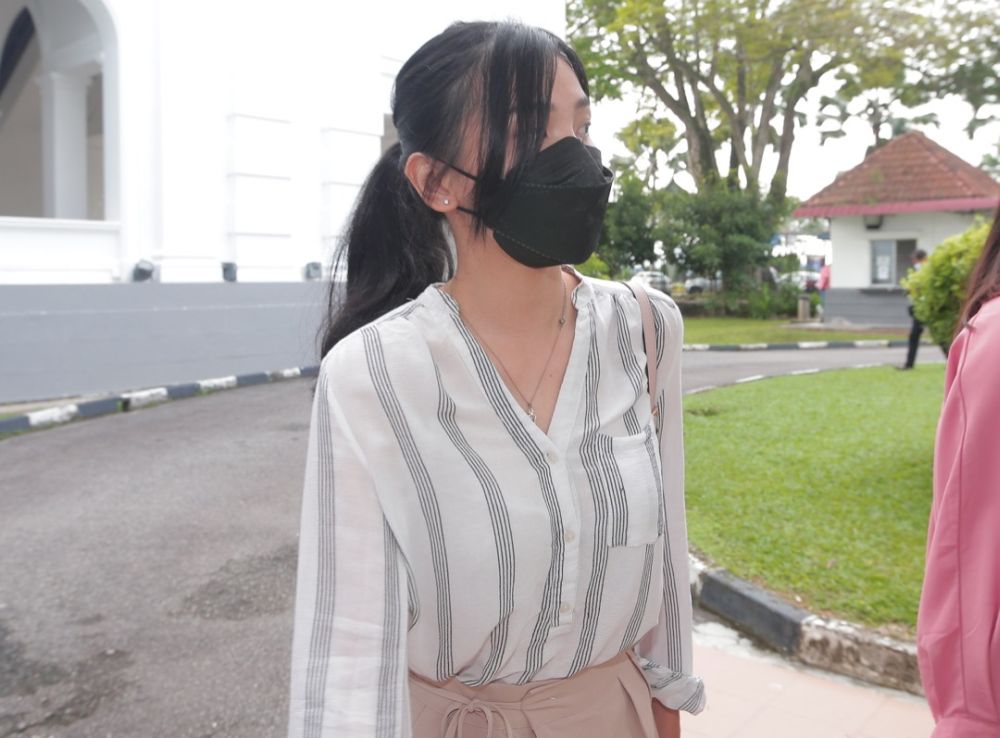
Sam Ke Ting is pictured at the Johor Baru High Court April 13, 2022. — Picture by Ben Tan


JOHOR BARU, April 13 — Sam Ke Ting was today sentenced to six years in prison by the High Court for crashing into eight teenagers riding their bicycles on a road here about five years ago.

The decision was made by High Court Judge Datuk Abu Bakar Katar after the prosecution succeeded in their second appeal against the Magistrate’s Court decision to acquit and discharge the 27-year-old woman last October last year.

Sam had been charged with reckless or dangerous driving, resulting in the death of eight cyclists on Jalan Lingkaran Dalam, Johor Baru on February 18, 2017.

Sam, a clerk, was also ordered to serve six months in prison if she did not pay a RM6,000 fine, apart from being disqualified from driving for three years effective after the completion of her prison sentence.

In his judgment, Abu Bakar said the Magistrate’s Court has erred in failing to decide the respondent’s defence without being under oath.

“The respondent, in her defence, stated that she did not see the group of cyclists at the scene of incident and there were other vehicle that hit the deceased bicycles and drove away. This version had never been raised by the respondent during the prosecution case.

“The Magistrate’s Court made a mistake when it accepted the respondent’s defence for not knowing there would be ‘basikal lajak’ activity during the time of the incident as an excuse to drive dangerously, which resulted in the victims’ deaths.

“The respondent should have drove carefully instead driving fast, causing the incident and she should have realised that the area’s lighting was not bright at around 3.20am,” he said before sentencing.

Sam had earlier appeared at the Johor Baru High Court compound at about 9am wearing a white striped shirt and brown long pants. She looked calm after the sentence was handed down.

Defence counsel Muhammad Faizal Mokhtar urged the High Court to grant a stay of execution on Sam as they would be appealing the case at the Court of Appeal.

However, Abu Bakar rejected Sam’s appeal for stay of execution as they have yet to receive approval from the Court of Appeal.

Johor prosecution director Tengku Amir Zaki Tengku Abd Rahman and deputy public prosecutor Muhammad Syafiq Mohd Ghazali prosecuted the case.

On October 10 last year, the Johor Baru Magistrate’s Court upheld the decision of the accused to be acquitted and acquitted of the charges which occurred on February 18, 2017.

Based on the charge sheet, Sam who at the time of the incident was 22-years-old, was accused of driving a car with registration number JQB 9984 along Jalan Lingkaran Dalam recklessly or dangerously resulting in the death of eight cyclists at 3.20am.

The eight victims involved were Mohamad Azrie Danish Zulkefli, 14 (at the time of the incident);  Muhamad Shahrul Izzwan Azzuraimie, 14;  Muhammad Firdauz Danish Mohd Azhar, 16;  Fauzan Halmijan, 13;  Mohamad Azhar Amir, 16;  Muhammad Harith Iskandar Abdullah, 14;  Muhammad Shahrul Nizam Marudin, 14 and Haizad Kasrin, 16.- Malay Mail, 13/4/2022