Wednesday, January 18, 2023

Amend Federal Constitution and Judicial Appointments Commission Act 2009 to remove Prime Minister’s role in appointment and elevation of judges in Malaysia. PM must disclose whether recent appointments is as per recommendation of the Judicial Appointments Commission or not.(MADPET)


Media Statement – 19/1/2023

Amend Federal Constitution and Judicial Appointments Commission Act 2009 to remove Prime Minister’s role in appointment and elevation of judges in Malaysia.

PM must disclose whether recent appointments is as per recommendation of the Judicial Appointments Commission or not.


MADPET(Malaysians Against Death Penalty and Torture) demands confirmation that the recent appointment of High Court Judges, Court of Appeal Judges, Federal Court judge, the new President of the Court of Appeal Tan Sri Abang Iskandar Abang Hashim, the new Chief Judge of Malaya Datuk Mohamad Zabidin Mohd Diah, the new Chief Judge of Sabah and Sarawak Datuk Abdul Rahman Sebli was as recommended by the Judicial Appointments  Commission(JAC), and not the decision of the Prime Minister Anwar Ibrahim who ignored all or some of the recommendation of the JAC.

As it is now, the Federal Constitution in Article 122B(1) still states that ‘The Chief Justice of the Federal Court, the President of the Court of Appeal and the Chief Judges of the High Courts and (subject to Article 122C) the other judges of the Federal Court, of the Court of Appeal and of the High Courts shall be appointed by the Yang di-Pertuan Agong, acting on the advice of the Prime Minister, after consulting the Conference of Rulers.’ There is a need for a speedy amendment of the Constitution to remove the Prime Minister, to be replaced by an independent Judicial Appointment Commission(JAC).

On September 26, 2007, about 2,000 lawyers of the Malaysian Bar gathered at the entrance of the Palace of Justice in Putrajaya, before marching to the Prime Minister’s Office to deliver the Bar Council’s memorandum, which amongst others called for an independent Judicial Appointment Commission (JAC) to select appoint judges. Concern about the independence in the selection of judges arose when a video emerged showing a lawyer discussing with a senior judge about appointments of judges.

The government responded positively in the enactment of Judicial Appointments Commission Act 2009 (Act 695), whereby the Commission was to submit recommendations to the Prime Minister. It was expected that the Prime Minister would follow the recommendation of the JAC and advice the King as such.

However, a task force in October 2022, alleged that 4 individuals appointed to the top judicial posts in July 2018 differed from those selected by the Judicial Appointment Commission (JAC) and conveyed to then prime minister Tun Dr Mahathir Mohamad in June 2018.

Given this, and the possible disregard of the Prime Minister to the recommendation of the JAC, there is a need to amend the Federal Constitution, to remove the role played by the Prime Minister in the selection and appointment of judges. It should be replaced with the JAC directly advising the King.

When it comes to the JAC, at present the Prime Minister plays a role in the appointment, and this need to be removed. Section 5(1) of the Judicial Appointments Commission Act 2009 now states that ‘The Commission shall consist of the following members: (a) the Chief Justice of the Federal Court who shall be the Chairman;  (b) the President of the Court of Appeal; (c) the Chief Judge of the High Court in Malaya; (d) the Chief Judge of the High Court in Sabah and Sarawak;(e) a Federal Court judge to be appointed by the Prime Minister; and (f) four eminent persons, who are not members of the executive or other public service, appointed by the Prime Minister after consulting the Bar Council of Malaysia, the Sabah Law Association, the Advocates Association of Sarawak, the Attorney General of the Federation, the Attorney General of a State legal service or any other relevant bodies’

Thus, there is a need to amend the Judicial Appointments Commission Act 2009, to ensure that the 4 eminent persons are selected and appointed not by the Prime Minister.

The Conference of Rulers on 30/11/2022 also proposed the removal of the prime minister's power to appoint four representatives to the nine-member Judicial Appointments Commission (JAC), the body which proposes candidates to be made judges in the superior courts.

Negeri Sembilan's Tuanku Muhriz Tuanku Munawir, on behalf of the Conference of Rulers, also was reported saying that "To ensure the independence of JAC in carrying out its responsibilities, I propose that the appointment of its five members should not be made by the prime minister. "Instead it should be given to other institutions such as the Malaysian Bar Council, the Sabah Law Society, the Sarawak Bar Association and the Parliamentary Select Committee’[Malaysia Now, 30/11/2022]

Chief Justice Tengku Maimun Tuan Mat, on 9/1/2023 called for the amendment of the Federal Constitution, and the Judicial Appointments Commission Act 2009.  She said that “We will not reach the objective of appointing judges without executive involvement, if the current provision (which requires executive consultation) remains,” She said the prevailing public perception of executive involvement in the appointment of judges must also be removed.[FMT, 9/1/2023]

The conviction of the previous Prime Minister Najib Razak, and the fact that many members or former members of the Cabinet have pending cases in court, makes it all the more urgent to remove the prevailing public perception of executive involvement in the appointment of judges. Will judges chosen or elevated by the Prime Minister be seen to be independent in cases involving the Prime Minister, his Cabinet members or even the government?

In court today, Prime Minister Anwar Ibrahim himself too has commenced several defamation suits in court, amongst others, against  Muhyiddin Yassin, Kuala Terengganu MP Ahmad Amzad Hashim, Kedah Menteri Besar Datuk Seri Muhammad Sanusi Md Nor and Perak Pas chief Razman Zakaria. There is also the case of Yusoff Rawther, a former research assistant to Anwar, claiming sexual assault against Anwar that is still pending in court.

Noting the urgency and the current state of affairs, the Federal Constitution and the Judicial Appointments Commission Act 2009 must be speedily amended to remove the perception of executive involvement in the appointment and elevation of judges.

The required Bills should be tabled now at the upcoming Parliamentary session, and it should be passed easily considering that Anwar Ibrahim do have the support of more than two-thirds of the Members of Parliament, which is required for amendments of the Federal Constitution.

MADPET also calls for the immediate disclosure as to whether Prime Minister Anwar Ibrahim appointed and elevated judges as per the recommendation of the Judicial Appointments Commission, or that he opted to ignore the JAC recommendations, and appointed or elevated judges on his own. The names of judges appointed or elevated, different from those recommended by the JAC must be made known, and it will be best that these judges do consider recusing themselves from cases involving the government, or the Prime Minister, Cabinet members or politicians.

The perception that Malaysia has an independent judiciary is a matter of great urgency, and the needed amendment to the Constitution must not be delayed.


Charles Hector

For and on behalf of MADPET(Malaysians Against Death Penalty and Torture)

Agong presents letters of appointment to 21 judges at Istana Negara
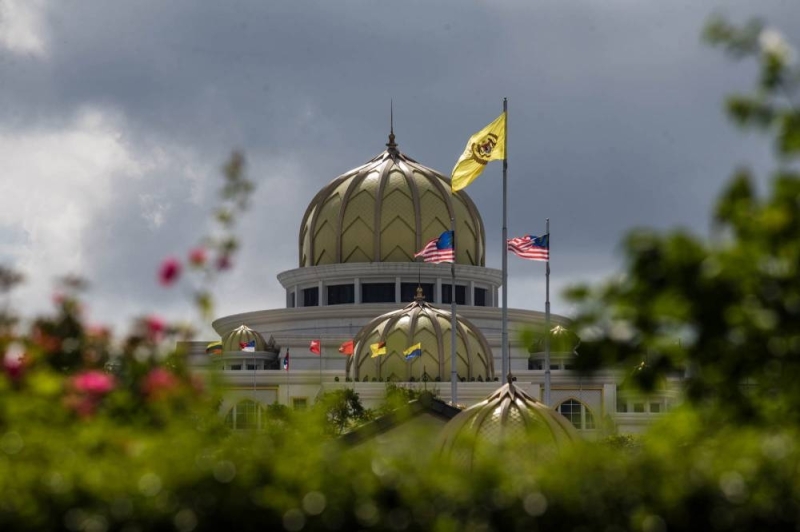
Agong presents letters of appointment to 21 judges at Istana Negara
Yang di-Pertuan Agong Al-Sultan Abdullah Ri'ayatuddin Al-Mustafa Billah Shah presented the letters of appointment to 21 judges in a ceremony at Istana Negara in Kuala Lumpur. ― Picture by Firdaus Latif

KUALA LUMPUR, Jan 17 ― The Yang di-Pertuan Agong Al-Sultan Abdullah Ri'ayatuddin Al-Mustafa Billah Shah today granted an audience and presented the letters of appointment to 21 judges in a ceremony at Istana Negara here.

Raja Permaisuri Agong Tunku Hajah Azizah Aminah Maimunah Iskandariah was in attendance.

Leading the list was the new President of the Court of Appeal Tan Sri Abang Iskandar Abang Hashim followed by Chief Judge of Malaya Datuk Mohamad Zabidin Mohd Diah, Chief Judge of Sabah and Sarawak Datuk Abdul Rahman Sebli and Federal Court Judge Datuk Nordin Hassan.

Also receiving their letters of appointment as Court of Appeal judges were Datuk Azman Abdullah, Datuk Azimah Omar, Datuk Lim Chong Fong, Datuk Collin Lawrence Sequerah, Mohamed Zaini Mazlan and Datuk Wong Kian Kheong.

Eleven judges appointed to the High Court were Datuk Norsharidah Awang, Tee Geok Hock, Datuk Zaleha Rose Pandin, Alice Loke Yee Ching, Datuk Azhar Abdul Hamid, Dr Arik Sanusi Yeop Johari, G. Bhupindar Singh, Mahazan Mat Taib, Ahmad Murad Abdul Aziz, Liza Chan Sow Keng and Wan Muhammad Amin Wan Yahya.

The ceremony was also attended by Minister in the Prime Minister’s Department (Law and Institutional Reform) Datuk Seri Azalina Othman Said and Chief Justice Tun Tengku Maimun Tuan Mat. ― Bernama, Malay Mail, 17/1/2023

Sarawak’s Abang Iskandar is new Court of Appeal president

V Anbalagan
- January 16, 2023 2:22 PM


14 Justices Abang Iskandar Abang Hashim (left) and Zabidin Diah have been performing the functions of their new positions since November.

PUTRAJAYA: Chief Judge of Sabah and Sarawak Abang Iskandar Abang Hashim will be promoted to Court of Appeal president, making him the first judge from Sarawak to assume the post, sources said.

The sources also said Federal Court judge Zabidin Diah will be made Chief Judge of Malaya.

Abang Iskandar, 63, and Zabidin, 65, have been performing the functions and duties of these positions since last November.

The posts of Court of Appeal president and Chief Judge of Malaya are the second and third highest on the judicial ladder, respectively.

Federal Court judge Abdul Rahman Sebli, 63, will assume the role of the Chief Judge of Sabah and Sarawak, taking over from Abang Iskandar, the sources said.

They are expected to receive their appointment letters from the Yang di-Pertuan Agong, Sultan Abdullah Sultan Ahmad Shah, tomorrow morning before taking their oaths of office at the Palace of Justice in the afternoon.

At the same time, Court of Appeal judge Nordin Hassan will be elevated to become a Federal Court judge.

High Court judges Azman Abdullah, Azimah Omar, Collin Lawrence Sequerah, Zaini Mazlan, Wong Kian Keong and Lim Chong Fong will be elevated to the Court of Appeal.

Sequerah is the trial judge in former prime minister Najib Razak’s ongoing RM2.3 billion 1MDB corruption trial. He is also the trial judge in deputy prime minister Ahmad Zahid Hamidi’s corruption, criminal breach of trust and money laundering trial.

Zaini is presiding over Najib’s ongoing audit report tampering case. He also presided over Rosmah Mansor’s RM1.25 billion Sarawak rural schools’ solar energy project corruption case. He found Rosmah guilty of the charges in September last year.

Eleven judicial commissioners will be confirmed as High Court judges while five from the Bar and Judicial and Legal Services will be appointed judicial commissioners. - FMT, 16/1/2023


Remove executive’s role in judges’ appointment, says Chief Justice

V Anbalagan
- January 9, 2023 6:33 PM

283 Shares
166
81
32
Tengku Maimun Tuan Mat says the prevailing public perception of executive involvement in the appointment of judges must be removed.

PUTRAJAYA: The judiciary has proposed that provisions in the Federal Constitution be amended to remove executive involvement in the appointment of judges.

This was revealed by Chief Justice Tengku Maimun Tuan Mat, who said the suggestion was given by the judiciary to the task force probing former attorney-general Tommy Thomas’ book, “My Story: Justice In The Wilderness”.

One of the suggestions was that improvements should be made to the process of appointing judges.

“We suggested that there should be an amendment to the constitution to give effect to our proposal,” she told reporters after officiating a ceremony to open the legal year.

Tengku Maimun said the judiciary was collectively supportive of the task force’s proposal to the government.

“That is our general stand to improve the judiciary or the Judicial Appointments Commission (JAC). However, there must be meaningful engagement with all stakeholders to move forward,” she said.

Article 122B (1) states that judges and all administrative position holders shall be appointed by the Yang di-Pertuan Agong, acting on the advice of the prime minister, after consultation with the Conference of Rulers.

However, Section 27 of the Judicial Appointments Commission Act 2009 states that the prime minister may request for two additional names for consideration with respect to any vacancy to the offices of the Chief Justice, Court of Appeal President, Chief Judges of Malaya, and Sabah and Sarawak, and on the panels of the Federal Court and the Court of Appeal.

Tengku Maimun said any amendment to the 2009 Act would likely first require the Federal Constitution itself to be amended.

“We will not reach the objective of appointing judges without executive involvement, if the current provision (which requires executive consultation) remains,” she added.

She said the prevailing public perception of executive involvement in the appointment of judges must also be removed.

Tengku Maimun said she had also called for the new government to set up an independent judicial academy to cater to the training needs of superior court judges.

Last year the top judge announced that the government approved 25 acres of land in Nilai, Negeri Sembilan, alongside an existing magistrates’ court for the academy.

“In principle, the previous government had approved (the proposal), but when the final decision was communicated to us, they said judges should go to the judicial and legal service officers’ training institute due to a costing issue.

“As a matter of principle, judges should not be going there. Judges are not government officers,” Tengku Maimun said.

She said judges in the past never attended any course at the institute located in Bandar Baru Bangi.

“The person who issued the statement lacked understanding of the law and procedure,” she added.

Death threats

Meanwhile, sharing a personal experience in her role as Chief Justice, Tengku Maimun said she had been on the receiving end of death threats when presiding over cases involving certain personalities.

“In cases involving certain personalities, the support or criticism is extreme. People generally know that I myself have received death threats before.

“Whether those were serious threats or not is another question, but it has reached that level,” she said, according to Bernama.

When it comes to high-profile individuals, she said the comments directed at the judiciary were not constructive but excessive, one-sided and politically-motivated.

“I hope the people out there understand the structure of the country’s legal process before issuing any statements which show their lack of understanding.”

In August last year, the media quoted police as saying they had received reports of threats made against Tengku Maimun on social media and would be taking action against anyone found abusing such platforms to undermine security. - FMT, 9/1/2023


Malay rulers propose PM stay out of judges appointment body

They say a more balanced membership is needed so that appointments are not biased.
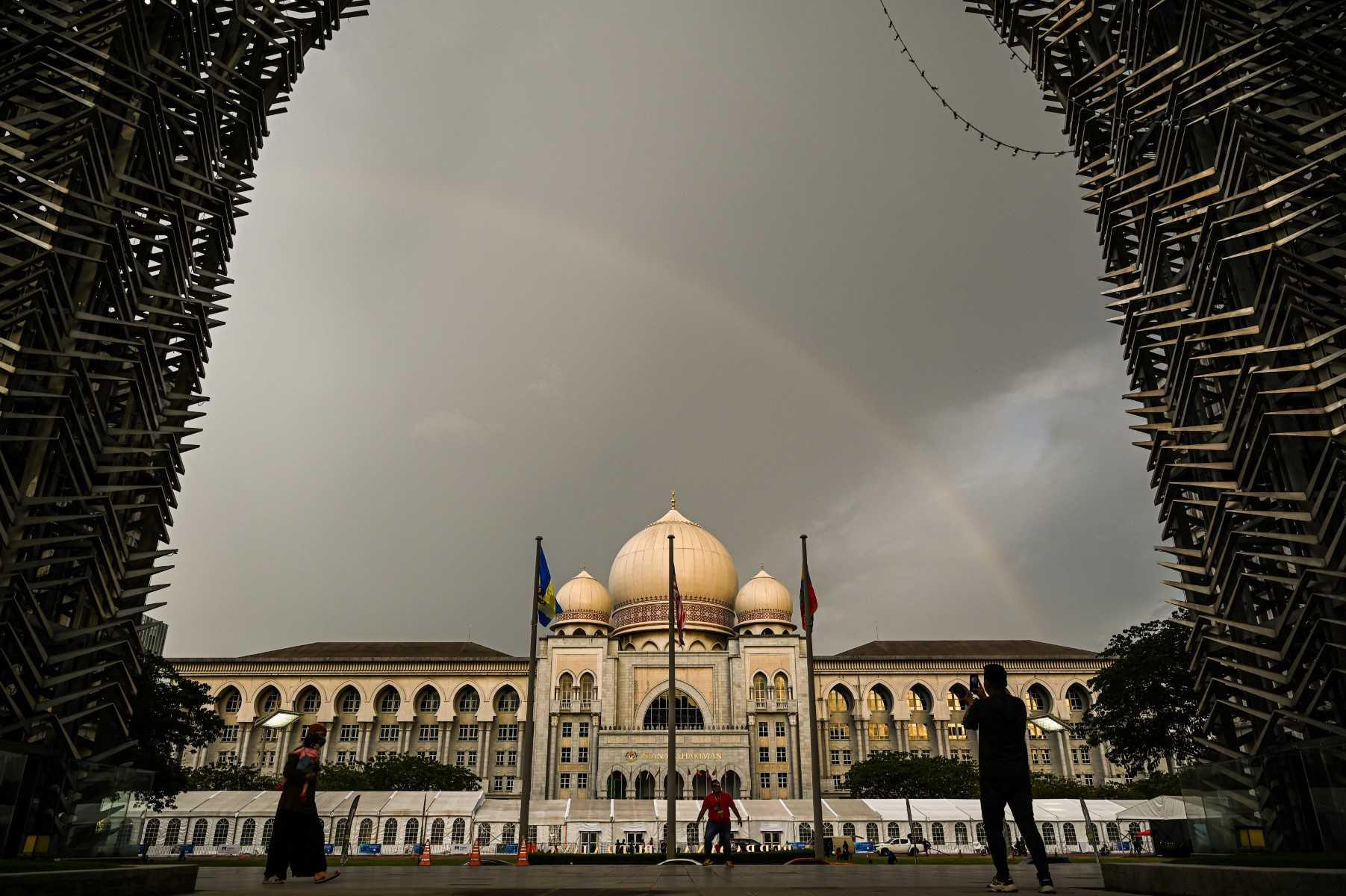
People take pictures outside the Palace of Justice in Putrajaya which houses the Court of Appeal and Federal Court. Photo: AFP

The Conference of Rulers today proposed the removal of the prime minister's power to appoint five representatives to the nine-member Judicial Appointments Commission (JAC), the body which proposes candidates to be made judges in the superior courts.

This followed a meeting by the rulers chaired by Negeri Sembilan's Tuanku Muhriz Tuanku Munawir, held for two days at Istana Negara beginning yesterday.

In its statement, the conference said the JAC in its present composition had weaknesses, adding that its membership was critical to ensure that only those with intergrity are appointed to judicial posts.

Presently, four of the nine JAC members are made up of senior judges, while the remaining five are appointees of the prime minister.

Tuanku Muhriz said a more balanced membership was needed so that appointments would not be biased towards any parties.

"To ensure the independence of JAC in carrying out its responsibilities, I propose that the appointment of its five members should not be made by the prime minister. 

"Instead it should be given to other institutions such as the Malaysian Bar Council, the Sabah Law Society, the Sarawak Bar Association and the Parliamentary Select Committee," he said.

Tuanku Muhriz also called for JAC's structure to be reevaluated through discussions with the relevant institutions and stakeholders.

"When all this is implemented, I am confident JAC will be able to carry out its responsibilities more effectively, and choose and appoint only those individuals who have a noble character, and are transparent and fair, to become judges in Malaysia."

JAC was set up in 2009 to ensure an unbiased selection of judges for the consideration of the prime minister.

Critics have however questioned the provision allowing the prime minister to appoint the majority of the commission's members, as well as his power to remove them, saying it smacks of political patronage in the judiciary. - Malaysia Now, 30/11/2022

Why Malaysia’s lawyers march: Did the 2007 Walk for Justice change anything? Why are they marching again?
Why Malaysia’s lawyers march: Did the 2007 Walk for Justice change anything? Why are they marching again?
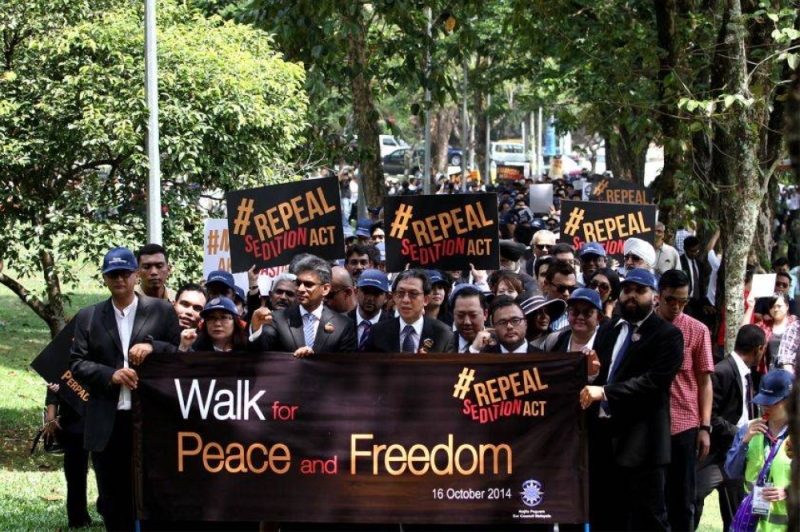
On October 16, 2014, the Malaysian Bar held the ‘Walk for Peace and Freedom’ to condemn the use of the Sedition Act 1948 and to protest the multiple arrests, investigations and charges made under that law. — Picture by Yusof Mat Isa

KUALA LUMPUR, June 17 — The Malaysian Bar plans to march to Parliament today to uphold the independence of the courts and speak out against any attempts to intimidate judges, and present a memorandum addressed to the prime minister on the matter.

This march will be one of the rare moments in the 75-year history of the Malaysian Bar, which currently represents 20,556 lawyers in Peninsular Malaysia.

But will a march by lawyers change anything? Have previous events ever nudged the Malaysian government to do what is right for the judiciary and the country?

Here, Malay Mail takes a quick look at the Malaysian Bar’s 2007 “Walk for Justice”, which is closest in aim to the upcoming “Walk for Judicial Independence”, and see what came of it. The information is based largely on resources publicly available on the Malaysian Bar’s website:

A history of marching when it counts

The Malaysian Bar actually has a long history of marching since it was founded in 1947, such as its April 7, 1981 walk from the Royal Lake Club to Parliament to protest against the government’s proposed amendments to both the Societies Act and the Federal Constitution, as well as the December 2005 and December 2006 peaceful marches from Dataran Merdeka to the Lake Gardens to mark the annual International Human Rights Day on December 10.

In the same year when the Malaysian Bar celebrated its 60th anniversary and had more than 12,000 members, it organised the Walk for Justice.

This was prompted by the September 19, 2007, release of a video clip showing senior lawyer VK Lingam speaking on the phone about or brokering the appointment of judges in Malaysia.

The Malaysian Bar’s governing body on September 22 held an emergency meeting and decided to present a memorandum to the government to call for a royal commission of inquiry (RCI) on the video clip incident, and on September 24 announced that it would present the memorandum after a peaceful walk on September 26.

On September 25, the government announced a three-member independent panel to investigate the video clip’s authenticity, but did not at that time announce an RCI.

What happened at the 2007 march?

On September 26, 2007, lawyers — numbering more than 1,000 or over 2,000 according to different reported estimates — gathered at the entrance of the Palace of Justice in Putrajaya, before marching to the Prime Minister’s Office to deliver the Bar Council’s memorandum.

Then-Malaysian Bar president Datuk Ambiga Sreenevasan was quoted by The Straits Times saying at the march: “We are walking for justice, we want judicial reform” and “Lawyers don't walk every day. When lawyers walk, something is wrong.”

The Malaysian Bar then handed over two memoranda to the prime minister’s aide.

The first memorandum was a letter addressed to the prime minister about the “latest crisis in the judiciary” as shown by the expose through a video clip of a lawyer’s lengthy discussion with a senior judge and the alleged brokering of the appointment and promotion of judges, with the Malaysian Bar urging the prime minister to strengthen the independence of the judiciary through judicial reform and to introduce a Judicial Appointments Commission (JAC) to restore public confidence in the judiciary.

The memorandum also urged for an RCI into the video clip. This was well before a government panel later also recommended for the inquiry to be held.

The other memorandum was the Bar Council’s paper on the setting up of an independent judicial commission, providing recommendations such as the composition of such a commission, the process to select judges and the characteristics of candidates.

What was the outcome?

On September 25, 2007, the Malaysian government formed an independent three-man panel to verify whether the video clip was authentic. This panel on November 9, 2007 then gave its report to the government and recommended for a commission of enquiry to be set up.

On December 12, 2007, an RCI was officially set up with five members, with five terms of reference, namely to determine the video clip’s authenticity, to identify the speaker, the person he was speaking to and persons mentioned in the conversation, to determine the truth of the phone conversation and whether there has been any misbehaviour of persons identified or mentioned in the video clip, and to recommend the appropriate course of action to be taken if any of them are found to have committed any misbehaviour.

Following RCI proceedings from January 14 to February 15, 2008, the RCI panel on May 9, 2008 gave its report to the Yang di-Pertuan Agong. The RCI panel’s report was made publicly available on May 20, 2008.

In the RCI report, the panel agreed with and supported the Malaysian Bar’s September 2007 memorandum to the government on the need to set up a JAC, having concluded that there were weaknesses in the process of appointment and promotion of judges and that having a judicial commission would provide more “transparency, accountability and good governance” which would then boost public confidence in the judiciary.

On April 17, 2008, then prime minister Tun Abdullah Badawi announced that the government proposed to set up a JAC, with the aim of making the nomination, appointment and promotion of judges a more transparent process.

It was also at this 2008 event that the prime minister recognised the contributions of the “six outstanding judges” — including two posthumously — who were affected by the 1988 judicial crisis, and announced goodwill ex gratia payments to them or their families. (The Bar Council together with the International Bar Association’s Human Rights Institute, LAWASIA and Transparency International–Malaysia had in August 2007 formed a panel of eminent persons to look into the 1988 judicial crisis and had in August 2008 released its report.)

The independence of the judiciary was strengthened when the Judicial Appointments Commission Act 2009 was gazetted on February 8, 2009.

In short, the government actually carried out the RCI and the JAC which the Malaysian Bar had pushed for in its 2007 walk.

File picture of Malaysian Bar president Chris Leong addressing the crowd at the ‘Walk for Peace and Freedom’ event, October 16, 2014. — Picture by Yiswaree Palansamy

Wait, there were other marches, too

After the 2007 Walk for Justice, the Malaysian Bar held two more marches, to uphold freedom of assembly and freedom of speech in Malaysia.

On November 29, 2011, the Malaysian Bar organised the “Walk for Freedom 2011: Peaceful Assembly Bill Cannot and Must Not Become Law!”, which reportedly was attended by about 1,000 persons in protest against the government’s Peaceful Assembly Bill which was said to have clauses that were too restrictive on the constitutional right to assemble, such as prohibiting street protests.

In the 2011 walk from the Royal Lake Club to Parliament, Malaysian Bar’s proposed alternative Peaceful Assembly Bill was delivered to then deputy minister in the Prime Minister’s Department Datuk Liew Vui Keong.

The Peaceful Assembly Act 2012 was gazetted on February 9, 2012.

In October 2012, the Malaysia Bar received the United Nations Malaysia Organisation of the Year Award, where the professional body was recognised as having admirably fulfilled its role as the guardian of the rule of law and defender of human rights and the public interest in Malaysia.

On October 16, 2014, the Malaysian Bar held the “Walk for Peace and Freedom” to condemn the use of the Sedition Act 1948 and to protest the multiple arrests, investigations and charges made under that law.

In the march from Padang Merbok to Parliament, which was estimated to be attended by between 1,000 and 2,000 lawyers, the Malaysian Bar’s memorandum was presented to minister in the Prime Minister’s Department at the time, Datuk Mah Siew Keong, who accepted it on behalf of the PM.

Zooming back to 2022

The judiciary has come under threat again, with online attacks ramping up in recent months against the judge who had heard and decided on former prime minister Datuk Seri Najib Razak’s trial over the misappropriation of RM42 million of SRC International Sdn Bhd, in what appears to be a bid to discredit the outcome of the trial.

The Malaysian Anti-Corruption Commission (MACC) on April 23 was reported confirming to local newspaper The Star that it had started its investigation on the SRC trial judge Datuk Mohd Nazlan Mohd Ghazali, later responding on April 28 to criticisms by insisting that it has the power to investigate public officers including judges and clarifying that investigations do not necessarily mean an individual has committed an offence.

Judges and the judiciary in general however are unable to defend themselves publicly against wild allegations, which was why the Malaysian Bar stepped in to help protect the dignity and integrity of the courts.

The Malaysian Bar on April 24 spoke out against the MACC investigation, and the Bar Council on May 4 said it had on April 29 held an emergency meeting before deciding to hold an extraordinary general meeting (EGM). On May 5, the Bar Council announced the date of the EGM as May 27. Also on May 4, six former Malaysian Bar presidents had also launched a petition urging the Bar Council to organise a walk.

On May 21, the MACC announced that it had completed its investigations in a case involving the judge, and said it had presented on May 18 the investigation papers to the Attorney General’s Chambers for further study and direction.

On May 27, the Malaysian Bar decided at an extraordinary general meeting (EGM) to support the Bar Council’s motion to organise a peaceful protest to uphold the judiciary’s independence, while also criticising the way that the MACC had publicly announced investigations on the judge for an indefinite period and without proper closure and said that such action amounts to an act of intimidation against the judiciary.

Lawyers are expected to gather today at the Padang Merbok car park with plans to continue with the march to Parliament, with Deputy Minister in the Prime Minister’s Department Datuk Mas Ermieyati Samsudin expected to accept the Malaysian Bar’s memorandum on the prime minister’s behalf. - Malay Mail, 17/6/2022

Malaysiakini
Court directs Perak Pas chief to file defence statement against ...
... has directed Perak Pas chief Razman Zakaria to file his statement of defence
against Prime Minister Anwar Ibrahim's defamation suit.
.
2 weeks ago


Anwar’s ex-aide Yusoff Rawther wins RM200,000 in defamation suit

926 Shares
facebook sharing button 423
twitter sharing button 392
whatsapp sharing button 93
email sharing button 18
The judge said Yusoff Rawther had proved his claim on the balance of probabilities. (Bernama pic)

SHAH ALAM: The sessions court here has ordered Anwar Ibrahim’s press secretary Tunku Nashrul Tunku Abaidah to pay RM200,000 in damages for defaming Yusoff Rawther.

Judge Ishak Bakri Yusof said Yusoff, a former research assistant to Anwar, had proved his claim on the balance of probabilities.

Yusoff’s solicitors Messrs Haniff Khatri Abdulla, in a statement issued this evening, said the defendant was also ordered to pay RM25,000 in costs to Yusoff.

The statement said Tunku Nashrul is to publish an apology within 45 days from today and that the content must be acceptable to Yusoff.

-Advertisement-

Ads by

Tunku Nashrul is to also withdraw his defamatory media statement issued on June 10, 2019.

Yusoff filed a suit on Sept 12, 2019, saying the media statement by Tunku Nashrul had lowered his reputation in the eyes of the public.

Apart from the defamation suit against Tunku Nashrul, Yusoff had filed an action against Anwar’s then political secretary Farhash Wafa Salvador Rizal Mubarak, claiming compensation for injuries allegedly sustained after an assault.

Yusoff had also filed a suit against Anwar, the PKR president, accusing him of sexually assaulting him 10 days before he won the Port Dickson by-election on Oct 13, 2018.

Yusoff claimed to have suffered serious physical, psychological and social trauma as a result of the incident.

Anwar, however, denied the claim, and the matter is still pending in court. FMT, 19/10/2022


Tuesday, December 27, 2022

Attorney general selection should be independent... (Malay Mail)


 See full statement of MADPET at

Serving Judges Must Not Be Considered Or Appointed As Attorney General, To Also Preserve The Independence Of The Judiciary(MADPET) 


Attorney general selection should be independent ― Matilda George

DECEMBER 27 ― As reported by FMT, Charles Hector, from the Malaysians Against Death Penalty and Torture (Madpet), said that government should not appoint sitting judges as attorney general (AG) in order to preserve the independence of Judiciary.

According to The Star, Prime Minister Datuk Seri Anwar Ibrahim is considering three candidates for the attorney general post, and all are judges. They are Ahmad Fairuz Zainol Abidin, Wan Ahmad Farid Wan Salled (High Court) and Kamaludin Md Said (Court of Appeal).

Article 145(1) of the Federal Constitution says that Yang di-Pertuan Agong “shall on the advice of the prime minister, appoint a person who is qualified to be a judge of the Federal Court to be the attorney general for the Federation.”

As such the requirement here states that AG is a person who is qualified to be a judge of the Federal Court”.

The selection of AG does not necessarily need to be selected from the bench. It can also be selected by any ordinary public person who has equal qualification to be seated as the Federal Court judge in holding the attorney general's office (AG).

The AG selection should be independent, and there are a few ways to ensure that the attorney general is independent from the judiciary. ― Reuters pic

In 2019, Tommy Thomas was appointed as the new attorney general, was the first practicing barrister to be appointed directly from the Malaysia Bar to the attorney general. His appointment during Pakatan Harapan administration shows that AG can be appointed following the criteria under A145(1) of the FC.

The AG selection should be independent, and there are a few ways to ensure that the attorney general is independent from the judiciary.

Firstly, the appointment of the AG is outside of the judiciary. This is one way to ensure independence, where the selection of the attorney general is made by persons who do not have any prior experience as a judge. This can help to ensure that the attorney general is not beholden to any particular judicial.

Secondly, is establishing clear guidelines for the attorney general’s role. This will ensure clear guidelines for the attorney general’s role and responsibilities. This includes setting out the attorney general’s powers, duties and obligations in relation to the judiciary.

Moving on, the attorney general should have the necessary resources and support in performing their duties effectively and independently. Thus, protecting the AG independence is important, as it is to prevent political interference in the attorney general’s decision-making process.

Overall, it is essential to ensure that the AG can carry out their duties independently, by upholding the rule of law and protecting the integrity of the legal system.

* This is the personal opinion of the writer or publication and does not necessarily represent the views of Malay Mail. - Malay Mail, 27/12/2022

“Serving judges mustn’t be considered for AG post to preserve judiciary independence”(Focus Malaysia)


 See full statement at

Serving Judges Must Not Be Considered Or Appointed As Attorney General, To Also Preserve The Independence Of The Judiciary(MADPET) 

“Serving judges mustn’t be considered for AG post to preserve judiciary independence”

A SERVING Federal Court, Court of Appeal or High Court judge must never be considered, let alone be appointed by the King on the advice of the Prime Minister (PM) to be the Attorney-General (AG). They should remain judges until retirement.

Such is the stance advocated by non-governmental movement, Malaysians Against Death Penalty and Torture (MADPET), which further maintained that there should be a “cooling off period” of at least three years before appointment of just retired judges to the role “to avoid the perception of ‘rewards’ for things done while serving as judges”.

This follows recent media reports of a few serving judges being considered for the AG post after Tan Sri Idrus Harun “had expressed his intention not to serve out the rest of his contract which ends in March next year if he is to be replaced by the new government” (The Star, Dec 16).

The Star named the judges as Datuk Seri Kamaludin Md Said (Court of Appeal), Datuk Ahmad Fairuz Zainol Abidin (High Court) and Datuk Wan Ahmad Farid Wan Salleh (High Court).

More recently, news portal Free Malaysia Today (FMT) – citing sources – reported that three serving judges appear to be in PM Datuk Seri Anwar Ibrahim’s consideration for appointment as the next AG.  They are Federal Court judge Datuk Mohamad Zabidin Mohd Diah and Court of Appeal judges Datuk Yaacob Sam and Datuk Abdul Karim Abdul Jalil.

“As such, the PM must clarify matters, including whether any sitting judges were met, and offered the position of AG,” MADPET co-founder Charles Hector pointed out in a media statement.

Charles Hector

“We need to remove perception that the independence of these judges has been compromised by such actions/omissions of government and others. We need to restore confidence in Malaysian judges to reassure us that cases involving ministers, politicians and even the government will always be treated independently and impartially by our judges.”

As a solution, MADPET proposed that a senior and suitable member of the AG’s Chambers (AGC) be appointed as the AG given that the appointment of others – including former or serving judges – have raised concerns in recent years about “selective prosecution” and questionable use of prosecution powers in certain cases.

“UMNO secretary-general (Datuk Seri) Ahmad Maslan’s acquittal on money laundering charges by the High Court on Sept 29 after he paid a compound of RM1.1 mil is one such case of questionable use of prosecution powers,” asserted Hector.

“One of the measures that is currently being fought for to ensure independence of judges is the removal of the PM’s powers in appointment in which many including MADPET have been calling for the selection and appointment of judges be done by an independent body like maybe the Judicial Appointment Commission who can then advise the King directly.” – Dec 27, 2022, Focus Malaysia


Monday, December 26, 2022

Don’t appoint sitting judge as AG, says rights group(FMT)


 See full statement at

Serving Judges Must Not Be Considered Or Appointed As Attorney General, To Also Preserve The Independence Of The Judiciary(MADPET) 

Don’t appoint sitting judge as AG, says rights group

150 Shares
facebook sharing button 56
twitter sharing button 81
whatsapp sharing button
email sharing button
Madpet spokesman Charles Hector said a senior public officer such as a federal counsel or prosecutor from within the Attorney-General’s Chambers, or any lawyer should be appointed as the AG. (Charles Hector Facebook pic)

PETALING JAYA: A rights group has advised the government against appointing a sitting judge as the attorney-general (AG) in order to preserve the independence of the judiciary.

Charles Hector of the Malaysians Against Death Penalty and Torture (Madpet) said that such appointments raises questions on the independence of the judiciary and the judges themselves.

“Would the people be confident of the independence of these judges in cases where one of the parties is the prime minister or the government?” Hector, who is the NGO’s spokesman said in a statement.

On Dec 16, The Star reported that Court of Appeal judge Kamaludin Md Said, and High Court judges Wan Ahmad Farid Wan Salleh and Ahmad Fairuz Zainol Abidin were being considered for the post by Prime Minister Anwar Ibrahim, citing sources.

Subsequently FMT reported that three serving judges appear to be in Anwar’s consideration for appointment which are Federal Court judge Zabidin Diah and Court of Appeal judges Yaacob Sam and Abdul Karim Abdul Jalil.

However, Hector said these judges should remain on the bench until they retire.

He was also against the appointment of recently retired judges for the AG’s post saying there must be a “cooling-off period” of at least three years.

He said this was to avoid the perception that one was being rewarded with the post.

Hector suggested that a senior public officer such as a federal counsel or prosecutor from within the Attorney-General’s Chambers (AGC), or any lawyer be appointed as the AG.

Historically, it has been the practice of the government to appoint a sitting judge as an AG. The late Mohtar Abdullah, Apandi Ali, and present officeholder Idrus Harun also rose from the bench to be appointed as the AG. - FMT, 26/12/2022


PM told not to appoint serving judge as AG (Malaysian Insight)

 See full statement at

Serving Judges Must Not Be Considered Or Appointed As Attorney General, To Also Preserve The Independence Of The Judiciary(MADPET)

PM told not to appoint serving judge as AG 


Malaysians Against Death Penalty and Torture co-founder Charles Hector Fernandez has said that a serving judge should never be considered for the post of attorney general in order to avoid negative public perceptions of the judiciary. – Facebook pic, December 26, 2022.

IT is best for the government to appoint a senior public officer or any other lawyer as the new attorney general (AG), an anti-death penalty group said. 

Malaysians Against Death Penalty and Torture (Madpet) co-founder Charles Hector Fernandez said a serving judge must never be considered in order to avoid any negative public perception of the judiciary or individual judges. 

“They should remain judges until retirement,” he said in a statement. 

He added that judges who have just retired should also not be appointed as attorney general. 

“There must be a ‘cooling off period’ of at least three years before appointment, to avoid the perception of ‘rewards’ for things done whilst serving as judges,” he said. 

He said that Article 145 of the Federal Constitution stated that anyone who was qualified to be a judge of the Federal Court could be appointed as an AG. 

“It does not say a serving or retired judge must be the attorney general,” said Charles, who is also a human rights lawyer. 

“As such, it is best that a senior public officer, being a federal counsel or prosecutor from within the Attorney General’s Chambers, or any lawyer be appointed as the attorney general,” he added. 

A recent report by Free Malaysia Today said the government was considering Federal Court judges Zabidin Diah, Yaacob Sam and Abdul Karim Abdul Jalil for the post. 

The Star, meanwhile, reported that serving Court of Appeal Judge Kamaludin Md Said and High Court Judge Wan Ahmad Farid Wan Salleh were among three candidates vying to be Idrus Harun’s replacement. 

Idrus had been ready to step down before the expiry of his contract in March to allow Prime Minister Anwar Ibrahim to appoint a candidate of his choice. 

The AG is appointed by the King on the advice of the PM. 

Hector also said it was time to restore confidence in Malaysian judges to reassure people that cases involving ministers, politicians, and even the government would always be treated with independence and impartially by judges. – December 26, 2022. - Malaysian Insight

Serving Judges Must Not Be Considered Or Appointed As Attorney General, To Also Preserve The Independence Of The Judiciary(MADPET)


Media Statement – 26/12/2022

Serving Judges Must Not Be Considered Or Appointed As Attorney General, To Also Preserve The Independence Of The Judiciary

The fact that names of judges being considered to be appointed as Attorney General have been reported in media is a threat that may affect the perception of the independence of judges, noting also that the courts do hear cases involving Ministers, politicians and the government are parties of suits.

Impact on Perception of Independence of Judiciary

One media report suggested that 3 serving judges, being Federal Court judge Zabidin Diah and Court of Appeal judges Yaacob Sam and Abdul Karim Abdul Jalil are being considered for appointment as the next attorney-general (AG). (FMT, 21/12/2022). An earlier media report mentioned serving Court of Appeal judge Datuk Seri Kamaludin Md Said and serving High Court judge Datuk Wan Ahmad Farid Wan Salleh. (Star, 16/12/2022).

Serving judges ought not be considered or appointed as Attorney General or to any other positions by the Prime Minister, Ministers and/or the government.

This is also because such a move has a tendency to impact negatively on the fact and/or perception of the independence of the Malaysian judiciary and individual judges.

Would we be confident of the independence of these judges in cases where one of the parties is the Prime Minister or government?

After a High Court, Court of Appeal and Federal Court judge is appointed, safeguards to ensure the independence of the judiciary comes into effect, including security of tenure until the retirement age of 66. This independence also includes independence from influence and/or orders from the Prime Minister and the government.

Attorney General only need qualification to be Federal Court Judge

It is best that a senior public officer, being a Federal Counsel or Prosecutor from within the Attorney General’s Chambers, or any lawyer be appointed as the Attorney General.

Remember that all that Article 145 of the Federal Constitution states about the needed qualification to be appointed Attorney General is that a ‘…person who is qualified to be a judge of the Federal Court…’. It does not say a serving or retired Judge must be the Attorney General.

All that is required for a person to be qualified to be a judge of the Federal Court, and the meaning of this is stated in Article 123 which says that he/she must only be ‘…(a) he is a citizen; and (b) for the ten years preceding his appointment he has been an advocate of those courts or any of them or a member of the judicial and legal service of the Federation or of the legal service of a State, or sometimes one and sometimes another…’

MADPET (Malaysians Against Death Penalty and Torture) takes the position that a serving Federal Court or Court of Appeal or High Court judge must never be considered, let alone be appointed by the King on the advice of the Prime Minister to be the Attorney General. They should remain judges until retirement.

Judges just retired also preferably ought not be appointed Attorney General, and MADPET adopts the position that there ought to be a ‘cooling off period’ of at least 3 years before appointment, to avoid the perception of ‘rewards’ for things done whilst serving as judges.

The Judges' Code of Ethics 2009, in Article 5 states that ‘…A judge shall exercise his judicial function independently on the basis of his assessment of the facts and in accordance with his understanding of the law, free from any extraneous influence, inducement, pressure, threat or interference, direct or indirect from any quarter or for any reason…’

As such, now following the said media reports, the government of Prime Minister Anwar Ibrahim must clarify matters, including whether any sitting judges were met, and offered the position of Attorney General.

We need to remove perception that the independence of these judges has been compromised by such actions/omissions of government and others. We need to restore confidence in Malaysian judges to reassure us that cases involving Ministers, politicians and even the government will always be treated independently and impartially by our judges.

Attorney General/Public Prosecutors Must Be Independent of Prime Minister or Government

In a recent Zahid Hamidi (now Deputy Prime Minister)’s Foreign Visa System (VLN) case, in deciding not to call Zahid to enter his defence and then acquitting him, the High Court judge found that the ‘prosecution failed to make out a prima facie case on all the charges’, whereby he also mentioned that key witnesses were not called, and material evidence not adduced.(Sun, 23/9/2022). Were the prosecution actions/omissions due to the Public Prosecutor, acting for the interest of the government of the day? In any event, prosecution did file an appeal in this case to the Court of Appeal, and the next case management at the Court of Appeal is fixed for 10/1/2023. (The Edge Markets, 22/11/2022)

Article 145(1) of the Federal Constitution states, that “…The Yang di-Pertuan Agong shall, on the advice of the Prime Minister, appoint a person who is qualified to be a judge of the Federal Court to be the Attorney General for the Federation…’ The King must act on the advice of the Prime Minister.

In Malaysia, the Attorney General is also the Public Prosecutor, and Public Prosecutors too need to act professionally and impartially, hence it is most important that the Attorney General (also the Public Prosecutor)’s appointment be done independently, and as such the role of the Prime Minister in the selection and appointment process need to be removed.

MADPET believes that it is better that a senior and suitable member of the AGC be appointed as the Attorney General – noting also that the appointment of others, including former or serving judges, have raised concerns in recent years about ‘selective prosecution’ and questionable use of prosecution powers in certain cases.  

Ahmad Maslan, the UMNO Secretary General’s acquittal on money laundering charges by the High Court on 29/9/2022, after he paid a compound of RM1.1 million (US$239,000) is one such case of questionable use of prosecution powers.

Expedite the removal of the Prime Minister in appointing judges

One of the measures that is currently being fought for to ensure independence of judges has been the removal of the Prime Minister’s powers in appointment, and to that end many including MADPET have been calling for the selection and appointment of judges be done by an independent body, like maybe the Judicial Appointment Commission, who can then advise the King directly. As it is, some Prime Minister may follow the recommendation of the Judicial Appointment Commission, and some may not.

Article 122B of the Constitution now states that ‘(1) The Chief Justice of the Federal Court, the President of the Court of Appeal and the Chief Judges of the High Courts and (subject to Article 122c) the other judges of the Federal Court, of the Court of Appeal and of the High Courts shall be appointed by the Yang di-Pertuan Agong, acting on the advice of the Prime Minister, after consulting the Conference of Rulers….’ This provision and similar provision that provide for the appointment of judges, on the advice of the Prime Minister must be repealed, removing the Prime Minister’s role, and replaced by an independent body, possibly a more independent Judicial Appointments Commission.

MADPET calls for the appointment of the Attorney General/Public Prosecutor and Judges be seen as independent of the Prime Minister and the government to restore the credibility of prosecution and judges, and to ensure the right to fair trials and that all persons are equal before the law and entitled to the equal protection of the law.

MADPET calls on the Prime Minister and government to do the needful to ensure that the perception of the independence of our judges and courts is strengthened.

There may also need to extend the safeguards to ensure independence to Session Court judges and Magistrates. The jurisdiction of Session Court judges has today been extended to include matters that were previously the sole discretion of High Court judges.

These judicial officers, including Session Court judges and Magistrates should all reasonably be under the Judiciary, and no longer under the Judicial and Legal Service Commission, where the Attorney General is a Commission member.


Charles Hector

For and on behalf of MADPET(Malaysians Against Death Penalty and Torture)


####


Three judges being considered as attorney general


  • Nation
  • Friday, 16 Dec 2022

PETALING JAYA: One judge from the Court of Appeal and two from the High Court are being considered as replacements for Tan Sri Idrus Harun as attorney general (AG).

A government official, speaking on condition of anonymity, said Idrus had expressed his intention not to serve out the rest of his contract, which ends in March next year, if he is to be replaced by the new government.

Three names had been presented to Prime Minister Datuk Seri Anwar Ibrahim for his consideration before he advises the King on who should be appointed the next AG.

All three are judges, added the source.

“The names currently being mentioned are Datuk Ahmad Fairuz Zainol Abidin, Datuk Seri Kamaludin Md Said and Datuk Wan Ahmad Farid Wan Salleh,” said the source yesterday.

He added that the appointment will be made very soon as the Prime Minister needs to put his house in order before the new year so he can concentrate on other matters.

Idrus was reappointed as the AG for another year on March 6.

Under Article 145(1), the Yang di-Pertuan Agong shall, on the advice of the Prime Minister, appoint a person who is qualified to be a Federal Court judge to be the attorney general.

Justice Kamaludin was appointed Judicial Commissioner on Nov 1, 2012, and served at the Kuala Lumpur High Court until Sept 11, 2014.

He was then elevated as a High Court Judge and served at the Kuala Lumpur and Seremban High Court until 2018.

Justice Kamaludin was elevated as a Court of Appeal judge on April 27, 2018, and is currently in charge of judicial reviews.

Another possible candidate, Justice Ahmad Fairuz, was deputy chief executive of the Securities Commission from April 1, 2016, to March 29, 2018.

On March 30, 2018, he was appointed Judicial Commissioner and on March 25 this year, he was elevated as a High Court judge at the commercial division.

Justice Wan Ahmad Farid was in the news last June when he recused himself from hearing former prime minister Datuk Seri Najib Razak’s application to allow Queen’s Counsel (QC) Jonathan Laidlaw to represent him in his final appeal in the Federal Court in the SRC International Sdn Bhd case.

Justice Wan Ahmad Farid declared he was once an active politician and has a family member who is still active in Umno.

He was a senator back in 2008 and was deputy to then home minister Tan Sri Syed Hamid Albar. - Star, 16/12/2022


3 judges may be in running to become next AG

(From left) Justices Zabidin Diah, Yaacob Sam and Abdul Karim Abdul Jalil are believed to be candidates for the attorney-general’s post in place of incumbent Idrus Harun.

PETALING JAYA: Three serving judges appear to be in Prime Minister Anwar Ibrahim’s consideration for appointment as the next attorney-general (AG), sources say.

They are Federal Court judge Zabidin Diah and Court of Appeal judges Yaacob Sam and Abdul Karim Abdul Jalil.

A source said the three have all the credentials to occupy the position as they have handled criminal and civil cases both as judges and also during their stint in the judicial and legal service.

“Knowledge and experience in civil and criminal laws are vital as the AG is chief legal adviser to the government.

Ads by Kiosked

“The AG also doubles up as a public prosecutor as stated in the Federal Constitution and the Criminal Procedure Code.

“A highly qualified person is needed as he needs to handle high-profile criminal cases,” the source added.

The late Mohtar Abdullah, Apandi Ali and present office holder Idrus Harun also rose from the bench to be appointed AG.

Zabidin is currently the acting Chief Judge of Malaya following a vacancy which arose when Azahar Mohamed retired two months ago.

He was appointed a judicial commissioner in 2004 before becoming a High Court judge in 2006.

Zabidin was promoted to Court of Appeal judge in 2018 and elevated to sit on the Federal Court bench earlier this year.

Ads by Kiosked

Yaacob and Abdul Karim are currently the top two senior Court of Appeal judges.

Yaacob was appointed a judicial commissioner in 2009 and became a High Court judge the following year.

He was also the chairman and member of the Enforcement Agency Integrity Commission (EAIC) from 2014 to 2017.

He was elevated as a Court of Appeal judge in 2017.

Abdul Karim was appointed a judicial commissioner in 2012 and made a High Court judge in 2014.

He was elevated to sit on the Court of Appeal in 2016.

Ads by Kiosked

Idrus’ contract is set to expire in March.

However, FMT understands that he is prepared to leave office earlier if Anwar has identified a suitable replacement.

Article 145 (1) of the Federal Constitution states that the Yang di-Pertuan Agong shall on the advice of the prime minister appoint a person who is qualified to be a judge as AG.

Under Article 123 of the constitution, a citizen who has practised law or has been in the judicial and legal service, or a combination of both, for at least 10 years is qualified to be appointed as AG. - FMT 21/12/2022

Three key prosecution witnesses in Zahid’s case unreliable and not credible: Judge

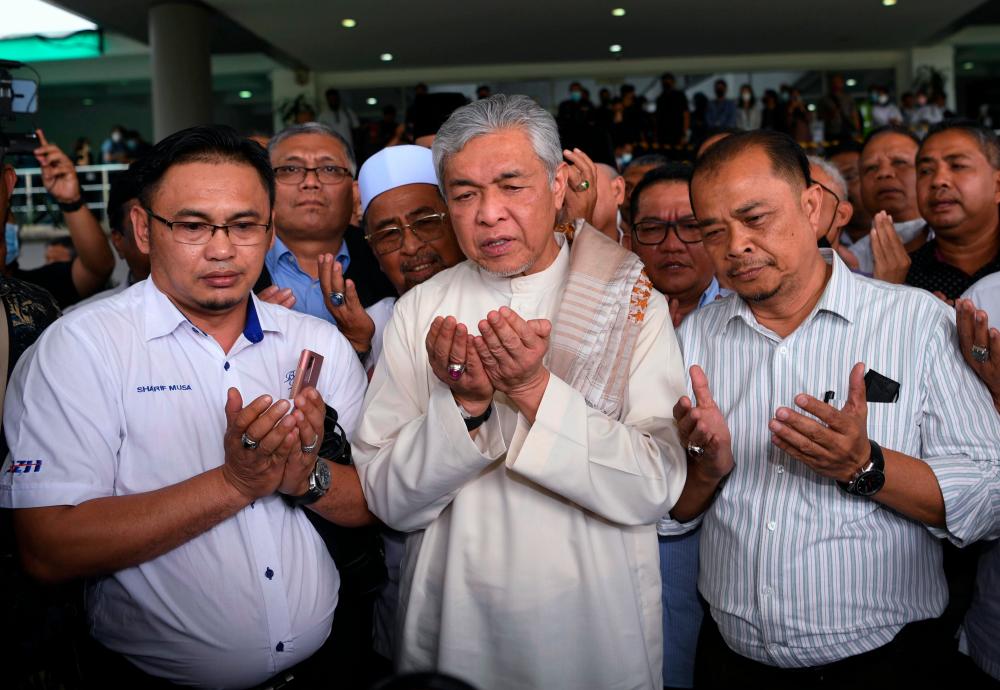
SHAH ALAM, 23 Sept -- Former Deputy Prime Minister Datuk Seri Dr Ahmad Zahid Hamidi (centre) recited a prayer after the High Court today acquitted him of 40 charges of corruption in relation to the Overseas Visa System (VLN). BERNAMAPIXSHAH ALAM, 23 Sept -- Former Deputy Prime Minister Datuk Seri Dr Ahmad Zahid Hamidi (centre) recited a prayer after the High Court today acquitted him of 40 charges of corruption in relation to the Overseas Visa System (VLN). BERNAMAPIX

SHAH ALAM: The High Court today ruled that three key prosecution witnesses in Datuk Seri Ahmad Zahid Hamidi’s corruption case involving 40 counts of receiving bribes in connection with the Foreign Visa System (VLN) were unreliable and not credible.

Judge Datuk Mohd Yazid Mustafa, when reading out his more than two-hour judgment, named the witnesses as former directors of Ultra Kirana Sdn Bhd (UKSB, namely Harry Lee Vui Khiun, Wan Quoris Shah Wan Abdul Ghani and David Tan Siong Sun, who are the 15th, 16th and 17th prosecution witness (PW), respectively.

“I find that the three key witnesses called by the prosecution were not reliable and neither were they trustworthy or credible,” he said.

Judge Mohd Yazid said the court found that the notations of ‘Z’ and ‘ZH’ that appeared in UKSB’s ledger did not prove that Ahmad Zahid received the monies or gratification.

“I further find that even though there was a suggestion that the accused had received political donations amounting to RM200,000 on two occasions, there is no sufficient evidence of particulars before the court for me to come up with any amended charge,” he added.

He said Harry Lee (PW15) and Wan Quoris Shah (PW16) also agreed that there was no independent evidence to support the contention that the monies were paid to Ahmad Zahid.

“Based on all the evidence adduced by the prosecution, I observe there is no closed-circuit television (CCTV) footage produced in court, the drivers (of the key witnesses), the guards and policemen (at Ahmad Zahid’s house) were not called.

“Touch ‘n Go transaction slips or phone call logs and messages with the accused were also not produced (as evidence),” he said.

Referring to Datin Seri Rosmah Mansor’s solar case, judge Mohd Yazid said all the individuals involved in the process to deliver the money (RM5 million) to her were called as witnesses.

“However in Ahmad Zahid’s case, the witnesses involved or had knowledge of the source of funds, including Nicole (a businesswoman from Hong Kong) and two money changers were not called as witnesses to support the prosecution’s case,” he added.

Judge Mohd Yazid also said the three key witnesses testified that the monies were placed in a brown envelope on each occasion of delivery, but the prosecution did not produce any sample envelope as evidence.

“No evidence was led to show the size of the envelope used. I simply cannot imagine what envelope, in what size, could fit in the SG$600,000 in cash which is equivalent to about RM1.6 million at the material time.

“Surprisingly, David Tan (PW17), the creator of the ledger, admitted during cross-examination that the second delivery of RM3 million was by way of a luggage was an afterthought.

“This admission of an afterthought by PW17 is more than sufficient for me to find that he has zero credibility,” he added.

To further support his finding, the judge said David Tan testified that he would record the payments on the same day or the next day, but most of the ‘remark’ columns in the ledger were left blank.

“PW15 also agreed that the blank ‘remark’ columns do not show that the monies were paid to the accused. The blank ‘remark’ columns give rise to a possible inference as suggested by the defence that the monies could have been distributed among the three of them (PW15, PW16 and PW17) as they maintained a luxurious lifestyle,” the judge said.

He said each of them owned one unit of property at Pavilion, with PW16 also owning a bungalow house in Putrajaya, one semi-detached house in Cyberjaya, two Range Rovers, expensive motorcycles and pay tax amounting to millions of ringgit.

“Without strong evidential support, I simply cannot consciously make a finding that the monies were in fact received by the accused as suggested by the prosecution based on transactions recorded in the ledger as there was no record that the monies were in fact received by the accused in the ‘remark’ columns,” said the judge.

Judge Mohd Yazid said from the testimony of the three key witnesses, it was Harry Lee (PW15) who controlled and decide on the funds and made payments to various parties.

“Further, these monies were not reported to the tax authorities, never reported to the external and internal auditors of UKSB and these monies were are not reflected in audited accounts of UKSB.

“I find that there is sufficient evidence to show that criminal offences have been committed. Based on ledger (UKSB), the monies received from Sept 2004 until Aug 2018 was about RM238,356,966,” he said.

Judge Mohd Yazid said the court found that the prosecution failed to make out a prima facie case on all the charges when they failed to prove the foremost important element against Ahmad Zahid, which is the receipt of the corrupt monies.

“Based on the foregoing reasons and analysis of the evidence and the law, I hereby acquit and discharge the accused from all charges without calling for his defence as the prosecution has failed to made out a prima facie case,“ he added.

However, on the issue of political donation, the judge said the defence failed to lead evidence to suggest that the political donation of RM200,000 was spent for political purposes.

On the issue of unfair trial and selective prosecution raised by the defence, he said the matters did not arise at all in the case.

“I myself certainly have refrained from day one to be swayed or influenced by any comments made outside of this courtroom. It was my solemn duty to uphold justice without favour and fear or prejudice,“ he added.

He expressed his appreciation to both parties for their professionalism in conducting the trial, enabling the proceedings to run smoothly without any vexatious and frivolous interlocutory applications.

After the judge finished reading out the more than 100-page judgement, Ahmad Zahid, clad in white baju Melayu and black pants shouted ‘Allahu Akbar’, followed by applause by family members and supporters.

Ahmad Zahid had pleaded not guilty to 33 charges of receiving bribes amounting to SG$13.56 million from Ultra Kirana Sdn Bhd for himself as Home Minister to extend the contract of the company as the operator of a one-stop centre (OSC) service in China and the VLN system, as well as to maintain its contract with the Home Ministry to supply the VLN integrated system.

On the other seven charges, he was alleged to have obtained for himself cash of SG$1,150,000; RM3.125 million; 15,000 Swiss Franc; and US$15,000 from the same company, which he knew had a connection with his official functions.

He was charged with committing all the offences at Seri Satria, Precinct 16, Putrajaya and Country Heights, Kajang, between Oct 2014 and March 2018. - Bernama, Sun Daily, 23/9/2022

 145  Attorney General

(1) The Yang di-Pertuan Agong shall, on the advice of the Prime Minister, appoint a person who is qualified to be a judge of the Federal Court to be the Attorney General for the Federation.

123  Qualifications of judges of Federal Court, Court of Appeal and of High Courts 

A person is qualified for appointment under Article 122B as a judge of the Federal Court, as a judge of the Court of Appeal or as a judge of any of the High Courts if -

(a) he is a citizen; and

(b) for the ten years preceding his appointment he has been an advocate of those courts or any of them or a member of the judicial and legal service of the Federation or of the legal service of a State, or sometimes one and sometimes another.