* see full previous Court of Appeal Judgment below. Thanks CLJ
Media Statement – 17/7/2021
Lawyer incompetence can result in death
*Miscarriage of justice a reason for the abolition of the death penalty*
MADPET(Malaysians Against Death Penalty and Torture) highlights that lawyer’s incompetence could have resulted in a 31 year old man being hanged to death, which is proof that an innocent person could end up being a victim of miscarriage of justice due to the fallibility of lawyers and other human persons involved in the administration of justice.
Yahya Hussein Mohsen Abdulrab, 31, was sentenced to death by hanging in 2014 by the Tawau High Court in Sabah. He was found guilty of trafficking 1,800 grams of Methamphatamine.
Then, on 8/9/2020, the Court of Appeal quashed the conviction and sentence against the Appellant Yahya Hussein because of the flagrant incompetency of his counsel during the High Court trial. The Court of Appeal found Yahya was deprived of his right to a fair trial due to the 'flagrant incompetence' of his counsel, and ordered a re-trial.[Current Law Journal [2020] 1 LNS 1239]
The Federal Court on 13/7/2021, acquitted a man on death row. The court agreed that the previous counsel was 'flagrantly incompetent', but it held that the Court of Appeal was wrong to order a retrial instead of a complete acquittal.(New Straits Times, 13/7/2021).
Yemeni Yahya Hussein Mohsen Abdulrab was simply very lucky that he could afford and/or find a competent lawyer, different from the lawyer who defended him at the High Court who then made the needed application for the adducing of new evidence, and thereafter also appealed the decision to the Court of Appeal. If the same lawyer at the High Court had handled the appeals, he may still be on death row.
The Court of Appeal, in its decision, raised several issues that led it to conclude that the lawyer handling the case during the High Court trial was ‘….flagrantly incompetent in the handling of the trial for the Appellant. This has also deprived the Appellant a fair trial resulting in a miscarriage of justice. …’
Amongst these issues, as sighted from the Court of Appeal judgment, were:-
a) Failure to raise the accused version of how he came into being in possession of the said drugs by ‘…not proposing it to the prosecution's witnesses…’. The later attempt to just raise it when the accused was called to testify was found by the court to be ‘….only an afterthought considering this was not put before the prosecution's witnesses…’
b) Failure to call material Defence witness that could corroborate the accused version of how he came into being caught with the drugs;
c) Failure to ‘…make oral submission at the end of the prosecution's case and did not put up a written submission at the end of the defence's case…’; and
d) The Court also found that it was ‘….too risky for the Appellant's counsel to advance only one defence for the Appellant i.e. the weight of the drugs….’
If Yahya Hussein Mohsen Abdulrab did not manage to get another lawyer to take over the case from the previous lawyer, he would most probably still be on death row awaiting execution.
How many other accused are on death row, or have been executed simply because of the failings of their lawyers?
In our administration of justice, mistakes can be made by the police, prosecutors, judges, lawyers and others, and the risk of miscarriage of justice is there, and more worrying is when the victims could be executed.
If prosecution and lawyers of the accused fails to adduce relevant facts and evidence in the court of first instance, it is very difficult to bring in new evidence at a later stage or during appeals. In this case, the failure to challenge prosecution witnesses, and just raising the accused version of how he came into being in possession of the said drugs during the defence case was fatal – leading the judge to believe it to me merely an afterthought.
Judges too have the right to question witnesses but rarely is this right utilized. This right exercised may overcome failings of prosecutors and lawyers.
Poverty and ability to get competent lawyers can be most prejudicial to accused persons in criminal trials, where a finding of guilt can lead to incarceration in prison and even death.
“No criminal justice system is perfect. You take a man’s life and years later, you find out that another person did the crime. What can you do?” - Datuk Seri Nazri Abdul Aziz, the then Minister in the Malaysian Prime Minister’s Department.
We also recall the case of Chiang Kuo-ching, who was executed in Taiwan in 1997 after being convicted of sexually abusing and murdering a five-year-old girl, and in 2011, Taiwan’s Ministry of Justice admitted that Chiang had been executed in error.
Therefore, MADPET reiterates the call for the abolition of the death penalty;
MADPET also calls for the amendment of the laws that will make the adducing of new evidence in criminal trials, especially in capital punishment cases, during appeals be made easier as failures of lawyers, prosecutors and judges at courts of first instance leads to imprisonment, whipping and even death;
MADPET also calls for action to be taken against lawyers and prosecutors that fail to ensure that the court is made aware of all the relevant facts that will lead to justice being done; and
MADPET calls for the abolition of legal presumptions that shift the burden to accused persons to proof that the drugs found in their possession did not belong to them or was in their knowledge or was used for drug trafficking an offence that carries the death penalty.
Charles Hector
For and on behalf of MADPET(Malaysians Against Death Penalty and Torture)
Yemeni in drug trafficking case escapes death after freed by Federal Court
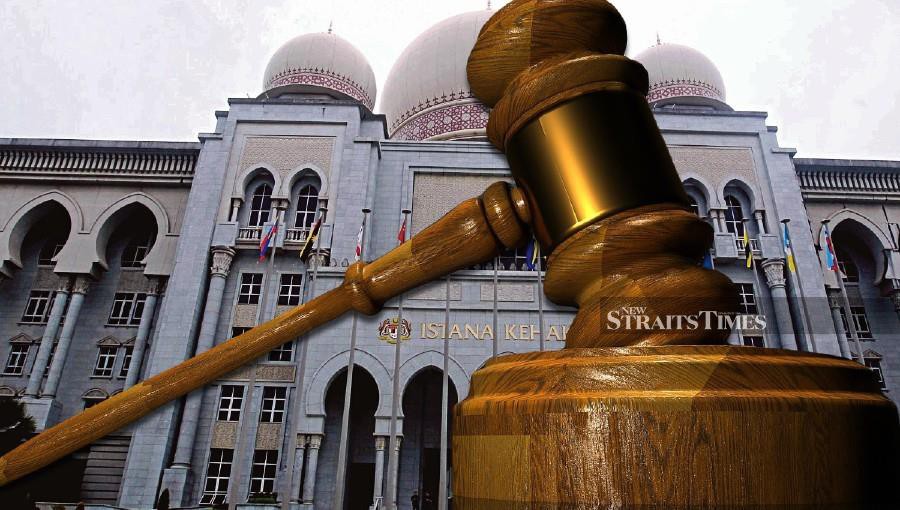
PUTRAJAYA: A Yemeni man was spared the gallows today after he was acquitted by the Federal Court of drug trafficking.
Yahya Hussein Mohsen Abdulrab, 31, was sentenced to death by hanging in 2014 by the Tawau High Court in Sabah.
He was found guilty of trafficking 1,800 grams of Methamphatamine.
Today, a three-member bench led by Chief Justice Tun Tengku Maimun Tuan Mat set him free after unanimously allowing his appeal.
The bench which also comprised Federal Court judges Datuk Seri Mohd Zawawi Salleh and Datuk Nallini Pathmanathan made the decision after hearing the matter.
Yahya's lawyer Rahmat Hazlan said the court in its decision cited the incompetency of his client's previous counsel who conducted the trial.
He said the Court of Appeal had quashed the conviction and ordered a retrial last year after concluding that Yahya had been deprived of his right to a fair trial due to the 'flagrant incompetence' of his counsel.
Although the Federal Court in its decision today agreed that the previous counsel was 'flagrantly incompetent', it held that the Court of Appeal was wrong to order a retrial instead of a complete acquittal, Rahmat added.
"The Federal Court decided that a retrial would be unfair as there was a breach of the constitutional safeguards, and as a result the trial process was unfair," he said.
He said the appellant had been incarcerated for more than eight years and the court was also of the view that it was unfair to order a retrial as it could lead to Yahya languishing in jail further.
On the merits, Rahmat said the additional evidence clearly show more than a reasonable doubt had arisen in the prosecution's case and the order for retrial or a reduction to a lower offence of possession was unsafe.
Yahya was also represented by lawyer Tan Sri Muhammad Shafee Abdullah and Wan Aizuddin Wan Mohammed while deputy public prosecutor Hanim Mohd Rashid prosecuted.
According to the charge sheet, Yahya had trafficked in 1,800.28 grams of Methamphatamine at the Arrival Hall of Tawau Airport at about 11am on July 25, 2013
The charge under Section 39B(1)(a) of the Dangerous Drugs Act 1952 carries a mandatory death sentence upon conviction. - New Straits Times, 13/7/2021
IN THE COURT OF APPEAL OF MALAYSIA
(APPELLATE JURISDICTION)
[CRIMINAL APPEAL NO: S-05-12-01/2015]
| |
|
|
| |
|
|
[In the matter of High Court in Sabah and Sarawak at Tawau
Criminal Trial No. TWU-45A-1/3-2014]
|
|
|
|
CORAM:
YAACOB HAJI MD SAM, JCA
HANIPAH FARIKULLAH, JCA
ABU BAKAR JAIS, JCA
JUDGMENT
Introduction
[1] This is a drug trafficking case that originated from the High Court. The Appellant appealed against the decision of the said High Court which convicted and sentenced him for the charge of trafficking the drugs. We heard oral submissions by the Appellant and Respondent for the appeal against the decision of the High Court on 19 February 2020 and we decided to order a retrial of this case before another High Court Judge. The Appellant lodged an appeal to the Federal Court not on the whole decision but only with respect to our decision that this case be retried before a different High Court Judge.
[2] It is therefore incumbent and relevant to note both the limited scope of the appeal lodged and hence our reasoning herein in arriving only to that part of the decision. As a consequence, there is no reason to be more elaborate than necessary in addressing the limited grievance of the Appellant. More so when the Respondent did not appeal against the whole of our decision.
The Charge
[3] The charge against the Appellant, a Yemeni national, reads as follows:
"That you on 25th day of July 2013 at about 11.00 am at the arrival hall of Tawau Airport in the District of Tawau, in the State of Sabah did on your own behalf, traffic in a dangerous drug, to wit 1,800.28 grams of Methamphetamine and that you have thereby committed an offence under section 39B(1)(a) of the Dangerous Drug Act 1952 punishable under section 39B(2) of the same Act ".
The Prosecution's case
[4] The Appellant arrived by flight from Kuala Lumpur to Tawau. PW1, an Immigration officer checked the Appellant's passport and found his social visit pass had expired. The Appellant then was accompanied by PW1 and his supervisor to the carousel after the Appellant informed that he had a luggage. They found the luggage, a briefcase on the floor at the carousel. There were no other passengers or any other luggage at that carousel.
[5] Upon request by PW1, two Customs officers, PW2 and PW6 then scanned the briefcase. Upon scanning, PW2 saw a suspicious image inside the briefcase. PW2 instructed the Appellant to bring the briefcase to him for further inspection. The Appellant using the key he had, unlocked the briefcase. PW2 then saw a transparent plastic package inside the inner compartment of the briefcase. PW2 then instructed the Appellant to close the briefcase and follow him with the briefcase to the Customs office.
[6] At the Customs office, PW10 instructed the Appellant to open the briefcase. Using the key inside his wallet, the Appellant opened the briefcase again. PW10 then saw one transparent plastic package containing crystalized substance. Using a test kit, PW10 conducted the initial drug test and found the crystalized substance suspected to be Methamphetamine. The Appellant then was arrested. The Chemist PW 9 confirmed that the substance found was Methamphetamine weighing 1800.82 grams.
The Findings of Trial Judge at the End of Prosecution's Case
[7] Based on the case of PP v. Sukumaran a/l Sundram [1999] 4 CLJ 242; [1999] 4 MLJ 426, the learned High Court Judge ("HCJ") found prima facie case as sufficient credible evidence was adduced by the prosecution for each essential ingredients of the offence for a supposition of guilt if it is not answered by the accused.
[8] Following Looi Kow Chai v. Public Prosecutor [2003] 1 CLJ 734, the learned HCJ had subjected the evidence adduced by the prosecution to maximum evaluation.
[9] Based on the evidence adduced by the prosecution as narrated, the learned HCJ found the following ingredients to be proven:
(a) The Appellant had possession of the drug;
(b) The drug in question was Methamphetamine;
(c) The Appellant had committed an act of trafficking of the drug.
[10] In respect of the first ingredient, the learned HCJ found the Appellant had custody and control of the briefcase. He had opened the same using the key he had. There was no other passenger at the carousel when the briefcase was taken by the Appellant. The briefcase was not tempered as it was still locked and the Appellant had the key all the time.
[11] The Appellant also had knowledge of the drug in the briefcase having regard to the presumption under s. 37(d) of the Dangerous Drug Act 1952. The fact that the Appellant had custody and control of the briefcase, would mean the Appellant had possession and knowledge of the drug by the operation of this statutory presumption.
[12] In respect of the second ingredient, PW2 testified that he saw a transparent plastic packet containing white crystalized substance when the briefcase was opened by the Appellant. Later the initial test done by PW10 using a test kit revealed that the substance to be Methamphetamine. Subsequently, the chemist PW9 conducted further test to confirm the substance as Methamphetamine and the learned HCJ accepted the weight of the drug as indicated in the charge. Essentially, the learned HCJ found the second ingredient to be proven having regard to the facts narrated.
[13] In respect of the third ingredient, the learned HCJ found direct trafficking. The Appellant was found having possession of the briefcase and the Appellant had the briefcase containing the drug for trafficking and not for own consumption. The amount of the drug found cannot mean the drug is for own consumption but for trafficking.
[14] The learned HCJ therefore called for the Appellant to enter his defence.
Defence
[15] The Appellant was the only witness who testified for the defence. He gave evidence that his friend by the name of Mickey requested him to bring the briefcase to Tawau. Mickey paid the air ticket, booked a hotel room and gave him RM 1000 for his expenses while in Tawau. Mickey told him to hand over the briefcase to Mickey's friend. Mickey gave the telephone number of his friend to the Appellant.
[16] He did not know the contents of the briefcase but he gave his shirts, pants and shoes to Mickey and Mickey packed them in the briefcase.
[17] The Appellant denied knowledge of the drug in the briefcase and said that Mickey as the one who had packed his clothes in the briefcase and therefore Mickey too had kept the drug in the briefcase.
[18] He said when he saw the briefcase at the airport, it was already on the floor and it was already opened. He had to press it again to close it. He admitted that he did not tell the Customs officers about this.
[19] He also admitted that he had never mentioned Mickey to the Customs officers.
The Findings of Trial Judge at the End of Defence
[20] Having regard to the cases of PP vs. Lim Chan [1992] 2 MLJ 561 and Hamidon Bin Mat Yatim v. PP [1995] 3 CLJ 724, the learned HCJ was of the finding that this an afterthought as this was not raised during the prosecution's case and in particular to the Customs Officers when the Appellant gave his cautioned statement.
[21] There is also no reason for Mickey to pack the Appellant's clothes. It is also illogical for the Appellant to say that Mickey packed his clothes according to the learned HCJ. It is illogical for the Appellant to say that he was supposed to pass the briefcase to Mickey's friend and in return, Mickey would hand over his clothes back to the Appellant.
[22] According to the learned HCJ too it is illogical for Mickey to send the Appellant to pass the briefcase to his friend when it is much cheaper to send the same by courier.
[23] And it is not possible for someone else to open the briefcase at the airport as the airport is manned by security personnel who would have seen such incident. Besides, the briefcase was locked and no one else would be able to open the same.
[24] Hence the learned HCJ found the existence of Mickey merely the make up story of the Appellant. His defence was merely a denial and afterthought. This had not rebutted the presumption of knowledge pursuant to s. 37(d) of the Act.
[25] Having heard the evidence of the Appellant, the learned HCJ found that the appellant had failed to rebut the presumption and no reasonable doubt had been raised against the prosecution's case. Hence the prosecution has proven its case beyond reasonable doubt.
[26] The learned HCJ therefore, convicted the Appellant on the charge preferred against him and sentenced him to death.
Event after Conviction and Sentence
[27] It should be noted that after the Appellant was convicted and sentenced by the High Court, the Appellant applied under section 61 of the Courts of Judicature Act 1964 to adduce further evidence to show the incompetency of his own counsel in handling the case at the High Court. A different panel of the Court of Appeal allowed this application. Therefore fresh evidence was recorded accordingly for this purpose at the High Court.
Grounds of Appeal
[28] Noting the manner upon which the submission was made during oral hearing of the appeal, we had remarked in open court that it seemed to us that the Appellant was not contending against the trial judge's grounds of judgment nor the findings made by His Lordship. In reply, counsel for the Appellant emphatically said that the Appellant's grounds of appeal are not directed against the decision. The records of the proceeding before us would show these exchanges. Instead, the Appellant's counsel said the submission before us is impressed to highlight that the previous counsel handling the case in the High Court for the Appellant was incompetent in defending the Appellant against the charge. Hence this is not the normal case where the grounds of judgment and the findings of the trial judge are being questioned. Instead the focus of the submissions is being directed at the Appellant's own previous counsel who conducted the Appellant's case at the trial court.
[29] In fact it is also recorded that the Appellant's counsel told us that the only issue arising from the submission above is whether the conviction and sentence by the trial judge are safe considering the incompetency of Appellant's previous counsel handling the case at the trial court.
Our Analysis and Decision
A. Scope of the Issue
[30] First, it cannot be overstated the limited scope of the issue raised by the Appellant in proceeding with the present appeal. It must also be remembered, the Respondent did not appeal against our decision.
[31] Having in mind the limited extent of the present appeal, it is relevant to highlight the case law that discussed the scope of an appeal and how the courts had confined itself and not strayed into others areas beyond the point or issue that is appealed. We expressed this to set the perimeters of what is only essential to be considered and to remind ourselves not to delve into matters irrelevant as to why we had decided for another High Court Judge to rehear the case.
[32] A case that illustrates the approach of the courts to strictly confine itself to what is being appealed is the Federal Court's case of Sababumi (Sandakan) Sdn Bhd v. Datuk Yap Pak Leong [1998] 3 CLJ 503; [1998] 3 MLJ 151. Although this case dealt with the issue raise for an appeal after leave is given, nonetheless it still relevant to denote how the court had been strict to limit what can be raised in the appeal proper. And though this is a civil case, there is no reason to say that the approach in this case should not be applicable for a criminal case. In this case the relevant provision pertaining to leave to appeal and the scope of such appeal is said as follows:
Under r. 108(1)(c) of the Rules of the Federal Court 1995, the Federal Court may determine or frame the questions or issue which ought to be heard in the appeal; in my view, this discretionary power given statutorily must be given effect to. In other words, only the issues or questions thus framed would be heard or entertained.
[Emphasis Added]
[33] Likewise, the Appellant too in the present appeal must be bound to only the issue of competency or lack of it by his former counsel at the High Court as a point of argument for the appeal now. He should not go beyond this contention in deciding the appeal as he through his counsel had said they are confining themselves to this issue alone.
B. The Law
[34] Having laid down the scope of the issue, it would be appropriate to state the law in respect of the contention that the Appellant's counsel who conducted the case at the trial court was incompetent. This according to the Appellant had caused a miscarriage of justice for him, warranting the conviction to be reviewed. In our view, it would also be instructive for the law to be highlighted first before the facts are considered to determine whether indeed the counsel for the Appellant was incompetent in handling the case.
[35] The leading authority on this issue is the Federal Court's case of Shamin Reza Bin Abdul Samad v. Public Prosecutor [2009] 6 CLJ 123; [2011] 1 MLJ 471. First, of importance regarding this case is the recognition that a conviction for a criminal offence can be set aside if it is proven that the counsel representing the accused had been incompetent in handling the case as a whole and in particular, presenting the defence of the accused resulting in the said conviction.
[36] Second, this case laid down two conditions that must be satisfied in order to find indeed the counsel of an accused person had not been up to the mark in defending the accused against the charge he was facing. These two conditions are as follows:
(a) The incompetence must be flagrant and;
(b) It has deprived the accused a fair trial.
[37] The case also stressed that the conduct of the counsel handling the case must be viewed as a whole and it would not be sufficient to find the said counsel incompetent if he was found merely wanting in one or two aspects.
[38] The case also noted that the overarching principle in applying this law is that the duty of the court in achieving justice should always be in the forefront despite the contention a counsel may have been incompetent. This is taken to mean that at the end of the day, the courts should still bear in mind whether justice is served in view of the totality of the evidence adduced, notwithstanding the manner the trial had been handled by the accused's counsel.
[39] The relevant excerpt of this case states as follows:
In our considered judgment, the incompetence of counsel in the conduct of a defence in a criminal trial is a ground on which a conviction may be quashed provided that (i) such incompetence must be flagrant in the circumstances of the given case; and (ii) it must have deprived the accused of a fair trial thereby occasioning a miscarriage of justice. Nothing short will suffice. And in considering the question, an appellate court must have regard to the conduct of counsel as a whole and not merely to his or her failure in one or two departments. Further, in the ordinary way, a court (whether at first instance or at the appellate state) will of course have regard to its paramount function and duty to ensure that justice is done so that the incompetence of counsel will not factor into the equation.
[40] Before us in the present appeal, it was argued that what the Appellant needs to show is just that his counsel was incompetent, thus depriving him of a fair trial. We could not agree to this submission as we are bound by the Federal Court's decision above. In this regard the Federal Court clearly has decided the incompetency must be flagrant and therefore not merely being incompetent per se. There is a higher standard imposed than just merely saying the counsel was not doing his work properly. Flagrant in this context means conspicuously or obviously offensive. It does not mean merely failing to do one's work. It is not meant to apply for incompetency at its lowest level. Therefore it is insufficient for the Appellant to prove mere incompetency without the same being flagrant.
[41] Besides, if we were to accept the submission of the Appellant as narrated above, it would be much too simple and easy for a conviction to be overturned, solely on the score that an accused's counsel was merely incompetent in managing the case in court for the accused.
C. The Facts
[42] Having laid down the law on the subject, it is now apposite to state the facts pertaining to what was done or not done by the Appellant's counsel in handling the case at the trial court. This is to determine whether indeed the Appellant's counsel was incompetent based on the law highlighted.
[43] In this regard, first of significance is the fact that during cross- examination of the prosecution's witnesses, the Appellant's counsel had only challenged these witnesses on the weight of the drugs. There were no other areas where the Appellant's counsel had taken other issues with these witnesses. This is important to note because the line of questions adopted by the Appellant's counsel during his cross-examination suggested that the defence of the accused was solely on the ground that the drugs were not up to the weight to find there was trafficking of the same. It would seem there were no other grounds of defence, considering what was cross-examined by the Appellant's counsel.
[44] This is indeed untrue and a precarious position undertaken by the Appellant's counsel at the trial court. This is untrue because as narrated earlier at paragraphs [15] to [17] above, the Appellant's defence was that the briefcase containing the drugs were given to him by Mickey. Therefore, it was indeed flagrantly incompetent for the Appellant's counsel not to cross-examine the prosecution's witnesses on this particular defence. This would also mean the Appellant had been deprived of a fair trial.
[45] It is also too risky for the Appellant's counsel to advance only one defence for the Appellant i.e. the weight of the drugs. More so when as stated, there was also the defence that the briefcase was given by Mickey and the Appellant was not aware of the drugs in that briefcase.
[46] After further evidence was ordered to be adduced by the Court of Appeal then, the Appellant testified he met his counsel in prison before the trial. He told his counsel that he was under the impression he was bringing presents for a friend of Mickey and was not aware that the briefcase contained the drugs. The Appellant further testified after he told his counsel the full narrative of his defence, the latter said he would study the Appellant's case and get back to the Appellant. But his counsel never turned up in prison on this thereafter. The Appellant afterwards met only briefly with his counsel in court. And his counsel told him he will only bring the defence of the discrepancy of the weight of the drugs. No other grounds of defence were discussed.
[47] We are of the opinion that not cross-examining the prosecution's witnesses on the defence that the Appellant was not aware of the drugs in the briefcase was indeed a matter so serious that it materially would have affected the Appellant's version of his innocence. It does not matter that defence might be weak but not proposing it to the prosecution's witnesses and merely relying on the sole defence of the weight of the drugs showed the flagrant incompetency of the Appellant's counsel and this had deprived the accused of a fair trial, thereby occasioning a miscarriage of justice.
[48] Indeed only after the defence was called, did the Appellant testify that Mickey had requested the former to bring the briefcase to Tawau. This prompted the learned HCJ to find that this defence was only an afterthought considering this was not put before the prosecution's witnesses. This finding of the learned HCJ could only be possible because of the flagrant incompetency of the Appellant's counsel in not introducing and pursuing this defence at the prosecution's stage. This was made more serious as the evidence tendered after further evidence was ordered to be adduced, indicated the Appellant had narrated this defence to his counsel before the trial. It is only the Appellant's counsel's refusal to raise this defence earlier that had caused the learned HCJ finding fatally against the Appellant.
[49] Evidence was also tendered that Mickey is the Appellant's wife's brother in-law. And instruction was given for the Appellant's counsel then to call the Appellant's wife as she would be in a position to corroborate the Appellant's evidence that the drugs in the briefcase belonged to Mickey. There was evidence that she came to court to be called as a witness but the Appellant's counsel then decided not to call her without giving any reasons. We considered this most surprising and crucial as her evidence could well support the evidence of the Appellant. Not calling her when she was ready to testify, had seriously affected the Appellant's defence. More so when no reasons were given by the Appellant's counsel as to why she was not called as a witness for the Appellant. This constituted another instance where the incompetency of the Appellant's counsel was flagrant and had caused the Appellant a fair trial and had occasioned a miscarriage of justice.
[50] It is also relevant to note, when further evidence was adduced, one Ahmad Faisal Mohd Al-Moafa from the Yemeni embassy testified he met the Appellant while the latter was in prison. In this meeting, the Appellant told Ahmad the whole details of his arrest. Ahmad later relayed it to the Appellant's counsel what was told to him. Ahmad gave evidence that the Appellant's counsel said such information was not useful and the latter kept insisting that his legal fees be paid in full.
[51] There was also evidence the Appellant's counsel did not make oral submission at the end of the prosecution's case and did not put up a written submission at the end of the defence's case.
[52] It is our considered view that all the facts as narrated above would only mean that the Appellant's counsel was flagrantly incompetent in the handling of the trial for the Appellant. This has also deprived the Appellant a fair trial resulting in a miscarriage of justice. The conduct of the trial by the Appellant's counsel was flagrantly incompetent as a whole and not confined only to one or two areas. The defence that the Appellant was requested to carry the briefcase by Mickey and as a consequence not having the knowledge that the drugs were contained in the same was so fundamental that it ought to have been raised by the Appellant's counsel. The failure to raise it, has caused the Appellant to be convicted for a very serious offence, resulting in the death penalty. In light of the circumstances, this court has also considered that as a whole, justice is best served for the conviction to be quashed as it would not be safe to affirm the conviction and sentence despite the evidence that had been adduced against the Appellant.
D. Order for retrial before a different High Court Judge
[53] Having quashed the conviction and sentence against the Appellant because of the flagrant incompetency of the Appellant's counsel, it would be most appropriate to order that a retrial be held before another High Court Judge. To order the Appellant to be acquitted and discharged for the offence charged, would not be a fair and appropriate decision to be made considering the circumstances of this case. If this order is made instead, it would be far too easy for an accused to be acquitted and discharge, i.e. just by engaging counsels who would by design not handle the case properly and with certain standard expected in defending an accused person.
[54] The Appellant had been detained in prison for a long time and may have to stay in prison for some time more, awaiting for the retrial. However, balancing the interest of the State and the Appellant's interest, it is only fair for a retrial to be ordered instead of letting the Appellant scot free by acquitting and discharging him just because of his own counsel improper handling of his defence at the High Court. In fact, as shown from the factual matrix of this appeal, the decision to set aside the conviction and sentence against the Appellant has to be done not on account of the prosecution fault or the erroneous findings of the learned HCJ but solely because of the flagrant incompetency of the Appellant's own counsel. Therefore, in the interest of justice, a retrial before another High Court Judge would be an appropriate and fair decision that should be made.
Conclusion
[55] Based on all the reasons aforesaid, we are unanimous that this is a proper case for the conviction and sentence to be quashed. However, for the reasons explained too, the case should be remitted to the High Court for a retrial before another High Court Judge.
Dated: 8 SEPTEMBER 2020
(ABU BAKAR JAIS)
Judge
Court of Appeal Malaysia
Source:
|


.JPG "(From left) Mohammad Alshatri, Sharon Wah, Suaram executive director Sevan Doraisamy and Kua Kia Soong are seen with their lawyers at Bukit Aman in Kuala Lumpur July 6, 2021. — Picture by Fidaus Latif")